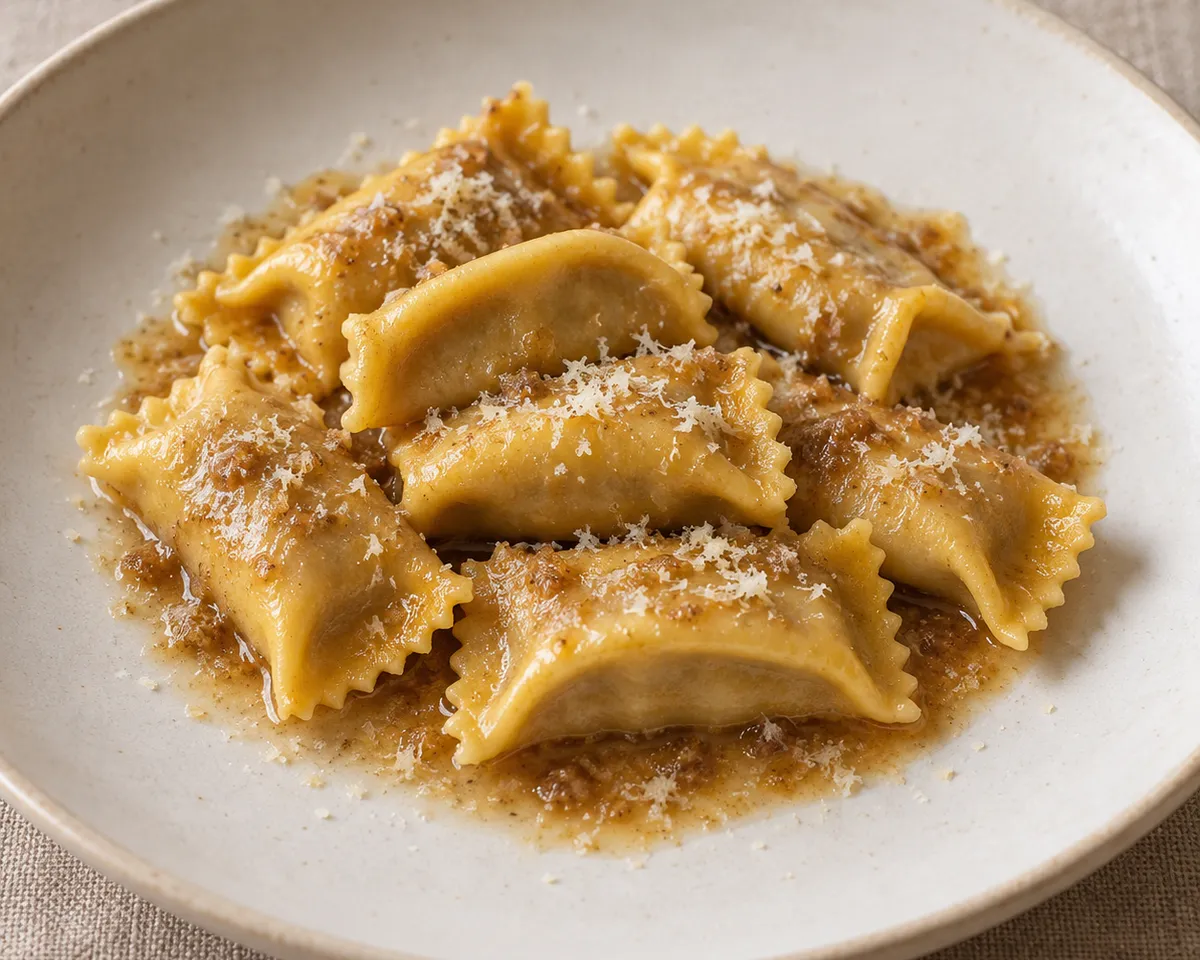
Agnolotti al sugo d'arrosto
Monferrato meat-filled pasta with its roasting juices
The sauce is already in the pot before the first agnolotto is folded. Beef and veal cook slowly with vegetables and a little wine; their juices become the dressing, while the meat is minced into the filling. That loop gives the finished pasta a depth that a separate tomato sauce would miss.
Around Casale Monferrato, cabbage often softens the roasted-meat filling. It is present without taking over, tucked into thin egg pasta with a little cooked ham and grated cheese. A row of small mounds is covered by folding the sheet over itself, then separated with a wheel into compact rectangular parcels. The folded edge gives each one a pleasingly plump shape.
Serve them with just enough warm roasting liquor to gloss their ridges. The dressing should recall the meat inside, not bury the careful work of making it.
Ingredients
For the meat and roasting juices
- 200 g(7 oz)beef chuck, in one piece
- 200 g(7 oz)boneless veal shoulder, in one piece
- 25 gunsalted butter
- 15 ml(1 tbsp)extra-virgin olive oil
- 1small yellow onion, finely chopped
- 1small carrot, finely chopped
- 1celery stalk, finely chopped
- 1small garlic clove, lightly crushed
- 1small sprig rosemary
- 120 ml(½ cup)dry white wine
- 250–400 ml(1–1⅔ cups)hot water, as needed
- fine salt and freshly ground black pepper
For the filling
- 300 g(10½ oz)savoy cabbage leaves, thick ribs removed
- 100 g(3½ oz)Italian prosciutto cotto, in a thick slice (see note)
- 60 gParmigiano Reggiano, finely grated
- 1large egg
- fine salt and freshly ground black pepper
For the pasta
- 350 gItalian tipo 00 flour, plus more for dusting
- 4large eggs
To finish
- 15 gunsalted butter
- Parmigiano Reggiano, finely grated, for serving
Kitchen notes
- Prosciutto cotto
- Use Italian cooked ham from a deli counter, cut thick enough to mince. This is prosciutto cotto, not dry-cured prosciutto crudo or sweet, smoky American sandwich ham.
- Savoy cabbage
- The Casale and lower Monferrato version uses cabbage to soften the meat filling. Squeeze it thoroughly after blanching so that it lightens the filling without watering it down.
- Parmigiano Reggiano
- Grate a wedge of the actual aged cheese. Shelf-stable grated Parmesan has a different texture and can make the filling dusty.
Method
Cook the meat
- Season the beef and veal lightly. In a heavy lidded pot, heat the 25 g butter and oil over medium-high heat. Brown both pieces deeply on all sides, then lift them out. Lower the heat; cook the onion, carrot, celery, garlic and rosemary in the same pot until the vegetables soften, about 8 minutes. Return the meat, pour in the wine and scrape up the browned bits. Let the wine reduce by about half, then add enough hot water to come about a third of the way up the meat. Cover and cook at a very gentle simmer, turning occasionally, for 1½–2 hours, until both pieces are tender enough to mince. Add a little hot water only if the pot threatens to dry out.
Keep the juices; make the filling
- Lift out the meat and let it cool. Strain the cooking liquid, pressing the vegetables gently; skim excess fat. Reserve this liquor for dressing the pasta. Blanch the cabbage in salted boiling water until tender, 3–4 minutes, then drain, cool and squeeze it very dry. Mince the meat, cabbage and prosciutto cotto finely, using a knife or meat grinder rather than making a smooth purée. Mix in the 60 g Parmigiano Reggiano and the egg; season cautiously. The filling should hold a small mound without leaking liquid. Chill while making the dough.
Roll and fold
- Knead the flour and four eggs into a smooth, firm dough, about 10 minutes; wrap and rest for 30 minutes. Roll one quarter at a time into a thin, supple sheet, keeping the rest covered. Place small hazelnut-sized mounds of filling about 3 cm (1¼ in) apart and about 3 cm from a long edge. Fold that edge over the row, pressing the pasta snugly around each mound and pushing out the air. Trim the long edge and cut between mounds with a fluted pastry wheel. Aim for small, roughly 3-by-4-cm rectangles sealed on all sides; the fold makes one side, and the wheel cuts the other three. Set them apart on a flour-dusted cloth or tray. Repeat with the remaining dough and filling.
Cook and dress
- Warm the reserved juices in a wide pan. If they are thin, simmer uncovered until lightly savory and able to coat a spoon; if they are very concentrated, loosen with a little pasta water. Bring a broad pot of salted water to a gentle boil. Cook the agnolotti in batches for about 3–5 minutes, until the pasta is tender at its folded edge; taste one rather than relying on the clock. Lift them into the warm juices, add the finishing butter and turn gently until glossy. Serve promptly with a modest grating of Parmigiano Reggiano.