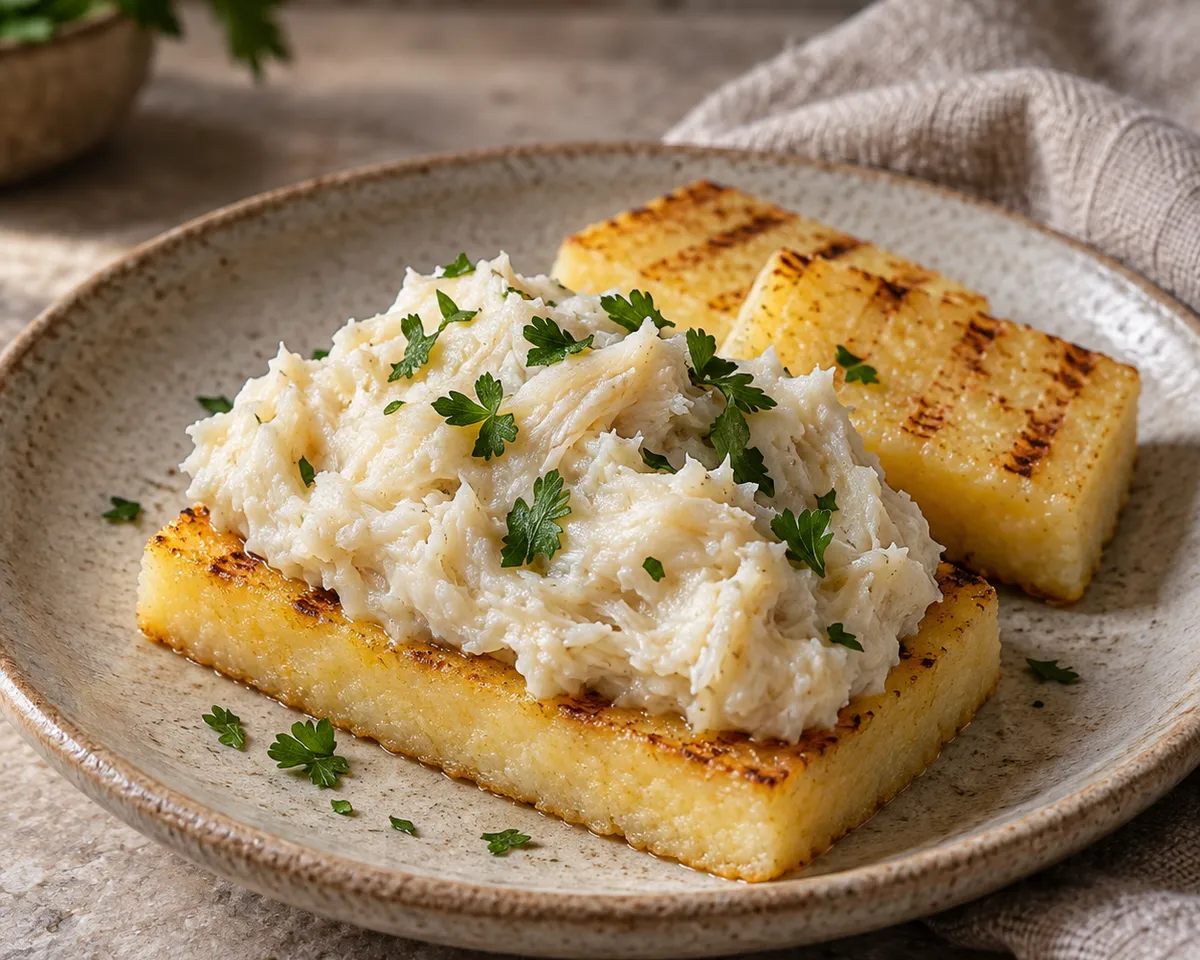
Baccalà mantecato
Venetian whipped stockfish with grilled polenta
Baccalà mantecato is one of Venice’s great acts of transformation. A piece of dried fish, soaked back to suppleness, is worked with oil until it turns pale, airy, and spoonable. Its texture should not be the blank smoothness of a purée: the best version still keeps a few small flakes of fish in the cream.
In standard Italian, baccalà usually means salt cod; in Venetian usage, the ingredient for this dish is stoccafisso, air-dried stockfish. The regional vocabulary matters at the fish counter, where salted cod is a different product.
Oil beaten slowly into the warm fish gives the spread its light, creamy texture. Grilled white polenta is a traditional accompaniment, its crisp edges and mild corn flavor setting off the stockfish.
Ingredients
For the mantecato
- 600 g(about 1⅓ lb)soaked, boneless stockfish (stoccafisso), including its skin if supplied (see note)
- 2bay leaves
- ½lemon
- 250 ml(1 cup)sunflower oil
- 85 ml(about ⅓ cup)mild extra-virgin olive oil
- fine salt and freshly ground white or black pepper
- 1 tbspfinely chopped flat-leaf parsley, for serving
To serve
- 350 g(about 12 oz)firm cooked white polenta, cut into 12 small rectangles
- extra-virgin olive oil, for brushing the polenta
Kitchen notes
- Stockfish, not ordinary salt cod
- For Venetian baccalà mantecato, ask for soaked stoccafisso: air-dried cod that has been rehydrated. In Venice this ingredient is traditionally called baccalà, but it is not the salted cod sold in many U.S. markets. Do not substitute salt cod; its salinity and texture produce a different dish. If buying dried stockfish, follow the supplier's soaking directions before starting.
- Oil and texture
- Sunflower oil mixed with mild olive oil keeps the flavor gentle. The amount the fish absorbs varies; add it gradually and stop when the mixture is creamy, cohesive, and still lightly flaky. A blender makes the fish pasty; steady beating leaves a few fine flakes.
- White polenta
- Venetian white polenta is traditionally served fresh or grilled with the mantecato. Buy or make a firm, sliceable white-corn polenta when you can; yellow polenta is also served in Venice.
Method
Poach the stockfish
- Put the soaked stockfish in a wide saucepan and cover with cold water. Add the bay and lemon. Bring just to a gentle boil, then lower the heat so the water barely trembles. Cook until the fish is tender enough to pull apart easily, about 20 minutes; timing varies with the thickness and prior soak. Lift the fish out, reserve 120 ml (½ cup) of the cooking water, and let the fish cool just enough to handle.
Check the fish
- Remove any remaining bones but keep the skin, which helps the mixture bind. Pull the flesh into coarse flakes in a deep bowl or the bowl of a stand mixer fitted with the paddle. Taste before salting: soaked stockfish varies widely in seasoning.
Mantecare
- Beat the warm fish steadily with a wooden spoon, or on medium speed with the paddle. Add the sunflower and olive oils together in a slow, narrow stream; pause briefly whenever the fish needs time to absorb the oil, then continue. Beat until it becomes pale, thick, and creamy but still retains a few flakes, 5–8 minutes by mixer or longer by hand. If it turns overly glossy or stiff before the oil is finished, beat in 1 teaspoon of reserved cooking water at a time, then continue with oil. Season cautiously with salt and pepper. Do not use a blender, which makes the texture pasty.
Grill the polenta and serve
- Brush the polenta rectangles lightly with olive oil. Grill in a ridged pan or under a hot broiler until crisp and browned on both sides, with grill marks if using the ridged pan. Spoon or spread the mantecato over the warm polenta, scatter with parsley, and serve at once. Refrigerate any remaining mantecato promptly and eat it within 1 day.