Baffo all'orvietana
Crisp guanciale with sage and wine vinegar
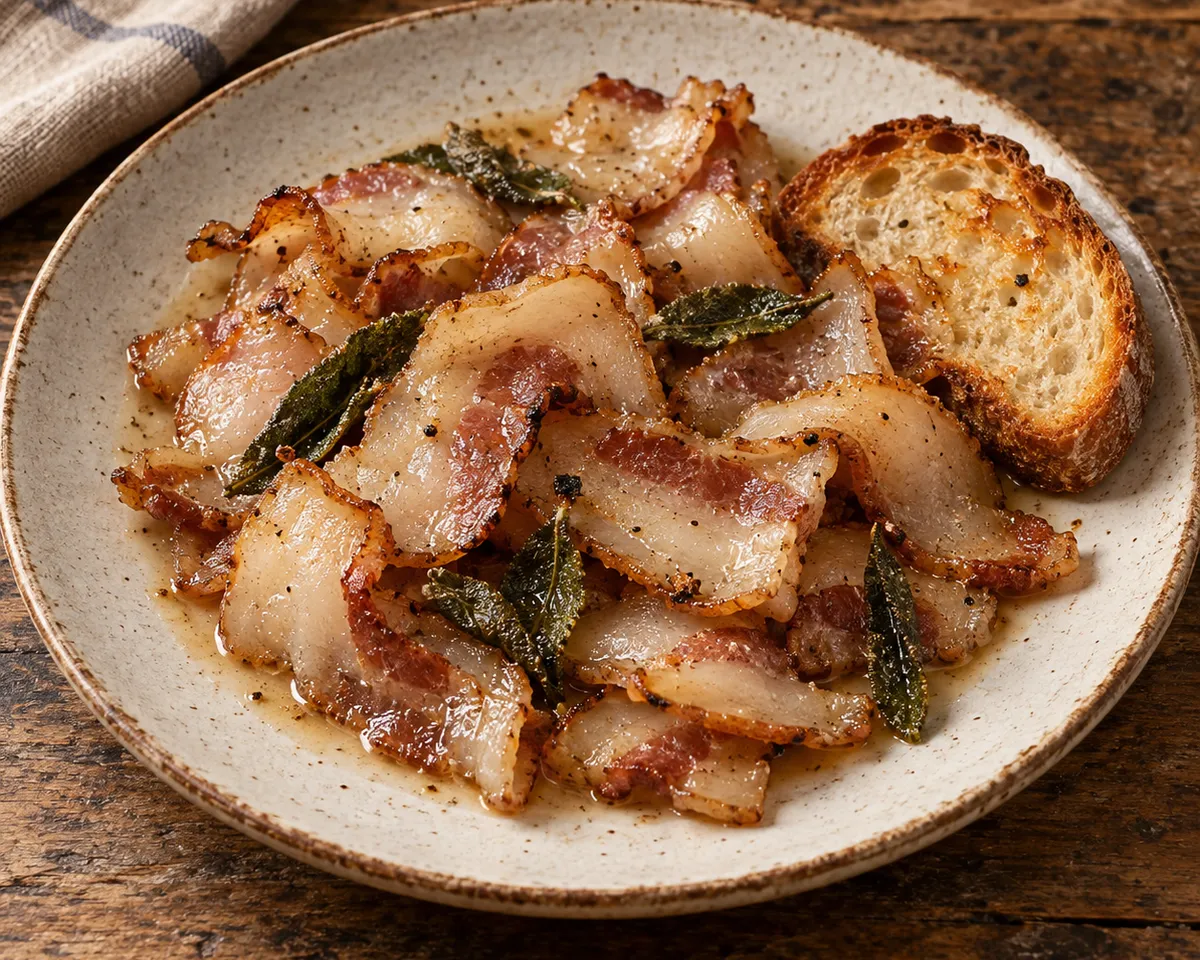
Thin slices of guanciale curl as their fat melts, leaving browned edges and a soft, richly seasoned middle. A few sage leaves go into the pan, followed by wine vinegar, which flashes against the hot pork and cuts straight through its richness. This is baffo, one of Orvieto's most direct ways of making a little cured meat into a hot dish.
The name refers to the cheek or jowl itself, locally also called barbazza. It matters which cut goes into the pan: cured guanciale renders slowly and keeps its supple chew, while bacon brings smoke and a different texture. The vinegar should be apparent but should not leave a puddle of sharp liquid beneath the pork.
Eat it as soon as it leaves the skillet, with bread for catching the glossy juices. The pleasure is in the quick sequence of fatty, herbal, crisp, and sour, each still distinct.
Ingredients
For the baffo
- 300 g(10½ oz)well-cured guanciale, rind removed and cut into thin slices about 2–3 mm thick
- 6–8fresh sage leaves
- 30 ml(2 tbsp)good white or red wine vinegar
- 4 small slicesrustic country bread, toasted, for serving
Kitchen notes
- Guanciale
- Buy a firm, dry-cured Italian pork jowl from a specialty Italian market or good butcher. It is not fresh pork cheek, smoked bacon, or ordinary sliced pancetta. Its own fat is enough for the pan; taste before considering salt, since cured guanciale generally needs none.
- Wine vinegar
- Use a clean-tasting wine vinegar, not balsamic glaze. The vinegar is reduced quickly in the rendered fat; it should brighten the pork without turning the plate syrupy.
Method
Render the guanciale
- Lay the guanciale in a single layer in a cold, wide skillet; cook in batches if needed. Set over medium-low heat and turn the slices as their fat begins to render. When they are lightly golden, add the sage and continue cooking until the edges are browned and crisp but the thicker centers still bend, about 5–8 minutes in all. Pour off a little rendered fat only if it is deep enough to submerge the slices.
Finish with vinegar
- If you cooked the guanciale in batches, return every slice and its collected juices to the pan. Raise the heat briefly and add the vinegar carefully; it will spit. Turn the guanciale through it for 20–30 seconds, just until the sharp steam subsides and a thin, glossy coating remains. Move the pork and sage at once to warm plates, spoon over the pan juices, and serve with toasted bread.