Bagna càuda
Piedmont's warm anchovy-garlic dip with autumn vegetables
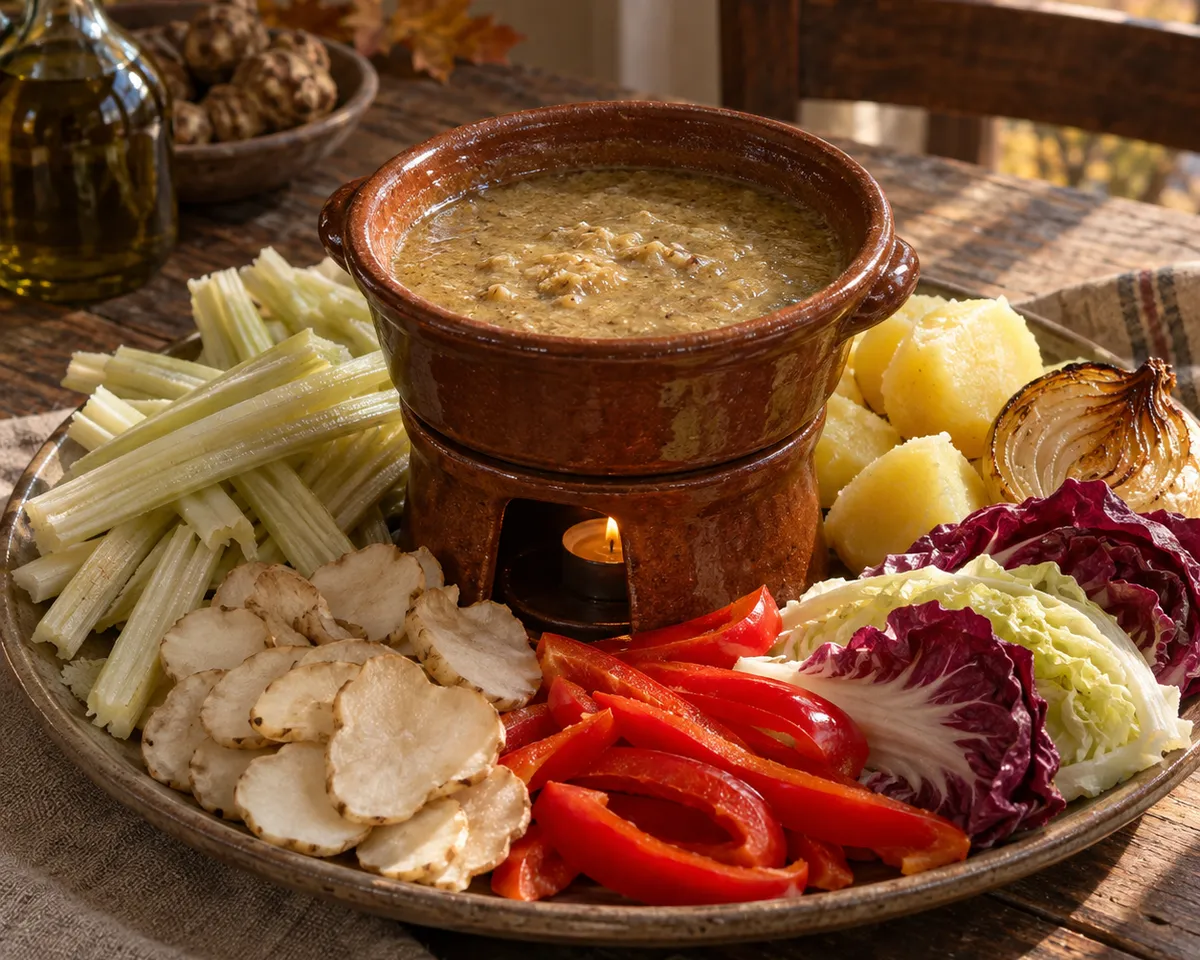
On an autumn table in Monferrato, the vegetables look like the easy part. They are merely the means of getting the sauce to the mouth: a warm, unapologetically garlicky emulsion of olive oil and salt-cured anchovies, kept gentle over a small flame and shared while the scent of garlic fills the room.
Bagna means sauce and càuda means hot in Piedmontese. Its anchovies came inland salted, through the trading routes that linked the coast and the hills; the dish made a durable pantry ingredient feel native to a landlocked region. It is associated with the grape harvest and the colder months, when raw and cooked seasonal vegetables surround the warm pot.
The three essential ingredients are oil, garlic, and anchovy. Quantities, the treatment of the garlic, and the vegetables change from kitchen to kitchen. Around Asti, the sauce can be strikingly garlicky, with a whole small head per person. Gentle cooking softens the cloves until they dissolve into the oil.
Ingredients
For the bagna càuda
- 4 small heads(about 160 g / 5½ oz peeled cloves)garlic, cloves peeled, halved lengthwise, and green germs removed
- 200 g(7 oz)whole salt-cured anchovies, weighed before rinsing, boning, and drying (see note)
- 300 ml(1¼ cups)mild extra-virgin olive oil
- 10 ml(2 tsp)walnut oil
- 60 ml(¼ cup)dry red wine, for rinsing the anchovies
For the vegetables
- 400 g(14 oz)tender inner stalks of cardo gobbo, if available, trimmed into dipping-size pieces (see note)
- 350 g(12 oz)Jerusalem artichokes, scrubbed, very thinly sliced, and held in lemon water
- 400 g(14 oz)small waxy potatoes, halved or quartered
- 2medium yellow onions, unpeeled and halved through the root
- 1red bell pepper, cut into broad strips
- 250 g(9 oz)heart of white cabbage, separated into tender leaves
- 1 lemon, for acidulated water
- extra-virgin olive oil and fine salt
Kitchen notes
- Salt-cured anchovies
- Buy 200 g by the packed whole-fish weight, then rinse, bone, and dry them yourself. They are not the oil-packed, tinned fillets used as a pizza topping; their cleaner, firmer flesh and controlled salinity matter in a sauce with so few ingredients.
- Garlic
- Remove the green germ and cook the cloves very slowly in oil without allowing them to color; do not reduce the amount to a token few cloves or replace it with garlic powder, roasted garlic, or another allium.
- Cardo gobbo
- Cardo gobbo di Nizza Monferrato is a tender, pale cardoon grown under a mound of soil so its stalks curve and blanch. It is a treasured local companion to bagna càuda, served raw; ordinary mature cardoon is tougher and more bitter. Seek it from a farmers market or specialty produce market in season. The sauce works with a changing collection of vegetables, so its absence does not require a substitute, though it is worth seeking out.
- Fojòt or fujot
- The little earthenware warmer with a flame underneath is practical equipment, keeping the sauce hot without letting it fry. A heavy saucepan on the lowest burner works at home, provided the oil never boils or sputters.
Method
Prepare the vegetables
- Heat the oven to 400°F (200°C). Hold the cardo gobbo and sliced Jerusalem artichokes in cold water acidulated with lemon while you work; serve both raw, well drained. Boil the potatoes until a knife meets only slight resistance, 12–15 minutes; drain. Brush the onion halves with olive oil, set them cut-side down on a tray, and roast until deeply soft and browned at the cut face, 25–35 minutes. Keep the pepper and cabbage raw. Arrange the vegetables on a large warm platter; their different temperatures and textures are part of the meal.
Melt the sauce without frying it
- Rinse the cleaned anchovies briefly in the red wine and dry them carefully. Put the garlic and 75 ml (5 tablespoons) of the olive oil in a flameproof earthenware pot or a small heavy saucepan over the lowest possible heat. Cook, stirring often with a wooden spoon, until the garlic is soft but has taken on no color, about 15 minutes. Add the anchovies and press them gently as they dissolve. Pour in the remaining olive oil and the walnut oil, then cook at the barest tremble for about 30 minutes, stirring from time to time, until the garlic has collapsed into a thick, mottled sauce. If it sizzles or fries, pull it from the heat until it calms.
Keep warm and share
- Transfer the sauce to individual fojòt/fujot pots over tea lights if you have them, or keep it over the gentlest burner and spoon it into warmed bowls as needed. Maintain it hot but never boiling. Dip the raw and cooked vegetables directly into the sauce and eat at once. Stir the pot from time to time so the garlic and anchovy stay suspended in the oil.