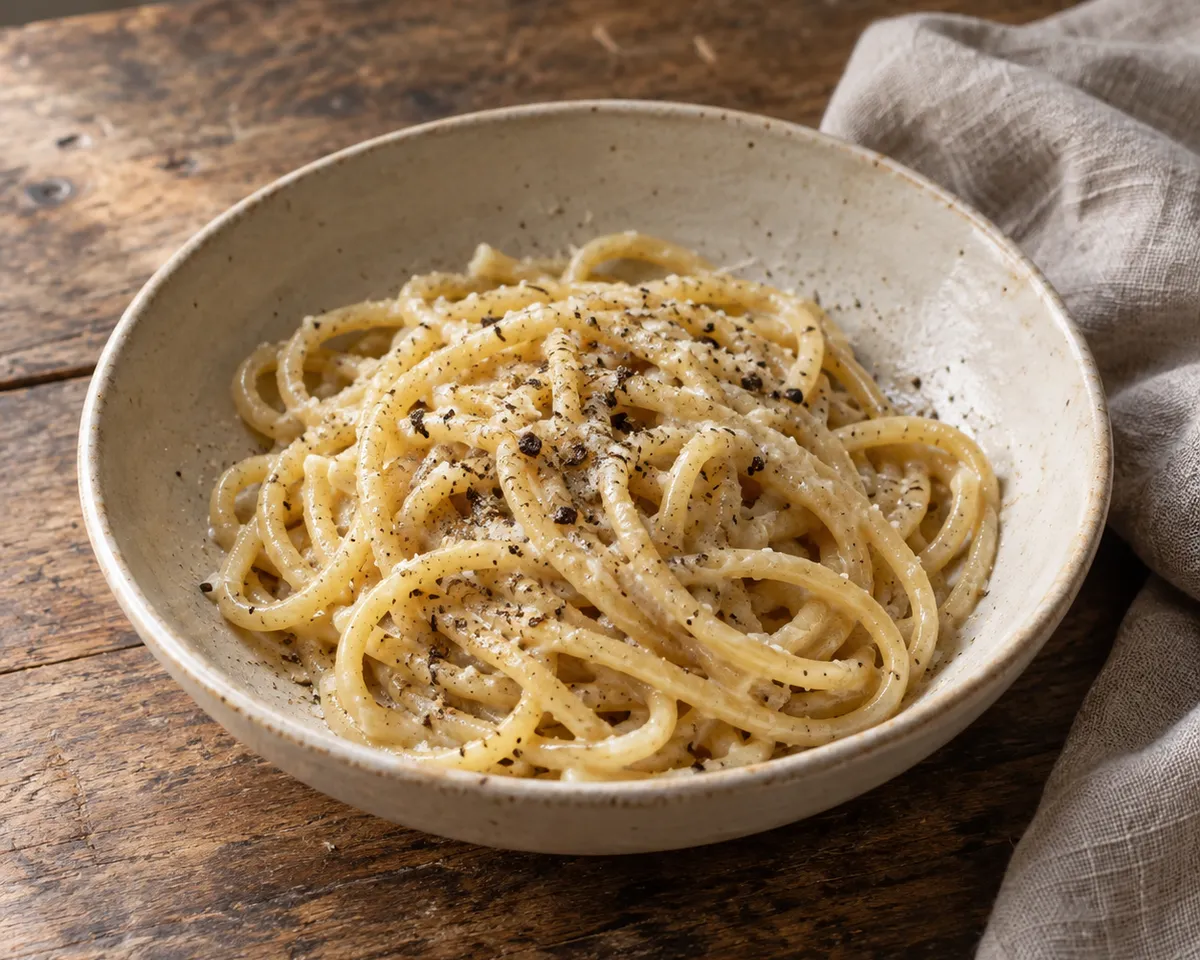
Cacio e pepe
Pecorino and black pepper pasta
Springy pasta, sharp sheep's cheese, and black pepper make cacio e pepe. The pepper retains its bite beneath the cheese, giving this Roman pasta a warmth that lingers after each mouthful.
Pecorino provides all the sauce's richness. Its gloss comes from a quick emulsion of finely grated cheese and starchy cooking water, made at the last possible moment. Tonnarelli, the square-cut Roman pasta, give the pepper something rough and resilient to cling to.
A good plate should be coated, hot, and assertively peppery, with no puddle of pale sauce underneath. This is one of those Roman dishes that rewards a little concentration and punishes waiting around: toss it hard, taste it immediately, and bring it straight to the table.
Ingredients
For the pasta
- 320 gdried tonnarelli (see note)
- 120 gPecorino Romano DOP, grated very finely (see note)
- 8 gblack peppercorns, coarsely crushed or freshly ground
- fine salt
Kitchen notes
- Tonnarelli
- Tonnarelli are square-cut Roman pasta, closely related in shape to spaghetti alla chitarra; dried versions may be made with egg or only durum wheat and water. They are a traditional choice for cacio e pepe. Use a dried tonnarello with a rough surface; do not replace it with delicate fresh angel-hair pasta.
- Pecorino Romano DOP
- Use a wedge of the firm sheep's-milk cheese and grate it nearly to a powder just before cooking. It is saltier and more assertive than Parmigiano Reggiano; Parmigiano changes the flavor of the sauce.
Method
Prepare the pepper and cheese
- Set a large warm serving bowl beside the stove. Put the black pepper in a dry wide skillet over medium heat and toast it, stirring or shaking the pan, until it smells warm and aromatic, 30–60 seconds; do not let it smoke. Take the skillet off the heat. Keep the pecorino separate and within reach.
Boil the tonnarelli
- Bring a large pot of water to a boil and salt it more lightly than usual: the pecorino will season the finished dish. Cook the tonnarelli until just al dente. Before draining, reserve at least 375 ml (1½ cups) of the starchy cooking water.
Emulsify and serve
- Add 120 ml (½ cup) of the hot pasta water to the toasted pepper, then transfer the drained tonnarelli to the skillet and toss until the strands are glossy. Move the pasta and its peppery liquid to the warm bowl. Add the pecorino in three additions, tossing vigorously after each addition. Add more hot pasta water a tablespoon at a time only until the cheese forms a light, clinging coating. If the cheese begins to gather in strings or grainy clumps, stop adding cheese and toss in a little more water until the sauce smooths out.
- Taste before adding any salt. Divide among hot bowls, finish with a little more black pepper if wanted, and serve immediately. The sauce should coat the pasta without pooling underneath it.