Carciofi alla giudia
Roman Jewish fried artichokes
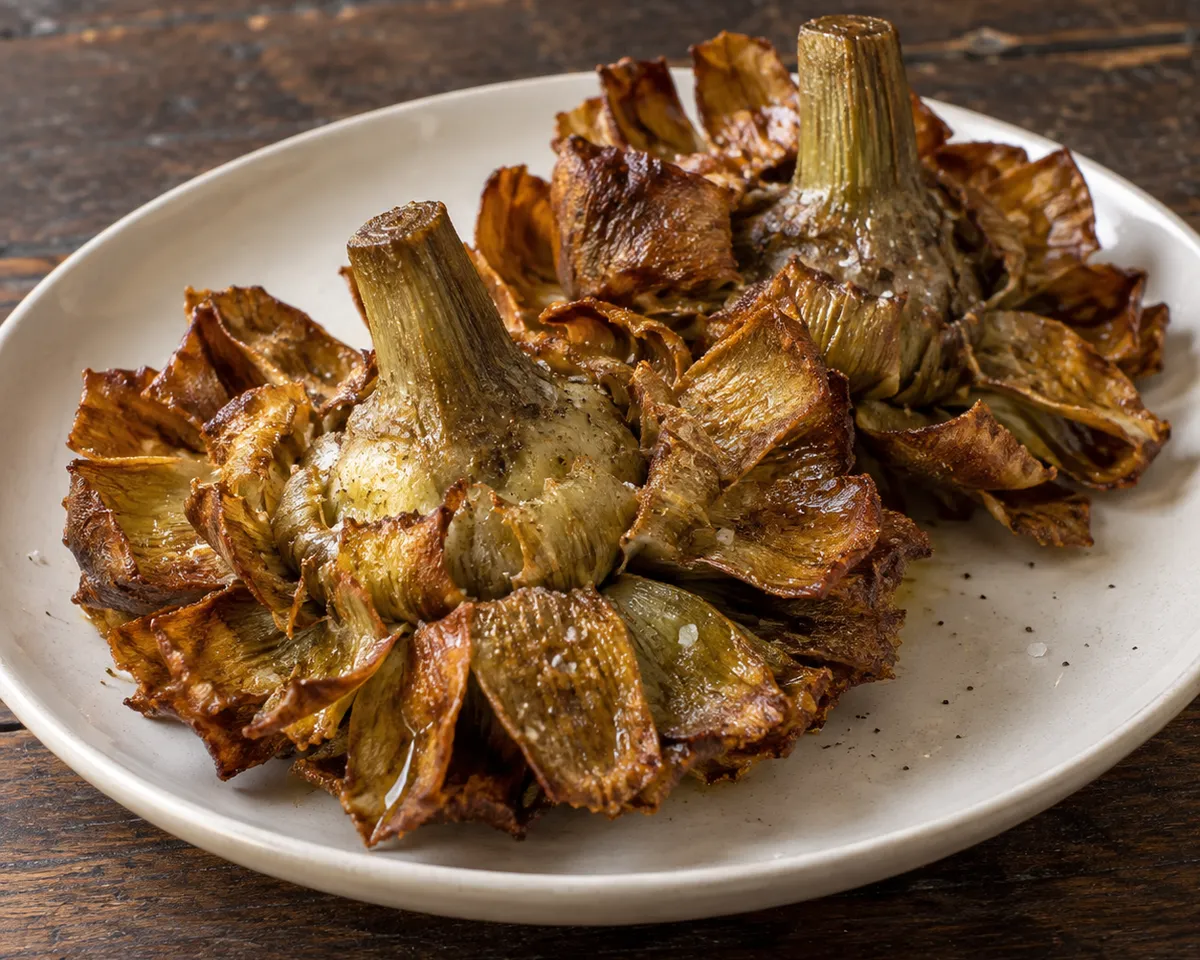
A carciofo alla giudia arrives looking less cooked than transformed: a whole artichoke burst open into a dark-gold flower, every leaf brittle enough to eat. The kitchen work begins with capatura, the close trimming that leaves just enough tender leaf for the oil to turn crisp.
The dish belongs to the cucina giudaico-romanesca of Rome's Ghetto, where it remains one of the city's most recognizable artichoke preparations. It is often traced to the sixteenth century, though the more useful fact for a cook is seasonal: the round, spineless Romanesco artichokes best suited to it are spring vegetables, and carciofi alla giudia have long been associated with Pesach tables as well as the restaurants of Rome.
There is no crust to hide behind. A slow first fry cooks the heart; a hotter second one gives the opened leaves their dry, shattering edge. Eat them hot, working from the petals inward, and do not save them for later.
Ingredients
For the artichokes
- 4large, very fresh round artichokes, ideally mammole or cimaroli (Carciofo Romanesco del Lazio IGP)
- 1lemon
- about 1.5 L(6⅓ cups)extra-virgin olive oil, or enough for a deep fry in your pot
- fine salt
- freshly ground black pepper
Kitchen notes
- Mammole or cimaroli
- Mammola names the large, round, essentially spineless Romanesco artichoke of Lazio; cimarolo more specifically describes a prized central head. The fresh protected Italian product is seldom obtainable in the United States. A fresh, heavy, round globe artichoke with tight broad leaves and a substantial stem is a workable home adaptation, though it is coarser and needs more trimming and a choke check. The Roman type gives the best flower.
- Extra-virgin olive oil
- Olive oil is the traditional frying fat. The amount depends on pot width: the oil should reach at least halfway up the artichoke heads without filling the pot so high that it can overflow when the artichokes go in.
- Lemon
- The lemon water prevents the cut artichokes from oxidizing while you trim them. It is not a lemon-forward finish for this dish.
Method
Trim and hold
- Fill a bowl with cold water and squeeze in the lemon. Working with one artichoke at a time, pull away the tough dark-green outer leaves until the leaves are pale and tender. Peel the fibrous outer layer from the stem, leaving 3–5 cm (1¼–2 in) attached. With a small sharp knife, shave away the pointed tops in a continuous spiral, preserving the tender lower portion of each leaf. Open the center enough to check for a fuzzy choke; if present, scoop it out without splitting the heart. Put the trimmed artichoke in the lemon water while you finish the rest.
- Drain the artichokes, then dry them exceptionally well inside and out. Hold two by their stems and tap their heads gently together, then tap each head lightly on the work surface to begin separating the leaves. Any trapped water will spit dangerously in the oil and will prevent a crisp fry.
First fry: cook the hearts
- Heat the olive oil in a deep, heavy pot to 285–300°F (140–150°C), keeping the oil level well below the pot's rim. Fry the artichokes one or two at a time for 10–15 minutes, turning them so the heads cook evenly; the stems need not be submerged. They are ready when a fork enters the base without resistance. The leaves will be darker, but not brittle yet.
- Lift out the artichokes and drain them upside down on a rack or paper towels for about 15 minutes, until warm rather than piping hot. Use a fork to draw the inner leaves outward from the center, opening each artichoke into a flower without pulling leaves free. Season the opened centers with salt and black pepper.
Second fry: crisp the flower
- Raise the oil to about 350°F (180°C). Return the artichokes to the oil, flower-side down first, for 2–4 minutes, turning them with tongs as needed so the spread leaves crisp evenly. Remove them when the leaves are a rich golden brown and rigid enough to crackle when touched; do not let them burn. Drain briefly, salt again if needed, and serve at once.