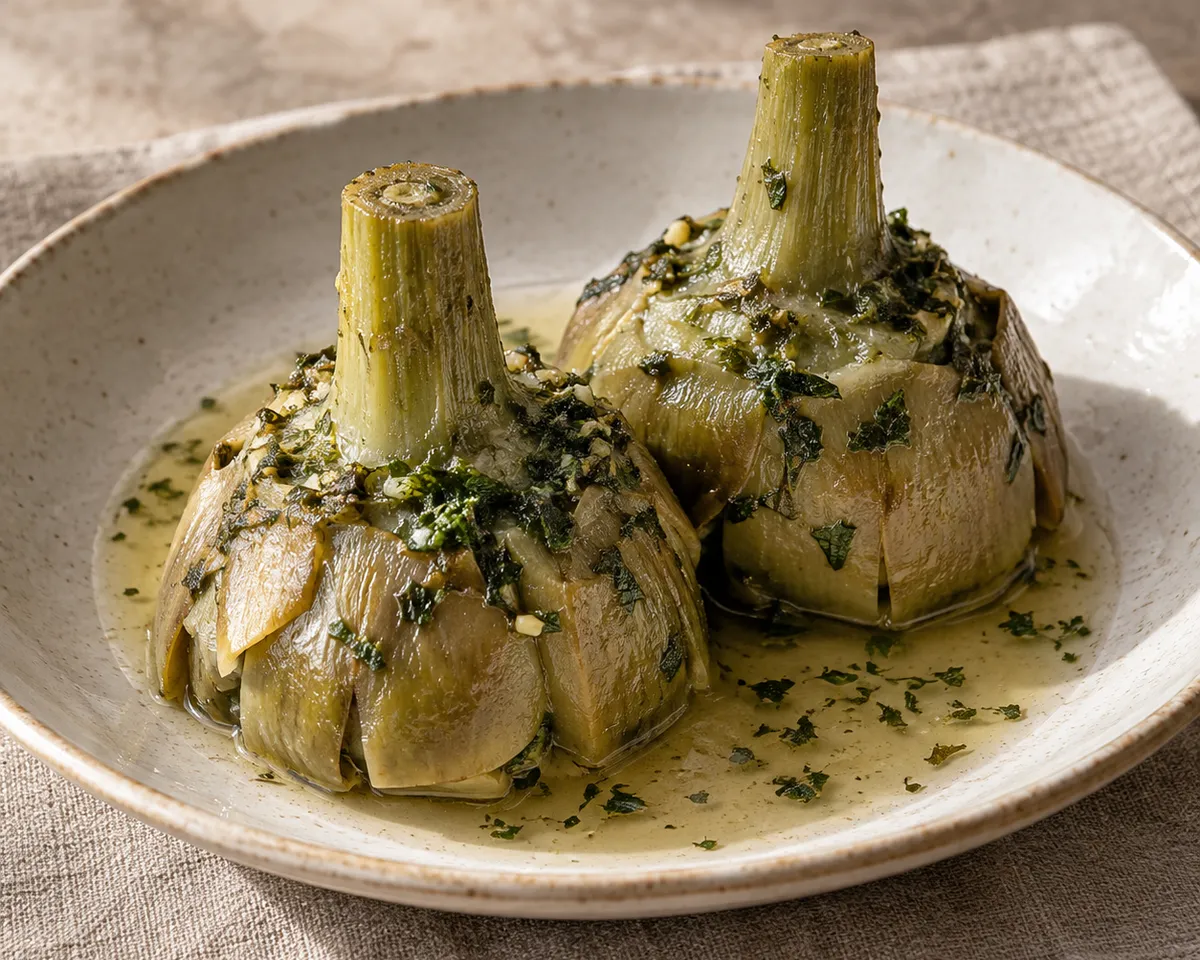
Carciofi alla romana
Roman artichokes braised with mentuccia
Rome has two famous ways of cooking an artichoke whole. The Jewish-style one opens into a crisp fried flower; alla romana remains tender, head down in a covered pot while herbs, garlic and olive oil perfume the heart. Its cooking juices are part of the pleasure, worth spooning over the finished vegetable.
The ideal artichoke is the Romanesco mammola or cimarolo: round, compact, nearly spineless, with a heart generous enough to stand up to close trimming. Mentuccia gives the braised artichokes their cool, wild fragrance. Ordinary mint has a different, more forceful scent and makes a different dish.
Some Roman versions tuck breadcrumbs into the center; others rely on herbs alone. This is the leaner herb-filled version. Trim generously and cook gently until a knife passes through the base with little resistance, so the whole artichoke can be eaten leaf by leaf rather than fought.
Ingredients
For the artichokes
- 4large, very fresh round artichokes, ideally mammole or cimaroli (Carciofo Romanesco del Lazio IGP; see note)
- 1lemon
- 2 clovesgarlic, finely chopped
- 15 gflat-leaf parsley leaves, finely chopped
- 8 gfresh mentuccia (nepitella) leaves, finely chopped (see note)
- 60 ml(¼ cup)extra-virgin olive oil
- 120 ml(½ cup)water, plus a little more if needed
- fine salt and freshly ground black pepper
Kitchen notes
- Romanesco artichokes
- Mammole are the large round, nearly spineless Romanesco type; cimaroli are prized central heads. Fresh Lazio IGP heads are rarely obtainable in the United States and are too perishable for practical individual online sourcing. A fresh, heavy, round globe artichoke is a workable home adaptation, though its leaves are coarser: remove more outer leaf, check carefully for a fuzzy choke and cook to tenderness rather than to the clock.
- Mentuccia
- Use lesser calamint (Clinopodium nepeta), also sold as nepitella or mentuccia. Common names vary, so check the botanical identity with a specialist grower or Italian market; it is distinct from spearmint and peppermint. The same herb dried is acceptable when fresh is unavailable, using about 2 g in place of the 8 g fresh leaves. Do not substitute common mint, which overwhelms the artichoke.
Method
Trim the artichokes
- Squeeze the lemon into a bowl of cold water. Pull away the tough dark outer leaves of each artichoke until you reach the pale tender leaves. Cut away about the upper third of the leaf tips, rounding the head as you work. Leave roughly 5–8 cm (2–3 in) of stem and peel its fibrous outside. Gently open the center and scoop out any fuzzy choke and sharp inner leaves without splitting the heart. Rub cut surfaces with the lemon half and hold the artichokes in the lemon water while you finish trimming.
Fill and arrange
- Mix the garlic, parsley and mentuccia with a generous pinch of salt and a few grinds of pepper. Drain the artichokes and shake out excess water. Open the leaves gently with your thumbs and work the herb mixture into each center and between the inner leaves. Stand the artichokes head down in a snug, heavy lidded pot, with the stems pointing up; tuck any trimmed tender stem pieces beside them. Pour in the olive oil and water. The liquid should come partway up the heads, not drown them.
Braise gently
- Bring the liquid to a quiet simmer, cover, and cook over low heat for about 25–35 minutes. Check once or twice that the pot has not dried out; add a splash of hot water if necessary. They are ready when a small knife slides easily into the base and the inner leaves pull away without resistance. If the juices are watery, lift out the artichokes and briefly reduce the liquid until it tastes concentrated. Serve warm, spooning the herb-scented juices over each one.