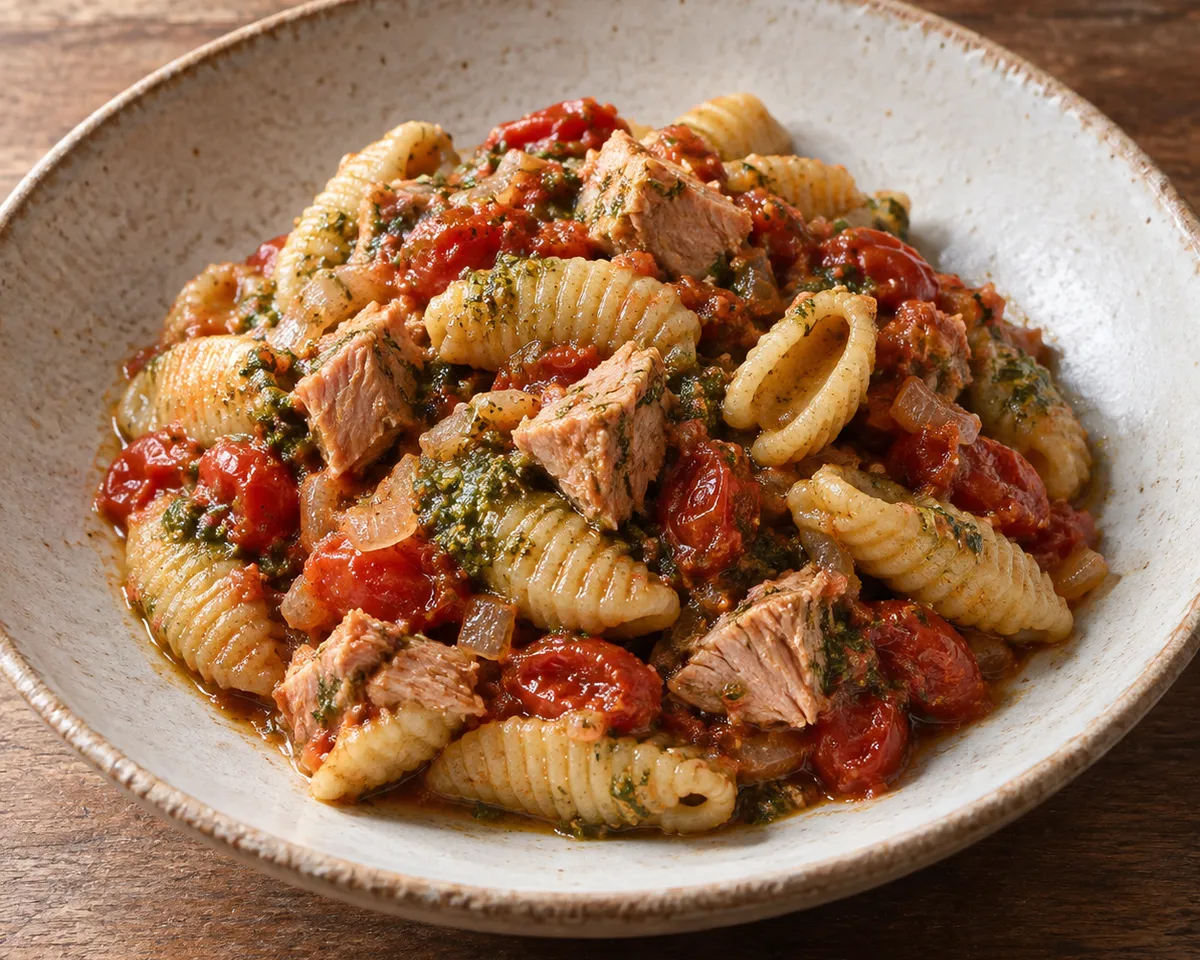
Cassulli alla carlofortina
Carloforte ridged pasta with tuna, tomato, and pesto
Cassulli look a little like generously sized Sardinian gnocchetti, but the comparison only gets you so far. Carloforte’s version is a fresh, eggless semolina pasta, ridged by hand so it can hold a loose, glossy sauce.
Tuna and tomato make the warm base; basil pesto arrives only after the heat is off. That last move keeps the basil bright and lets the pasta taste of both the sea and the herb garden instead of collapsing into a green cream sauce.
Cassulli belong to the Tabarchine cooking of Isola di San Pietro, where Ligurian habits and Sardinian ingredients became their own vocabulary.
Ingredients
For the cassulli
- 400 gfine durum-wheat semolina (semola rimacinata)
- 240 ml(1 cup)warm water
- 4 g(¾ tsp)fine salt
For the tuna and tomato sauce
- 45 ml(3 tbsp)extra-virgin olive oil
- 70 g (about ½ medium)yellow onion, finely chopped
- 300 gripe cherry or grape tomatoes, halved
- 250 g(about 9 oz)fresh tuna loin, cut into 2 cm (¾-inch) cubes
- fine salt
For the pesto
- 40 gfresh basil leaves
- 30 ml(2 tbsp)extra-virgin olive oil
- 27 gfinely grated Parmigiano Reggiano
- 13 gfinely grated Pecorino
- 17 gpine nuts
- 1small garlic clove, peeled
- 1small ice cube
To finish
- 35 gfinely grated Parmigiano Reggiano
Kitchen notes
- Cassulli
- Cassulli are Carloforte’s ridged, fresh semolina-and-water pasta: larger and plumper than malloreddus, and distinct from the island’s smooth curzétti. The method makes the local form at home rather than replacing it with another pasta shape.
- Tuna and pesto
- Carloforte cooks use both fresh tuna and preserved tuna pieces, with several pesto formulas. This recipe uses fresh tuna and a small batch of pesto Genovese. Choose a firm fresh tuna loin and add the pesto only after the pan leaves the heat.
Method
Make and rest the dough
- Put the semolina and salt in a wide bowl. Pour in most of the warm water, mixing first with a fork and then with your hands; add the last splash only if dry flour remains. Knead on an unfloured surface for 8–10 minutes, until the dough is firm, smooth, and no longer crumbly. Wrap and let rest for 30 minutes.
Shape the cassulli
- Cut the dough into four pieces and keep three covered. Roll one piece into a rope about as thick as your finger, then cut it into 1.5 cm (about ½-inch) pieces. Press each piece with your index and middle fingers across a ridged gnocchi board, drawing it toward you to make a plump, ridged shell. Dust lightly with semolina and spread on a tray. Repeat; the pieces need not be identical, but they should be close enough to cook together.
Build the tomato sauce
- Bring a large pot of well-salted water to a boil. At the same time, warm the olive oil in a broad skillet over low heat. Cook the onion with a pinch of salt until soft and translucent, about 8 minutes, without browning. Add the tomatoes and cook over medium heat until they slump and make a juicy sauce, 8–10 minutes; crush a few with the back of a spoon. Keep warm over the lowest heat.
Make the pesto
- While the sauce cooks, pulse the basil, olive oil, Parmigiano, Pecorino, pine nuts, garlic, and ice in a small food processor just until creamy. Scrape down the bowl as needed. It should make about 130 g of bright, loose pesto; stop before the basil warms or turns dull.
Boil, finish, and serve
- Cook the cassulli until tender but still resilient, 8–12 minutes depending on their size; taste one rather than relying on the clock. When the pasta has about 2 minutes left, add the tuna to the tomato sauce and cook just until the outside turns opaque while the centers remain tender. Reserve 240 ml (1 cup) cooking water, then transfer the pasta to the skillet. Toss briefly with enough cooking water to make the tomato-and-tuna sauce generous and fluid. Remove from the heat, fold in the pesto and Parmigiano, and serve immediately. The pesto should perfume the pasta, not cook in the pan.