Cinque e cinque
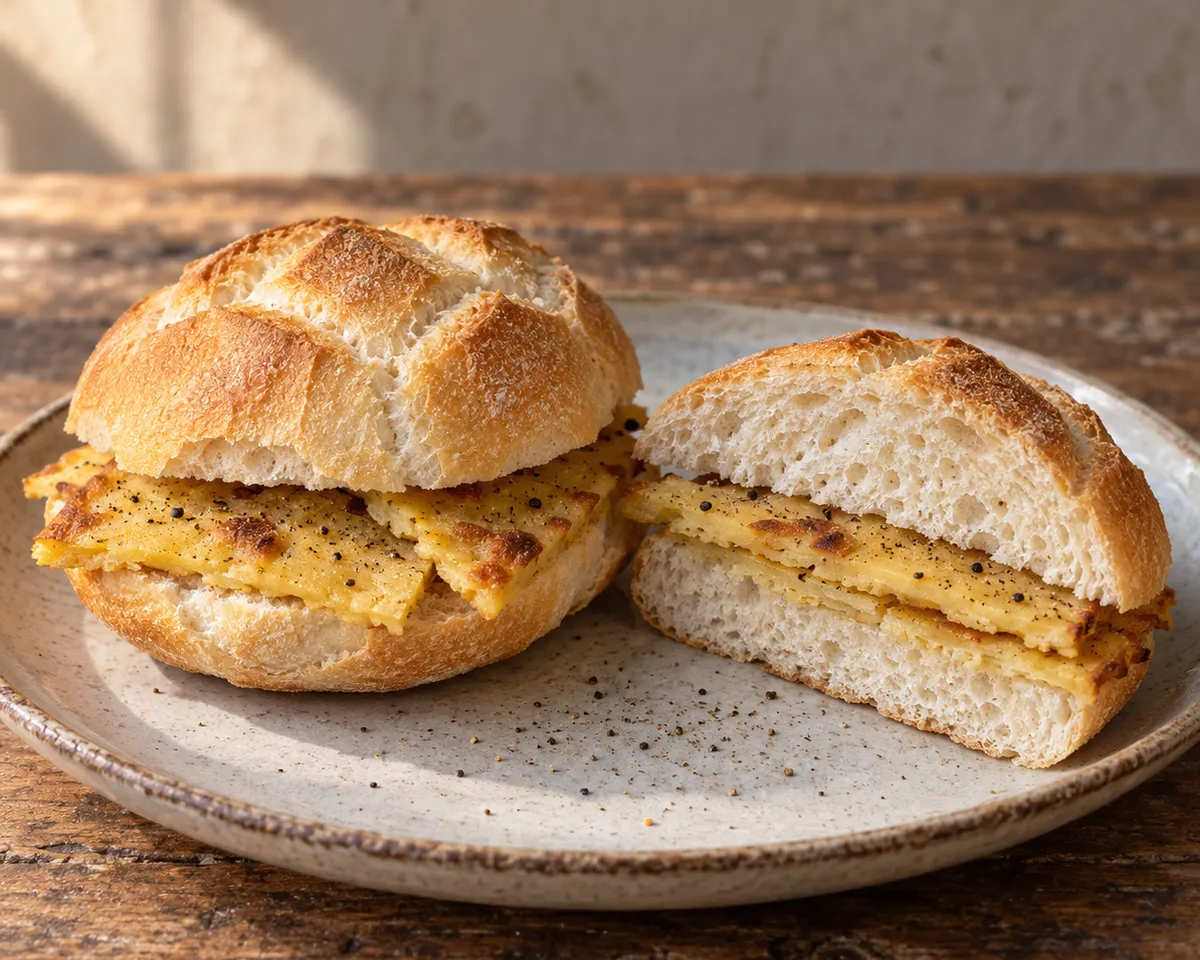
Livornese chickpea cake in a crisp roll
At a Livorno chickpea-cake shop, the chickpea torta is only half the order. The cook splits a small, salted francesino and slides in a hot wedge of torta: a thin cake, deeply golden at its edges and still soft at the center. Black pepper is the essential flourish.
The batter is simple: chickpea flour, water, salt, and generous olive oil. Its character comes from the long rest, the shallow oily pan, and fierce heat. A copper pan and wood-fired oven give the city version exceptionally browned edges; a shallow bare-metal pan in a hot home oven produces a browned base and a soft center.
The salted bread and black pepper set off the mild, earthy torta. Eat it while the chickpea cake is still hot and the crust is crackling.
Ingredients
For the torta di ceci
- 300 gchickpea flour, sifted if lumpy (see note)
- 800 gwater, at room temperature
- 8 gfine sea salt
- 60 g(about ¼ cup)extra-virgin olive oil, divided
To serve
- 4small salted crisp rolls, ideally francesini or rosette (see note)
- freshly ground black pepper
Kitchen notes
- Chickpea flour
- Use finely milled chickpea flour, also sold as besan, and check that it smells sweet and nutty rather than stale or bitter. This is flour from dried chickpeas, not canned chickpeas puréed with water; the latter cannot form the thin, set torta.
- The bread
- A Livornese cinque e cinque is made with a salted francesino (small French-style roll) or a soft round focaccina. A crisp Italian rosetta is the practical U.S. stand-in because it supplies the same salted, airy shell. Do not use unsalted Tuscan bread, soft sandwich rolls, or focaccia laden with toppings.
Method
Make and rest the batter
- Put the chickpea flour and salt in a large bowl. Whisk in about one-third of the water to make a smooth, thick paste, scraping the bottom and sides so no dry flour remains. Whisk in the remaining water gradually. Cover and leave at cool room temperature for 4–5 hours. Skim off any foam that forms, then whisk the batter again; it should pour freely and be completely smooth.
Heat the oven hard
- Heat the oven to 500°F (260°C), with racks in the lower and upper thirds. Use two plain aluminum or steel 12-inch (30 cm) pizza pans or shallow cake pans; avoid nonstick pans at this temperature. Shallow bare-metal pans help the thin batter brown in a home oven.
Bake the torta
- Stir 20 g of the olive oil into the rested batter. Divide the remaining 40 g oil between the room-temperature pans, tilting to coat the bases. Whisk the batter once more and divide it between the pans; it should make a shallow layer, about 7–8 mm (just over ¼ inch) deep. Bake until the surface is set, the edges are dark golden and blistered, and the underside releases in one flexible sheet, 18–24 minutes. If the top needs more color, move the pans to the upper rack or broil briefly, watching constantly. Do not bake it pale or thick.
Build the cinque e cinque
- Turn the torta out onto a board while hot and divide the two rounds into four equal portions. Cut each portion into pieces that fit the rolls. Split the rolls horizontally and tuck a portion of torta into each one, overlapping the pieces as needed. Grind black pepper generously over the chickpea cake, close the rolls, and eat at once. The bread should remain crisp enough to hold the filling while the torta stays soft and hot.