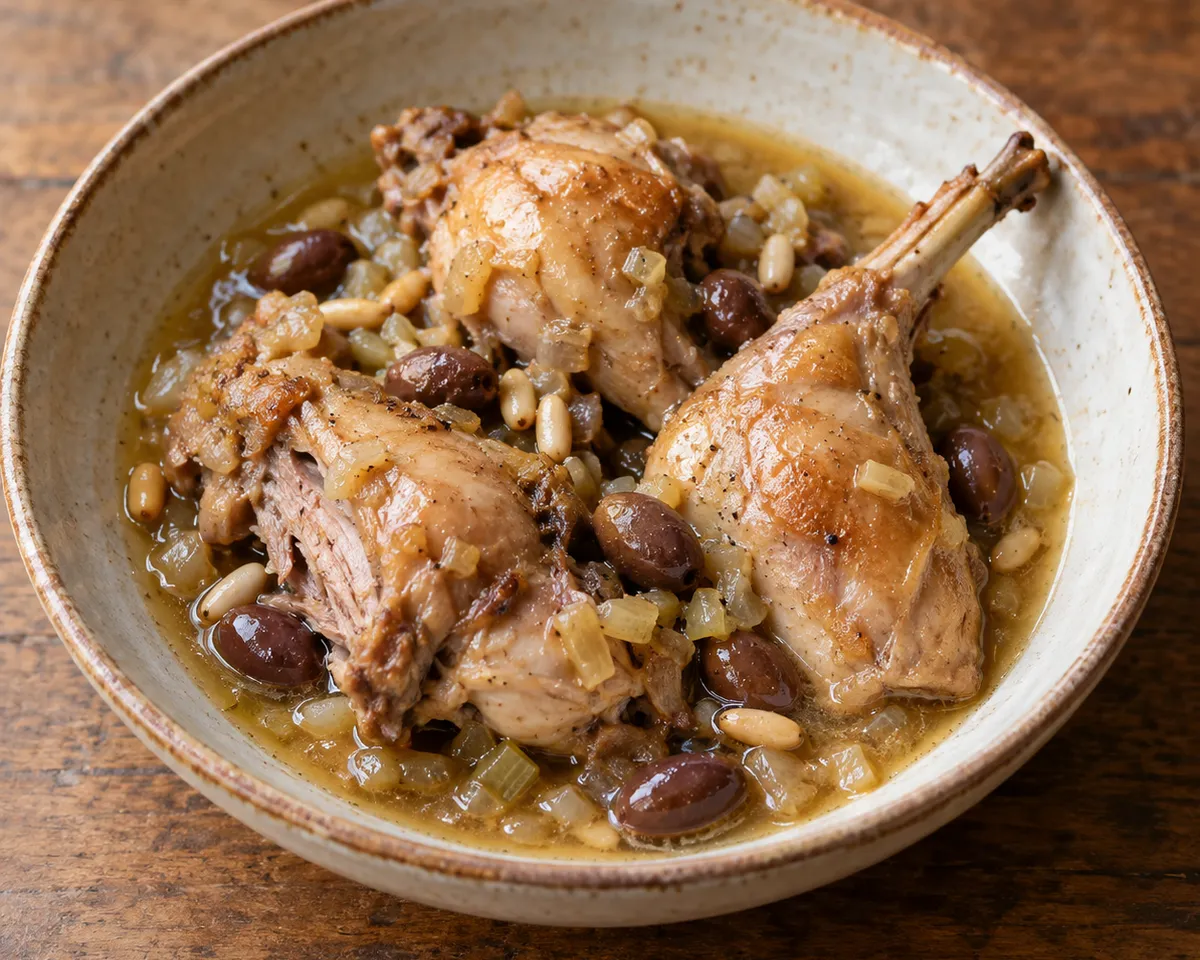
Coniglio alla ligure
Rabbit braised with Taggiasca olives and pine nuts
Small, dark Taggiasca olives and pine nuts give coniglio alla ligure its sweet-bitter edge. The rabbit takes on the fragrance of rosemary and wine as it cooks, and the olives stay whole in the glossy juices.
Wine choice varies across Liguria: some cooks use red, others favor the local white Pigato. White wine makes a light braising liquid, with no tomato to thicken or sweeten the sauce.
Cook the rabbit on the bone until the leg meat yields readily, then reduce the cooking juices to a light, glossy coating. Bread is welcome for the last of it.
Ingredients
For the rabbit
- 1.5 kg(about 3⅓ lb)young rabbit, jointed into serving pieces (see note)
- 60 ml(¼ cup)extra-virgin olive oil
- 1 mediumonion, finely chopped
- ½celery rib, finely chopped
- 2garlic cloves, lightly crushed
- 2rosemary sprigs
- 1bay leaf
- 30 gpine nuts
- 300 ml(1¼ cups)dry white wine, preferably Pigato (see note)
- 120 gsmall Taggiasca olives, preferably brined and pitted (see note)
- hot light rabbit stock or water, as needed (see note)
- fine salt
Kitchen notes
- Rabbit
- Ask a butcher to joint a young rabbit and keep the pieces bone-in. Its lean meat needs a quiet, moist braise; chicken changes the dish rather than substituting for it.
- Taggiasca olives
- These small Ligurian olives bring a distinctive delicate, lightly bitter taste. Look for brined whole or pitted Taggiasca olives at a specialty Italian market or online; black canned olives are not equivalent. If using whole olives, warn diners about the pits.
- Pigato and cooking liquid
- Pigato is a dry Ligurian white wine. A clean, dry, unoaked white wine is suitable if Pigato is unavailable. Broth made from the rabbit's head and liver gives a fuller sauce; light rabbit stock or hot water can also moisten the braise.
Method
Prepare the rabbit
- Pat the rabbit pieces dry and season them lightly with salt. Check the leg and shoulder pieces for any visible scent glands and trim them away. Drain the olives; if they are very salty, rinse briefly and drain again.
Soften the aromatics
- Warm the olive oil in a wide, heavy casserole over medium heat. Add the onion, celery, garlic, rosemary, bay, and pine nuts. Cook gently for 6–8 minutes, stirring, until the vegetables soften and the pine nuts begin to color; do not let the garlic burn.
Color the rabbit and add wine
- Raise the heat to medium-high and add the rabbit in a single layer, working in batches if needed. Turn the pieces until lightly golden on several sides, about 8–10 minutes. Return all the rabbit to the casserole, pour in the wine, and simmer uncovered until its sharp alcoholic smell fades and the liquid reduces by roughly half, about 5–8 minutes.
Braise gently
- Add just enough hot stock or water to come about one-third of the way up the rabbit. Cover and keep at a quiet simmer, turning the pieces occasionally, for about 45 minutes. Add the olives and continue cooking, partly covered, for 15–30 minutes more. The leg meat should yield readily when nudged from the bone; add small splashes of hot liquid if the pan becomes dry before it is tender.
Finish the sauce
- Transfer the rabbit to a warm platter. Discard the rosemary stems and bay leaf. If the juices are thin, boil them briefly until they lightly coat a spoon, then taste for salt; the olives may have supplied plenty. Spoon the olives, pine nuts, and sauce over the rabbit and serve warm.