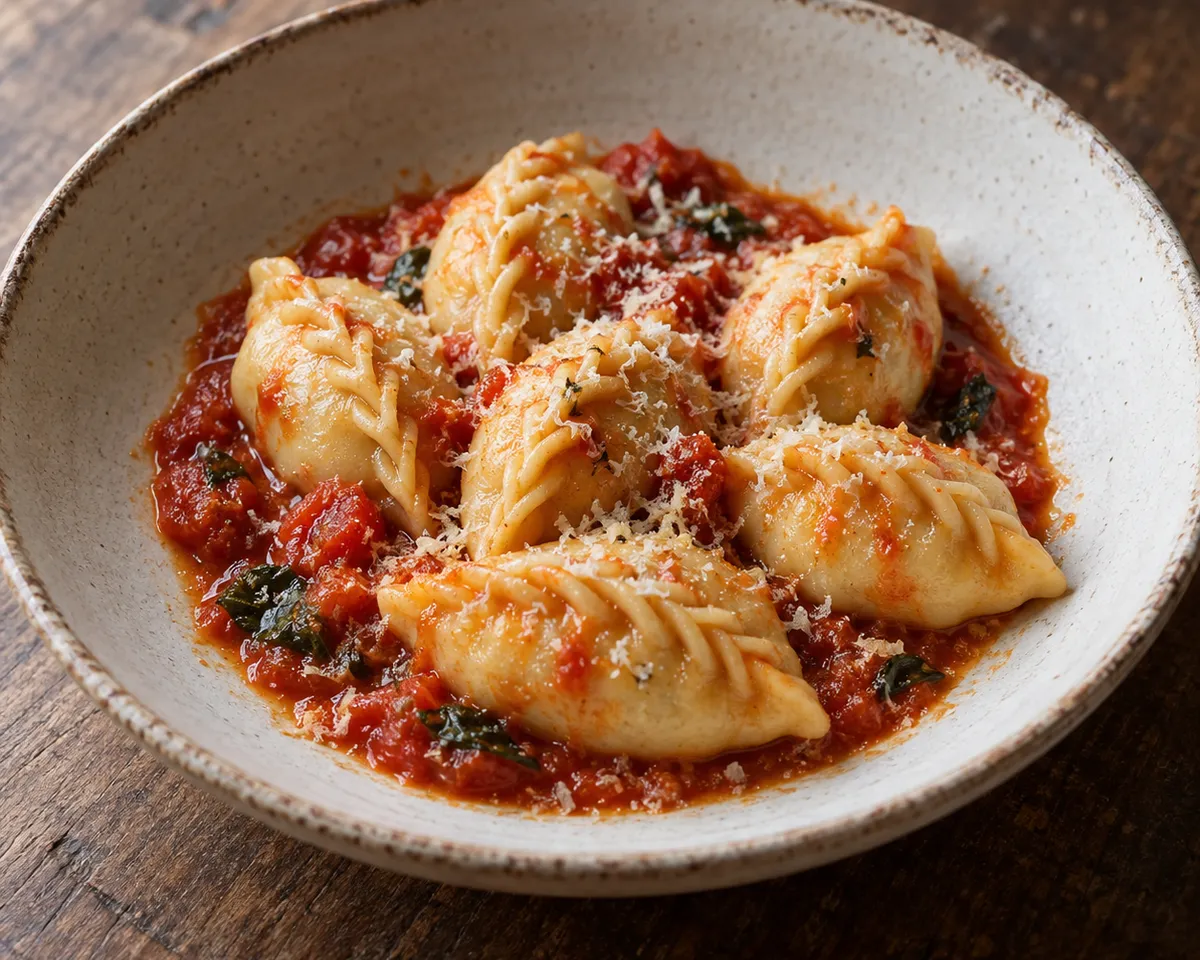
Culurgionis
Ogliastra's wheat-ear pasta with potato, pecorino, and mint
Each culurgione is stitched shut. In Ogliastra, a cook pinches the edges of a round of dough from alternating sides until a raised seam runs along the back like an ear of wheat: sa spighitta. The gesture is quick in practiced hands. The first one at home may be less graceful, but it should still be sealed.
Inside, warm potato takes up aged Pecorino Sardo and mint. The cheese brings salt and a little bite, the herb cuts through it, and garlic passes through the olive oil rather than sitting in chunks. Across Ogliastra the balance of these few ingredients changes from village to village, but the filling keeps its clear contrasts.
A little tomato and basil dress the parcels without burying their shape. Lift them out when the dough is tender, shortly after they float. The plait deserves to arrive intact.
Ingredients
For the dough
- 220 gsemola rimacinata (finely milled durum semolina; see note)
- 80 gItalian tipo 00 flour
- 150 g(about ⅔ cup)water, plus a little more only if needed
- 15 ml(1 tbsp)extra-virgin olive oil
- 3 g(about ½ tsp)fine sea salt
For the filling
- 600 gyellow-fleshed potatoes, weighed before cooking
- 150 gPecorino Sardo Maturo, finely grated (see note)
- 30 ml(2 tbsp)extra-virgin olive oil
- 1garlic clove, lightly crushed
- 12–15fresh mint leaves, finely chopped
- fine sea salt, only if needed
For the tomato dressing
- 400 gplain tomato passata
- 20 ml(1 tbsp plus 1 tsp)extra-virgin olive oil
- 1garlic clove, lightly crushed
- 4–6fresh basil leaves
- 30 gPecorino Sardo Maturo, finely grated, to serve
- fine sea salt
Kitchen notes
- Pecorino Sardo Maturo
- Use the aged Sardinian sheep's-milk cheese, available from specialty Italian shops and U.S. online suppliers. Pecorino Romano is usually sharper and saltier, and should not quietly replace it; taste the filling before adding salt.
- Semola rimacinata
- This is finely remilled durum-wheat semolina for pasta dough, not coarse semolina or all-purpose flour. The small amount of tipo 00 soft-wheat flour helps the sheet bend for the hand-plaited seam.
- Tomato passata
- Use plain strained tomato, not seasoned or sweetened American pasta sauce. The thin coating lets the potato, cheese, and mint remain the center of the dish.
Method
Make the filling
- Boil the potatoes in their skins until a skewer slips through the centers. Drain, peel while warm, and pass through a ricer or mash very finely; let the steam escape. Warm the 30 ml olive oil with the crushed garlic over low heat for 2–3 minutes without browning it, then remove the garlic. Fold the scented oil, grated pecorino, and mint into the potatoes. Taste before adding salt: the cheese may provide enough. The filling should be firm enough to hold a small oval mound. Cool, then refrigerate for at least 1 hour.
Knead and rest the dough
- Mix the semola rimacinata, tipo 00 flour, and salt. Work in the water and 15 ml olive oil, then knead for 8–10 minutes until smooth and elastic. Add water a teaspoon at a time only if dry flour will not incorporate; the dough should be firm rather than sticky. Cover tightly and rest for 45 minutes.
Make a simple sauce
- Warm the 20 ml olive oil and crushed garlic in a small saucepan over low heat until fragrant. Add the passata and a small pinch of salt. Simmer gently for 15–20 minutes, until the raw tomato taste has gone but the sauce remains loose. Remove the garlic, tear in the basil, and keep warm.
Shape the wheat-ear seam
- Divide the dough and keep unused pieces covered. Roll a piece to about 1–1.5 mm thick, thin enough to bend without cracking but not translucent, and cut 7–8 cm (about 3-inch) rounds. Set about 15–18 g of filling in a compact oval at the center of each. Hold a round in one palm and bring the lower edges together around the filling. Pinch a small flap from the left over the center seam, then one from the right over it; continue alternating, overlapping each pinch as you work toward the top. Make roughly ten or more close pinches and press the last bit shut. Keep a clear border so the seam contains dough, not filling. Set each parcel on a semolina-dusted tray and repeat, rerolling the scraps once. Expect about 40 pieces; the exact number depends on the thickness of the dough and size of the rounds.
Cook and dress
- Bring a broad pot of water to a gentle boil and salt it. Lower in the culurgionis in batches so they can move freely. Once they rise, simmer about 1 minute more, then lift one out and taste its seam; the dough should be tender and the filling hot, about 4–6 minutes total. Lift the rest with a spider or slotted spoon rather than pouring them into a colander. Spoon a little warm tomato sauce onto each plate, add the culurgionis, and finish with another small spoonful of sauce and the reserved pecorino. Serve immediately.