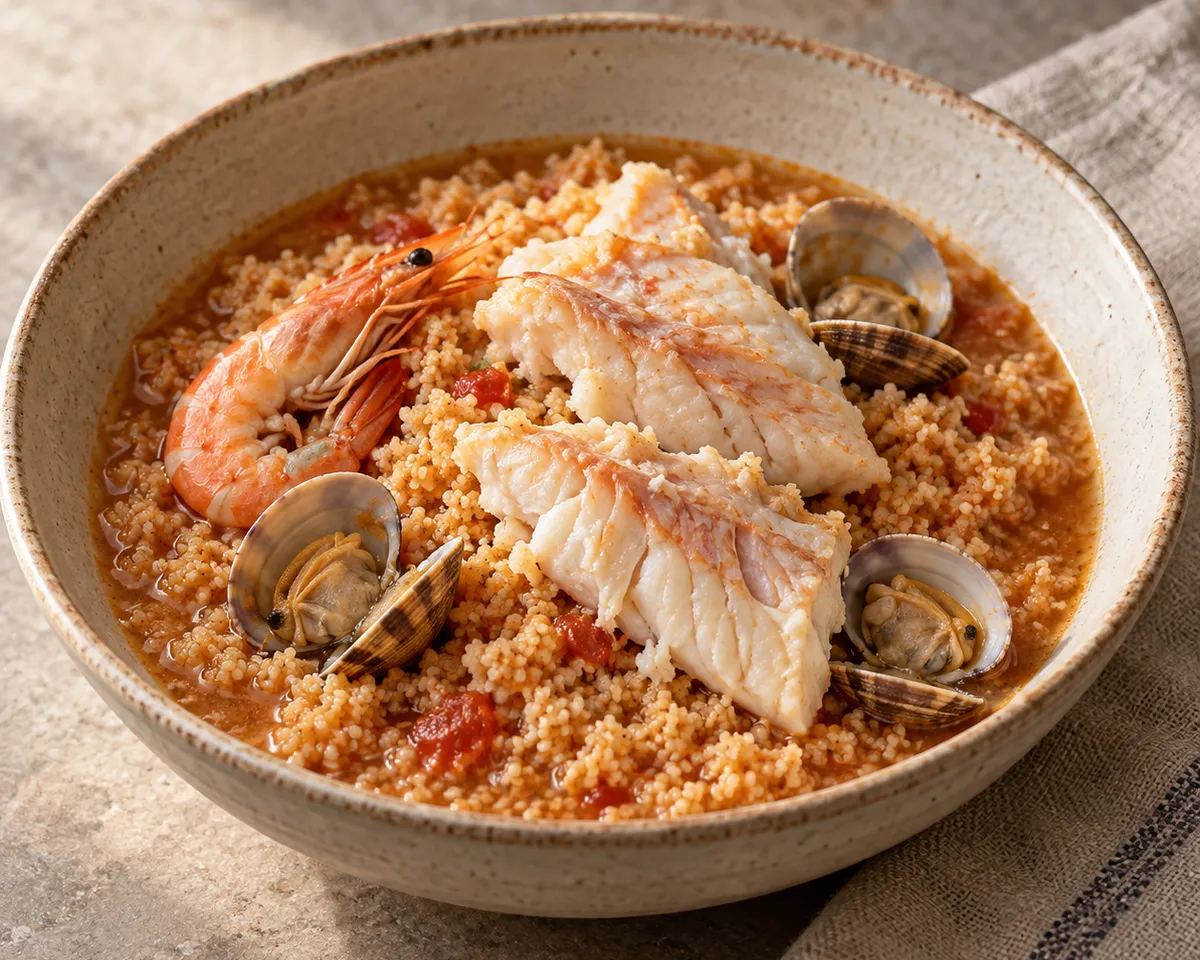
Cùscusu trapanese di pesce
Hand-rolled couscous with Trapani fish broth
Before it is steamed, Trapani's cùscusu is made grain by grain. The cook dampens semolina a little at a time and moves their fingers in circles until separate grains gather into tiny beads. This hand-rolling, called incocciatura, forms the grains that will take up the fish broth.
The old Maghrebi technique found a lasting Sicilian life on the coast between Trapani, Marsala, and San Vito. Its route into western Sicily reflects several centuries of contact, including later maritime ties. Here the steamed semolina takes ghiotta, the perfumed fish broth of the Trapanese sea.
The broth has tomato, almond, and garlic, but it should still taste first of fish. Spoon extra broth around the mound at the table, where the grains continue absorbing it around the clams, shrimp, and tender fish.
Ingredients
For the handmade cùscusu
- 280 gfine, uncooked durum-wheat semolina for handmade couscous (semola rimacinata; see note)
- 180 ml(¾ cup)warm water mixed with ½ tsp fine salt, for incocciatura
- 40 gblanched almonds, finely ground
- 35 gyellow onion, very finely minced
- 20 ml(4 tsp)extra-virgin olive oil
For the fish broth and service
- 600 gmixed whole bony soup fish, scaled and gutted but heads retained—preferably a mix including red scorpionfish, red gurnard, bogue, or John Dory (see note)
- 150 gred gurnard fillet, skin removed and cut into 4 cm (1½-inch) pieces
- 100 glarge shrimp or langoustines, shell-on
- 120 gsmall hard-shell clams, scrubbed
- 80 gyellow onion, roughly chopped
- 30 ggarlic cloves, peeled
- 60 gblanched almonds
- 30 g(about 2 tbsp)tomato paste
- 20 g(about ½ cup)flat-leaf parsley leaves and tender stems
- 80 ml(⅓ cup)extra-virgin olive oil
- 1.5 L(6¼ cups)cold water
- fine salt
For the steaming water
- 1small cinnamon stick
- 3bay leaves
- 1whole clove
- 1lemon, cut into wide strips of peel
Kitchen notes
- Semola rimacinata
- Buy fine, uncooked durum-wheat semolina labeled for pasta, bread, or handmade couscous. It is raw milled wheat, not the yellow, already-steamed instant couscous sold in boxes. The hand-formed grains, steam, and rest are the identity of this recipe; no shortcut substitution is offered.
- Fish for the broth
- Cùscusu takes a mixed fish broth, traditionally built from locally available bony fish such as scorpionfish, gurnard, bogue, and John Dory. Ask a good fishmonger for two or more firm, flavorful bony soup fish, scaled and gutted with the heads left on. Salmon, tuna, and a single mild fillet will not give the same broth.
- Cuscussiera
- A traditional cuscussiera or perforated pignata gives the best steam flow. A tightly fitted metal colander over a pot, sealed around the join with a damp cotton towel, directs steam through the grains in a home kitchen. Do not use a sealed electric rice cooker or microwave.
Method
Hand-roll the semolina
- Put the semolina in a broad, shallow bowl. Dip the fingertips of one hand in the salted water and work in small circles while the other hand turns the bowl. Add only drops at a time: the aim is many separate, damp grains about the size of coarse sand, not a wet mass or dough. Work for 12–15 minutes, breaking any large clumps between your fingers. Spread the grains on a clean kitchen towel for 15 minutes, return them to the bowl, repeat the light sprinkling and circular rubbing once, then let them rest for 30 minutes. You will not necessarily use all the water.
Season and set up the steamer
- Gently toss the rested grains with the ground almonds, minced onion, and 20 ml olive oil, taking care not to crush the newly formed beads. Bring a few centimeters of water to a steady simmer in a high-sided pot; add the cinnamon, bay, clove, and lemon peel to the steaming water. Set a metal colander or steamer insert over it so the base does not touch the water; it must fit closely. Line the join with a clean damp cotton towel to keep the steam moving through the grains, as a home version of a cuscussiera. Heap in the semolina loosely and cover the top with a clean lid or another towel.
Make the ghiotta
- While the cùscusu steams, pound or blend the 60 g almonds, chopped onion, garlic, parsley, and 80 ml olive oil into a coarse paste. Warm it in a wide pot over medium-low heat for 5–6 minutes, until fragrant but not browned. Stir in the tomato paste and cook for 2 minutes. Add the whole soup fish and the cold water. Bring just to a simmer and cook gently for 25–30 minutes. Strain the broth through a fine sieve into a clean pot, pressing the solids lightly. You need at least 1 L (4¼ cups) strained broth; if needed, add a little boiling water to reach that amount. Taste and salt it: it should be concentrated and aromatic, not a thick sauce.
Steam the cùscusu
- Steam the cùscusu for at least 90 minutes from the first steady steam, checking the pot's water level and replenishing it with boiling water as needed. The finished grains should be tender and softly swollen but still separate, with no raw grit at the center. Keep the strained broth hot while the grains steam.
Moisten, rest, and finish the seafood
- Tip the steamed cùscusu into a broad serving bowl. Ladle in about 500 ml (2 cups) of the hot broth in three additions, turning the grains with two forks after each addition and waiting until it is mostly absorbed. Reserve at least 400 ml (about 1⅔ cups) broth for the seafood and table. The grains should be moist and fragrant but not soupy. Cover loosely and rest for about 90 minutes. In the final 5 minutes, bring the reserved broth to a gentle simmer. Add the gurnard and shrimp and cook for 2 minutes; add the clams, cover, and cook until they open, 2–4 minutes more. Discard any clams that stay closed. Serve the cùscusu immediately with the gurnard, shrimp, and clams on top, passing the remaining hot broth at the table.