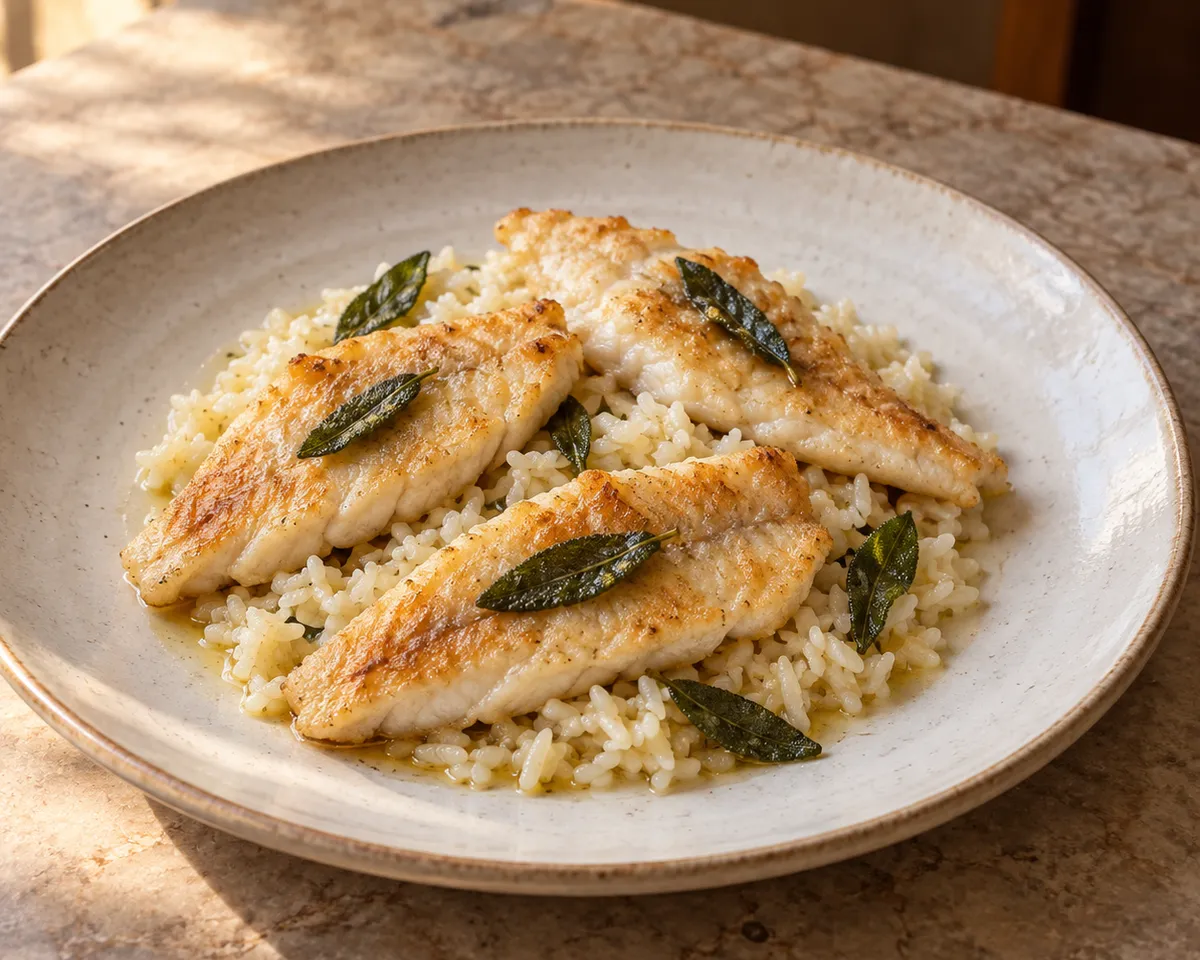
Filetti di pesce persico (al burro e salvia)
Lake Como perch fillets in butter and sage
On Lake Como, perch fillets are served over buttery rice. European perch is lightly floured, fried in butter with sage, and set across a mound of riso in cagnone: rice boiled, then turned in the same Lombard language of butter, sage, and grated cheese.
The fish stays sweet and delicate beneath its thin golden coat; the rice is tender and glossy rather than loose or soupy. Sage leaves perfume the butter that seasons both parts of the plate.
Many contemporary menus call the rice a risotto, and that version is now common around the lake. In the older Lake Como presentation, the rice is boiled and finished in butter and sage, with the fillets laid on top while their edges are still crisp.
Ingredients
For the riso in cagnone
- 350 gCarnaroli rice
- 50 gunsalted butter
- 6small fresh sage leaves
- 60 gfinely grated Grana Padano
- fine salt
For the perch
- 600 g(about 1⅓ lb)skinless European perch (Perca fluviatilis) fillets, pin bones removed (see note)
- 70 g(about ½ cup)all-purpose flour, for a light dredge
- 100 gunsalted butter
- 12small fresh sage leaves
- fine salt
Kitchen notes
- European perch (Perca fluviatilis)
- This is the Lake Como fish called pesce persico or persico reale. Ask for the scientific name when buying fillets: the generic market name “perch” can also mean Nile perch, pikeperch, or an American species. European perch has many fine bones, so ask the fishmonger to remove the pin bones. Do not substitute a different fish in this regional recipe; seek frozen or fresh European perch through a specialty fishmonger if it is not available locally.
- Riso in cagnone
- The older Lake Como rice accompaniment is boiled and then tossed with butter, sage, and grated cheese. It has separate, glossy grains instead of risotto's flowing sauce. Carnaroli is a sturdy Italian rice that stays defined through boiling and the final toss.
- Grana Padano
- Use a wedge of Grana Padano and grate it finely yourself. It gives the rice a savory, dry finish; pre-grated shelf-stable cheese often contains anti-caking agents and will not melt as cleanly.
Method
Boil the rice
- Bring a large pot of well-salted water to a steady boil. Add the Carnaroli and cook until the grains are tender with a small bite at the center, usually 15–18 minutes; begin tasting before the package time. The later toss in butter is brief and will not cook an underdone grain. Drain thoroughly. Do not rinse it.
Make the riso in cagnone
- While the rice cooks, melt the 50 g butter in a broad skillet over low heat with the 6 sage leaves. Let the sage perfume the butter and turn crisp, but do not let the butter darken. Add the drained rice and toss gently until every grain is glossed. Remove from the heat, fold in the Grana Padano, and taste for salt. Cover loosely to keep warm while you fry the fish; the rice should be separate and buttery, not the flowing consistency of risotto.
Flour the fish just before frying
- Pat the perch dry and season it lightly with salt. Spread the flour on a plate and coat the fillets one at a time, then shake each one well: the flour should make a nearly transparent veil, not a thick crust. Arrange the fillets on a dry plate in a single layer.
Fry in butter and sage
- Melt the remaining 100 g butter in a wide skillet over medium heat. When its foam becomes fine and quiets, add the 12 sage leaves; they should sizzle and scent the butter without blackening. Fry the fillets in batches, leaving space around each one, until their edges are golden and the flesh separates in moist, opaque flakes, about 3–4 minutes total for thin fillets. Turn them carefully once. Move the cooked fillets to a warm plate and repeat, adjusting the heat if the butter threatens to burn.
Plate immediately
- Divide the riso in cagnone among warm plates and lay the hot fillets across it. Spoon over the sage butter from the skillet and scatter the fried sage leaves on top. Serve immediately, while the flour coating still has a delicate crunch.