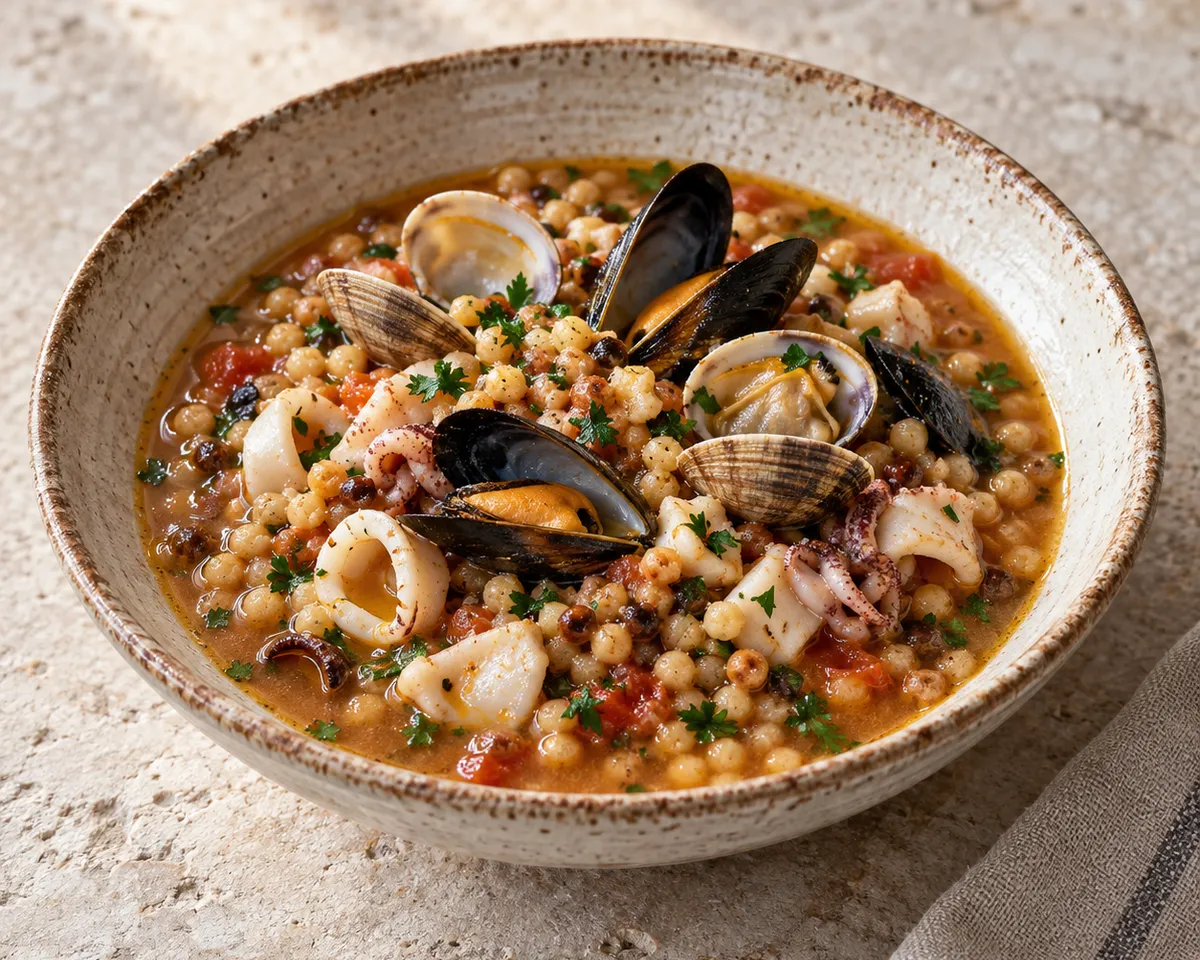
Fregola ai frutti di mare
Cagliari toasted pasta pearls with coastal seafood
Fregola is made of irregular toasted pellets of durum-wheat pasta, each one built to catch broth in its rough little crevices. Along the Cagliari coast, their defining encounter with the sea is fregula cun cocciula: clams opened with garlic, their briny liquor strained and returned to the pot.
Fregola ai frutti di mare takes that clam-broth logic outward, adding mussels, squid, and cuttlefish while keeping the pasta and its liquid at the center. The seafood is cooked in stages, then folded back into a loose, tomato-tinted broth where the toasted pearls remain distinct and spoonable.
A good bowl should move when shaken. The tomato is present but not dominant, the shellfish tastes of itself, and the sweetness of the squid arrives before the garlic does.
Ingredients
For the seafood and broth
- 500 g(1.1 lb)small live hard-shell clams, such as Manila or littleneck clams (see note)
- 500 g(1.1 lb)live mussels, scrubbed and debearded
- 250 g(9 oz)cleaned squid bodies and tentacles, cut into bite-size pieces
- 250 g(9 oz)cleaned cuttlefish, cut into bite-size pieces
- 900 ml(3¾ cups)light, unsalted fish broth or stock, kept hot (see note)
- 45 ml(3 tbsp)extra-virgin olive oil
- 2garlic cloves, finely chopped
- 300 gplain tomato passata
- 10 g(about ¼ cup)flat-leaf parsley leaves, finely chopped
For the pasta
- 250 gmedium-grain toasted Sardinian fregola (fregula; see note)
- fine sea salt, only if needed after tasting
- freshly ground black pepper
Kitchen notes
- Fregola (fregula)
- Use toasted Sardinian durum-wheat pasta pearls, ideally medium grain. Fregola is made from semolina and water, then dried and toasted; it is not precooked couscous, Israeli couscous, or round pasta such as acini di pepe. The genuine pasta's toast and irregular grains are structural to the dish.
- Clams and arselle
- The Cagliari clam base is traditionally made with arselle, also called cocciule in local usage. That regional name is not a reliable label for one U.S. commercial species, so buy fresh, live small hard-shell clams such as Manila or littleneck clams. Do not use canned clams: their liquor is too processed and their texture cannot stand in for freshly opened shellfish.
- Fish broth
- Use a light, unsalted broth made from white fish bones or a clean-tasting purchased fish stock. It extends the strained shellfish liquor without masking it. Avoid a dark shellfish bisque, a creamy seafood stock, or stock seasoned with fennel, wine, or saffron; those turn this focused coastal broth into another dish.
Method
Purge and open the shellfish
- Discard clams or mussels with cracked shells and any that remain open when tapped. If the seller has not already purged the clams, soak them in cold salted water for 30–60 minutes, then rinse well. Heat 1 tablespoon of the olive oil in a wide heavy pot over medium-high heat, add half the garlic, and stir only until fragrant. Add the clams and mussels, cover, and cook until they open, 3–5 minutes, shaking the pot once or twice. Lift out the opened shellfish as they are ready and discard any that stay shut.
Make a clean seafood broth
- Pour the shellfish liquid through a very fine sieve lined with damp paper towel or cheesecloth into a measuring jug; sand hides at the bottom, so leave the last cloudy spoonful behind. When cool enough to handle, remove most of the clams and mussels from their shells, reserving 8 shell-on pieces for the bowls. Keep the shelled seafood and reserved shellfish covered in the refrigerator. Mix the strained liquid with the hot fish broth and keep it at a bare simmer.
Cook the fregola in the broth
- In the wiped pot, warm the remaining 2 tablespoons of oil over medium heat. Add the remaining garlic and cook without browning for about 30 seconds. Add the cuttlefish and cook for about 2 minutes, until it turns opaque and just begins to curl at the edges. Add the squid and cook for 1 minute more, until opaque but still tender, then transfer both to the shellfish so they do not toughen. Add the passata to the pot and cook for 5 minutes, until it loses its raw edge. Stir in the fregola, then add enough hot seafood broth to cover it generously. Keep it at a lively simmer, stirring often and adding more broth as the pearls absorb it, as you would a risotto. Begin tasting at 12 minutes; medium fregola is usually tender with a slight bite in 15–17 minutes, but follow the package if it specifies a longer cooking time.
Finish loose, not dry
- When the fregola is tender, fold in the shelled clams and mussels, squid, cuttlefish, parsley, pepper, and enough remaining broth to make a loose, spoonable consistency. Warm only until the seafood is hot. Taste before adding salt: the shellfish liquor is often sufficient. Divide among warm shallow bowls, crown each with the reserved shell-on seafood, and serve immediately. It should settle and spread slightly on the plate rather than stand in a dry mound.