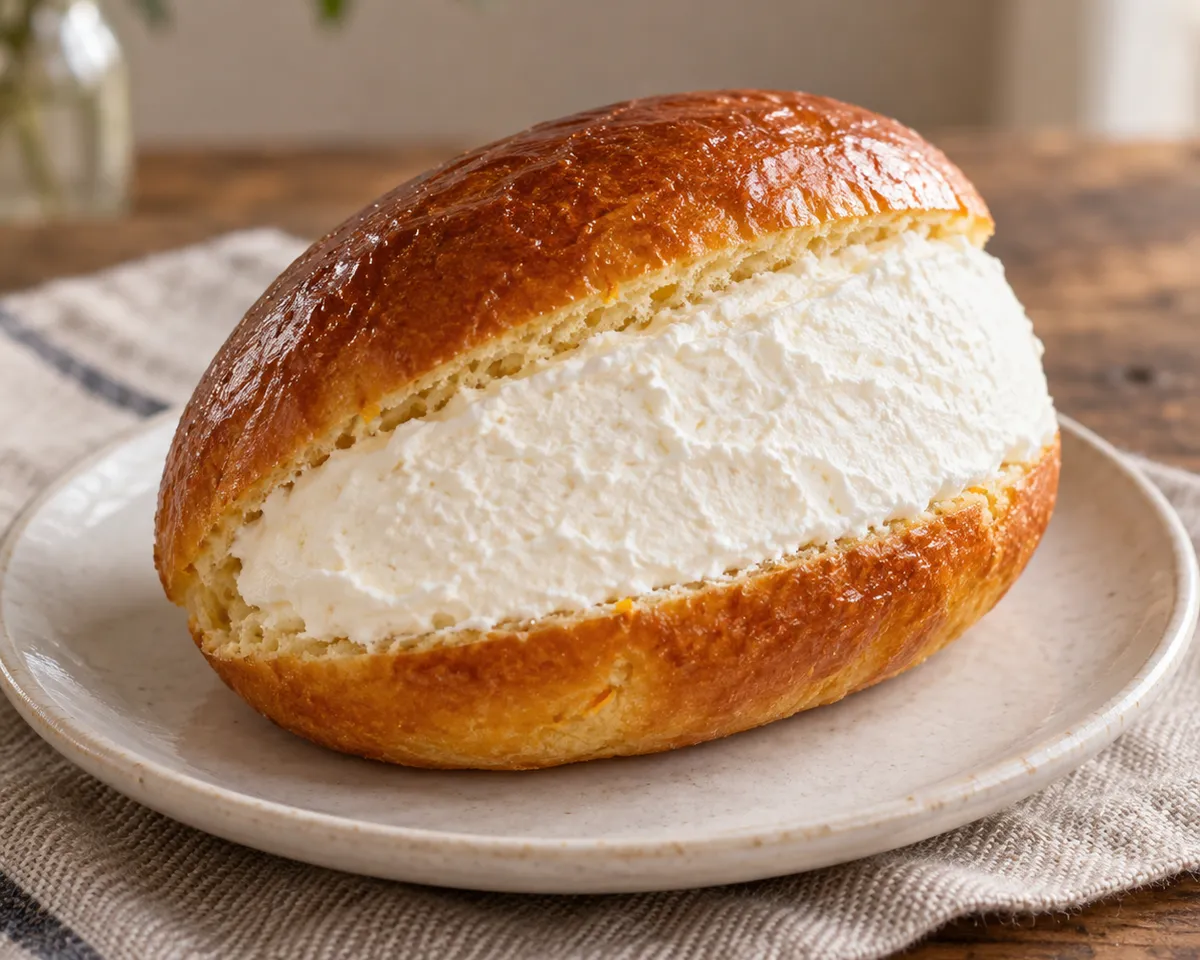
Maritozzo con la panna
Roman cream-filled sweet bun
A Roman maritozzo with cream is not delicate about its proportions. The bun is cut almost through its length, then packed with a cool white wall of panna and shaved level with a spatula. You are meant to leave the bar with a little cream on your nose.
The older maritozzo was a Lenten sweet bread, often flecked with raisins, pine nuts and candied peel. The version in Rome’s pastry cases came later: a plain, softly sweet, glazed bun filled with fresh cream. The light dough has a gentle orange perfume and enough structure to hold that generous filling.
The glazed bun supplies the sugar. The unsweetened filling stays cool and fresh against its sticky crust, with no custard or fruit to interrupt the cream.
Ingredients
For the buns
- 500 gstrong bread flour, about 12–13% protein
- 180 ml(¾ cup)whole milk, divided
- 12 g fresh yeast or 4 g instant yeastbaker’s yeast
- 110 glarge eggs, about 2, at room temperature
- 80 ggranulated sugar
- 15 g(2 tsp)mild honey
- 1unwaxed orange, finely grated zest only
- 8 g(1¼ tsp)fine salt
- 75 gunsalted butter, very soft
For the glaze and filling
- 1egg yolk
- 15 ml(1 tbsp)whole milk
- 50 g(4 tbsp)granulated sugar
- 50 ml(3 tbsp plus 1 tsp)water
- 500 g(about 2 cups)cold heavy cream, at least 35% milk fat (see note)
Kitchen notes
- Strong bread flour
- Use flour with enough protein to support a dough enriched with eggs, butter, milk and sugar. Italian recipes often specify farina 0 or a strong Manitoba-style flour; ordinary all-purpose flour can make the buns spread and bake compact.
- Heavy cream
- Choose dairy heavy cream with at least 35% milk fat, well chilled. The filling is freshly whipped cream, without custard, canned topping, or stabilizers. Leave it unsweetened; the bun and syrup supply the sugar.
- Fresh yeast
- Use 12 g fresh compressed yeast or 4 g instant yeast, not both.
Method
Make the sponge
- Warm 100 ml of the milk only until barely tepid. Stir in the yeast and 150 g of the flour until no dry flour remains. Cover and leave in a warm spot until doubled and visibly bubbly, about 1 hour. If using instant yeast, it may be mixed directly with the flour.
Mix and rise
- Add the remaining flour and milk, the eggs, sugar, honey, and orange zest to the sponge. Mix until the dough starts to gather and pull away from the bowl, about 8–10 minutes in a mixer on low speed. Add the salt, then work in the butter a few pieces at a time, waiting until each addition disappears before adding the next. Continue until the dough is smooth, elastic, and can stretch into a thin, translucent window without tearing; it will remain soft and a little tacky.
- Cover the bowl and let the dough rise until doubled, about 2 hours in a comfortably warm room. Turn it onto a barely floured surface and divide into 10 pieces, about 100 g each. Shape each into a taut ball, rest 15 minutes under a cloth, then roll it into a 10–11 cm (about 4-inch) oval with subtly tapered ends. Set the buns well apart on parchment-lined baking sheets, cover, and let them rise until very puffy and a fingertip impression returns slowly, 2–2½ hours.
Bake and glaze
- Heat the oven to 350°F (175°C). Whisk the yolk with the 15 ml milk and brush the buns gently, without deflating them. Bake until deep golden and cooked through, 14–16 minutes; the center should register about 195°F (90°C). Meanwhile, bring the 50 g sugar and water to a boil just long enough to dissolve the sugar. Brush the hot buns with the warm syrup, then cool completely on a rack. The buns must be fully cool before filling.
Fill just before serving
- Whip the cold heavy cream in a cold bowl to firm, glossy peaks: it should hold a clean ridge but still look smooth, never grainy. Do not sweeten it. With a serrated knife, make a lengthwise cut through the top of each bun, stopping before the base so it stays hinged. Fill each with about 50 g of cream, using a piping bag or spoon, then draw a small offset spatula across the cut to make the cream flush with the bread. Serve at once.