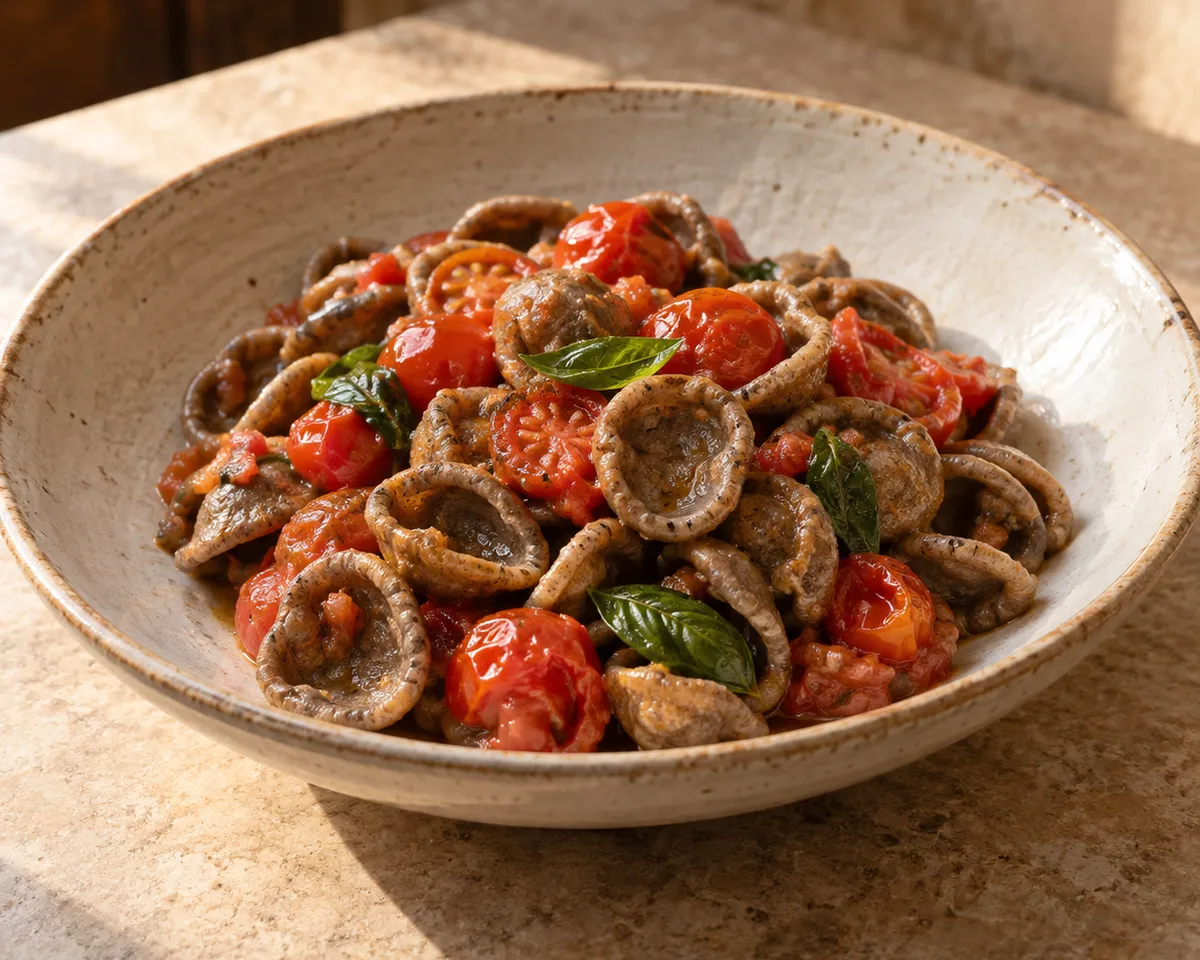
Orecchiette di grano arso
Toasted-wheat orecchiette with tomato and basil
Grano arso gives fresh pasta a dark, almost charcoal-brown color and a toasted edge that ordinary durum cannot supply. Today's flour is made by toasting wheat before milling it; the older practice gathered grain left after stubble burning. The connection is culinary, but the modern flour is deliberately produced rather than salvaged from a field.
Northwestern Puglia also has a grano arso strascinato, a larger dragged pasta associated with Canosa di Puglia. These are smaller, thumb-turned orecchiette: related through grain and handwork, distinct in shape. A proportion of ordinary durum semolina keeps the toasted flour supple enough to form them.
A brief sauce of ripe tomatoes and basil gives the dark pasta color and moisture without burying its roasted-wheat flavor. The thin centers take up the tomato juices; the thicker rims retain the chew that makes handmade orecchiette so satisfying.
Ingredients
For the orecchiette
- 245 gsemola rimacinata di grano duro (finely remilled durum semolina), plus a little for the tray
- 105 gfarina di grano arso (Italian toasted-wheat flour; see note)
- 175–190 gwater, at room temperature
- 2 gfine sea salt
For the tomato dressing
- 450 g(about 1 lb)ripe cherry tomatoes, halved
- 45 ml(3 tbsp)extra-virgin olive oil
- 1garlic clove, lightly crushed
- 8–10fresh basil leaves
- fine sea salt, for the sauce and pasta water
Kitchen notes
- Farina di grano arso
- Buy Italian grano arso flour from a specialty Italian supplier online. It is wheat, not a gluten-free flour. Modern grano arso is toasted before milling and is not flour scorched in a home pan. Do not replace it with charred ordinary flour: that gives a burnt taste and misses the ingredient that defines this pasta.
- Semola rimacinata
- Use finely remilled durum semolina, not coarse semolina. Mixed with the toasted flour, it gives the orecchiette enough structure to survive the drag-and-turn shaping.
Method
Mix the dark dough
- Mix the semola, grano arso flour and 2 g salt. Add 175 g water gradually and knead into a firm, cohesive dough, adding up to 15 g more only if dry flour remains. Work for 8–10 minutes until even in color and pliable; the toasted flour makes this dough less elastic than plain semola. Cover closely and rest for 30 minutes.
Shape
- Keep the dough covered as you work. Roll small portions into cords about 1 cm (⅜ inch) thick and cut into 1 cm pieces. Drag each beneath the nearly flat edge of a blunt table knife across a bare wooden board, then turn the resulting curled shell inside out over your thumb. A floured working spot can make the piece slide instead of curling. Keep a thin hollow and a sturdier rim; do not enlarge them into the oval, unturned Canosa strascinati. Spread in one layer on a semola-dusted tray.
Cook the tomatoes
- Warm the olive oil and garlic in a wide skillet over medium-low heat. When fragrant, add the tomatoes and a pinch of salt. Cook 10–12 minutes, pressing a few halves so their juice makes a light sauce while others remain recognizable. Remove the garlic. Tear in half the basil off the heat.
Boil and finish
- Boil the orecchiette in well-salted water until the thick rims are cooked through but still pleasantly firm, usually 5–8 minutes; grano arso dough can become fragile if overcooked. Reserve a cup of water and drain gently. Toss the pasta with the tomatoes over low heat, adding just enough cooking water for the sauce to cling without becoming soupy. Add the remaining basil and serve immediately.