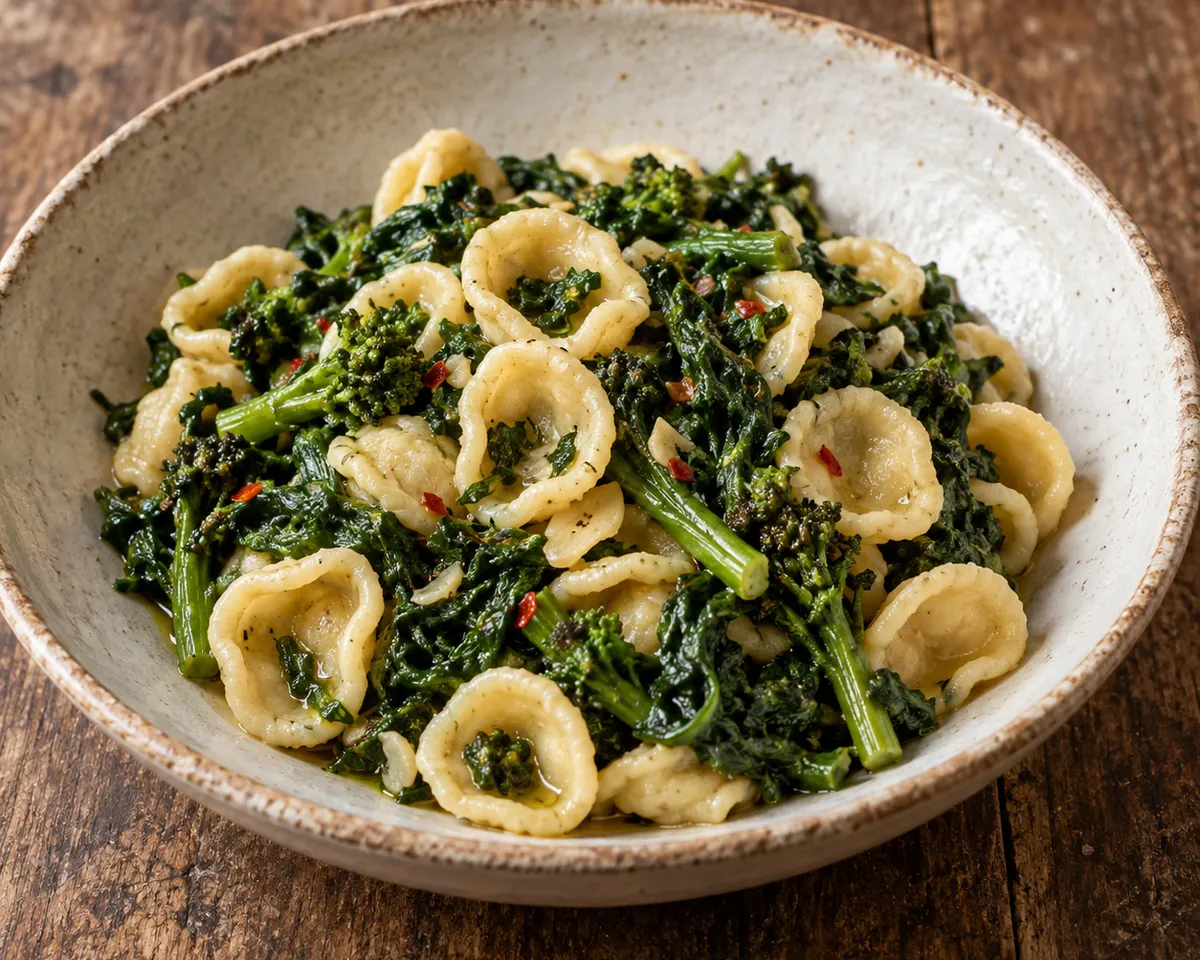
Orecchiette
Handmade Bari pasta with cime di rapa
The small hollow in an orecchietta is made in two motions: drag a nub of dough beneath a blunt knife, then turn it over the thumb. The center thins, the rim gathers, and the rough outer face is ready to catch whatever the pot gives it. No mold or machine can quite make that combination of textures.
Around Bari, this hand-shaped pasta has several familiar partners. Cime di rapa is the best-known: its bitter florets and tender leaves cook in the pasta water, then meet garlic, chile and anchovy melted into olive oil. The greens cling to the ridges while the little bowls hold the savory oil.
The dough asks only for finely remilled durum semolina and water. Make it firm, keep the pieces small, and let the knife do the dragging rather than flattening each piece into a disk. The reward is pasta with a pleasantly resistant bite, built to take a full mouthful of greens.
Ingredients
For the orecchiette
- 300 gsemola rimacinata di grano duro (finely remilled durum semolina; see note), plus a little for the tray
- 150 glukewarm water
- 3 gfine sea salt
For the greens and anchovy oil
- 1 kg (about 2¼ lb) before trimmingcime di rapa (broccoli rabe/rapini; see note)
- 60 ml(¼ cup)extra-virgin olive oil
- 4salt-packed anchovy fillets, rinsed and deboned, or oil-packed anchovy fillets, drained
- 1garlic clove, lightly crushed
- 1small dried red chile, crumbled
- fine sea salt, for the cooking water
Kitchen notes
- Semola rimacinata
- Use finely remilled Italian durum-wheat semolina, not coarse semolina for porridge or a pizza peel. The fine grind lets the dough form a thin center without cracking.
- Cime di rapa
- In the United States this vegetable is usually sold as broccoli rabe or rapini. It is a leafy, pleasantly bitter brassica with small florets, not ordinary broccoli or turnip roots. The stated weight is before discarding tough stems.
- Anchovies
- Salt-packed anchovies need thorough rinsing and deboning; good oil-packed fillets should be drained. Either should melt into the oil, not remain as visible chunks.
Method
Make the dough
- Mix the semola and 3 g salt on a board or in a wide bowl. Add the water gradually, gathering the grains into a mass; knead for 8–10 minutes until firm, smooth and elastic. It should feel noticeably stiffer than egg-pasta dough. Cover closely and rest at room temperature for 30 minutes.
Shape the ears
- Keep most of the dough covered. Roll a small piece into a cord about 1 cm (⅜ inch) thick and cut it into 1 cm pieces. On a bare wooden board, hold a blunt table knife almost flat and drag one piece toward you under the blade to make a curled, rough shell; flour on the working spot can make the piece slide instead of curling. Turn that shell inside out over the tip of your thumb, leaving a thin concave center and thicker rim. Spread the shaped pasta in a single layer on a semola-dusted tray while you finish the batch.
Prepare the greens and oil
- Strip away thick, fibrous stalks and tough leaves from the cime di rapa; keep the florets, young leaves and tender stems. Wash well. Bring a large pot of water to a boil and salt it. Meanwhile warm the olive oil, garlic and chile in a wide skillet over medium-low heat. Add the anchovies and stir until they dissolve; remove the garlic before it darkens. Keep the oil warm, not sizzling hard.
Cook together
- For particularly thick pasta, start the orecchiette first and add the greens later so they do not disintegrate. Otherwise, boil the greens for about 2 minutes, then add the fresh orecchiette to the same pot. Cook until the thick rims are tender with a little chew and the greens are soft but still green, usually 4–7 minutes more with the greens-first order. Test rather than relying on the clock. Reserve a cup of cooking water, then drain both.
Finish
- Transfer the pasta and greens to the anchovy oil. Toss over moderate heat with a splash of the reserved water until the oil lightly coats the pasta and the greens settle into its hollows. Taste before adding salt: the anchovies may provide enough. Serve immediately.