Pajata
Roman milk-fed veal intestine with rigatoni
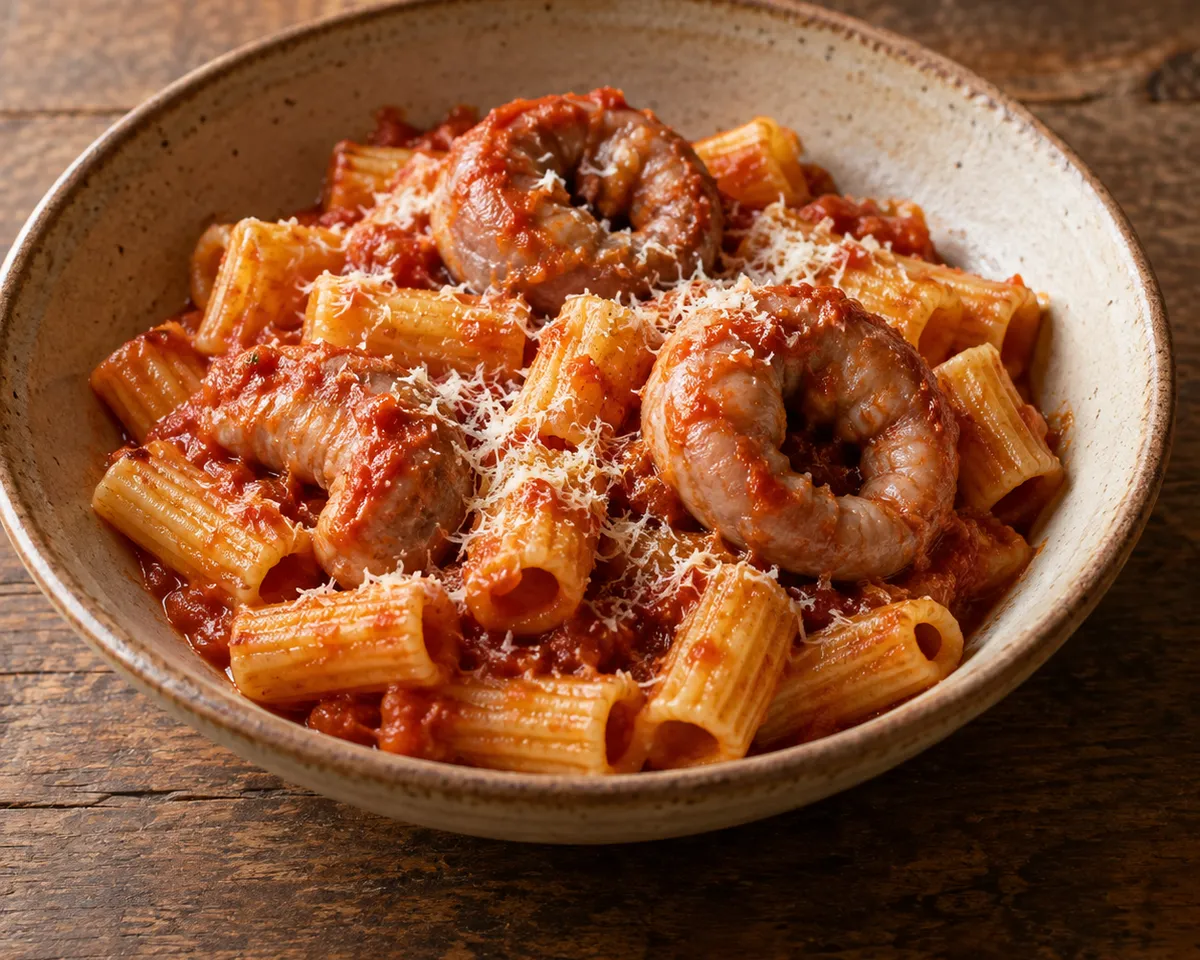
A spoonful of the sauce explains the fascination before the offal reaches the fork. Milk retained inside the intestine of an unweaned calf sets into soft curds as the rings braise, giving the tomato an unusual richness. The rings remain tender and intact, draped over ridged pasta rather than hidden in the sauce.
Pajata belongs to Rome’s quinto quarto repertoire, the cooking of parts beyond the familiar butcher’s cuts. Its most recognizable table form is rigatoni con la pajata: a slow tomato braise, pasta, and Pecorino Romano. It can also be grilled; the pasta version makes a meal of both the delicate rings and their sauce.
Ingredients
For the pajata sauce
- 1 kg(2 lb 3 oz)genuine pajata from an unweaned milk-fed calf, with its milk-rich contents retained and outer membrane removed by the butcher (see note)
- 40 g(1½ oz)solid salt-cured pork back fat (Italian lardo), finely chopped (see note)
- 30 ml(2 tbsp)extra-virgin olive oil
- 1 small (about 100 g)onion, finely chopped
- 1 small (about 70 g)carrot, finely chopped
- 1 stalk (about 60 g)celery, finely chopped
- ½small dried red chile, crumbled
- 125 ml(½ cup)dry white wine
- 650 g(about 2½ cups)plain strained tomatoes (passata)
- fine salt and freshly ground black pepper
For the pasta
- 350 g(12 oz)dried rigatoni
- 60 g(2 oz)Pecorino Romano DOP, finely grated
Kitchen notes
- True pajata and U.S. sourcing
- Pajata is a section of small intestine from an unweaned milk-fed calf with its milk-rich contents still inside; it is not tripe, cleaned veal intestine, or sausage casing. Genuine pajata is exceptionally difficult to obtain in the United States; routine retail intestine is emptied and cleaned. Ask a knowledgeable inspected veal processor or butcher whether they can supply this exact preparation. If they cannot, do not replace it with an emptied casing or fill one with dairy.
- Outer membrane
- The thin external membrane is traditionally stripped away while the intestine and its contents remain intact. Ask the butcher to do this delicate work. Keep the fresh product refrigerated until cooking; rinse the outside gently, never the inside.
- Pecorino Romano
- Use Pecorino Romano DOP, the salty sheep’s-milk cheese, rather than a generically labeled hard ‘Romano’ cheese made from cow’s milk.
- Italian lardo
- Lardo is solid cured pork back fat that can be minced for the soffritto. It is not rendered American lard (Italian strutto), which cannot be chopped, nor smoked bacon.
Method
Form the rings
- Keep the pajata cold while working. If the butcher has not already tied it, gently rinse only the outside without splitting or squeezing the intestine. Cut into roughly 20 cm (8 in) lengths. Bring the ends of each piece together and tie securely with kitchen twine to make small rings, preserving the milk-rich contents inside. Discard any piece that is torn or leaking. Do not open or flush the intestine.
Build the sauce
- Warm the chopped lardo and olive oil in a heavy, wide pot over medium-low heat. Add onion, carrot, celery and chile; cook until soft and fragrant without browning, about 8–10 minutes. Add the pajata rings in one layer and turn gently for several minutes, until their surfaces firm and take on a little color. Season lightly with salt and pepper. Pour in the wine and let it reduce until its sharp smell fades.
Braise slowly
- Add the passata and 150 ml (⅔ cup) water. Bring to a quiet simmer, cover partly, and cook gently for about 2 hours, turning the rings carefully once or twice and adding a little hot water if the sauce begins to catch. The rings should be tender but unbroken and the sauce thick enough to cling to pasta. Taste and adjust the salt only at the end; the cheese will add more.
Dress and serve
- Cook the rigatoni in well-salted water until just short of al dente. Lift the pajata rings from the sauce and snip away the twine. Transfer the pasta to the sauce with a splash of its cooking water and toss until glossy and cooked through. Fold in about half the Pecorino Romano. Divide among warm bowls, set the intact rings on top, and finish with the remaining cheese.