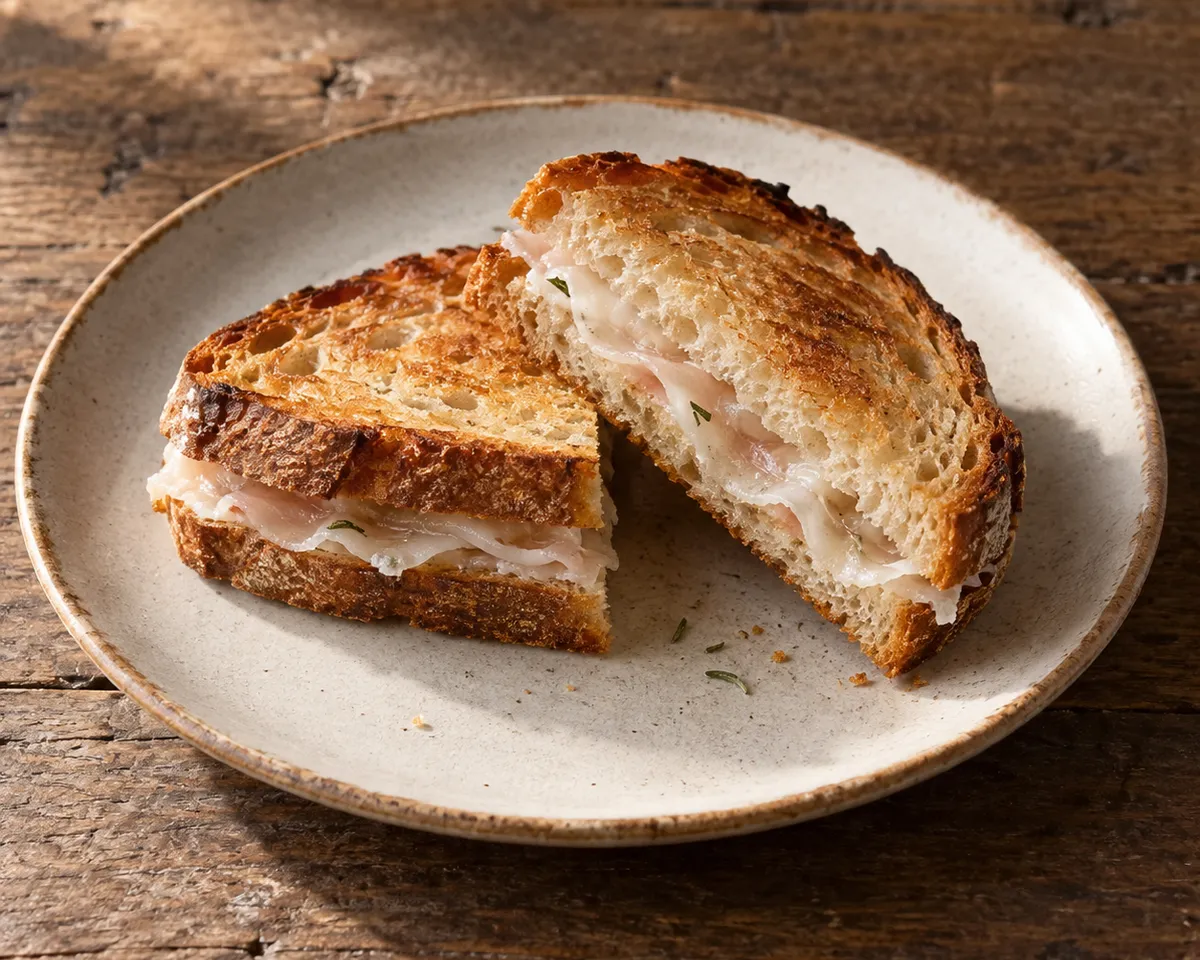
Panino al lardo di Colonnata
Warm Tuscan bread with thinly sliced Colonnata lardo
A hot slice of bread is enough to change the lardo. Its paper-thin sheets turn glossy and yielding on contact, releasing the perfume of rosemary, pepper, and the marble-cellar cure before they can slump away completely. The pleasure is in that narrow window between cool, firm fat and full melt.
Colonnata sits above Carrara in the Apuan Alps, where the protected lardo is made only in the village. It is not bacon, pancetta, or an interchangeable slab of pork fat: the IGP specification calls for pork back fat cured with salt, pepper, rosemary, and garlic in local marble conche for at least six months. That treatment leaves it gently savory and almost sweet; thin slices soften quickly on the hot bread.
Toasted pane toscano gives the lardo an unsalted, rough-edged frame; a little rosemary and sage echo the cure. A single layer of thin slices softens against the hot bread, leaving the sandwich crisp at the edges and glossy within.
Ingredients
For the sandwiches
- 8 slices, about 1 cm (⅜ inch) thickday-old Pane Toscano DOP or another lean, unsalted country loaf (see note)
- 120 g(4¼ oz)Lardo di Colonnata IGP, sliced paper-thin and kept chilled until needed (see note)
- 1 small sprigfresh rosemary, leaves finely chopped
- 2small fresh sage leaves, finely chopped
- 15 ml(1 tbsp)extra-virgin olive oil
- freshly ground black pepper, optional
Kitchen notes
- Lardo di Colonnata IGP
- Buy a package or deli cut explicitly labeled Lardo di Colonnata IGP. It is cured pork back fat, at least 3 cm thick before slicing, matured in local Colonnata marble conche for no fewer than six months with salt, black pepper, rosemary, and garlic. American bacon is smoked belly; pancetta is cured belly; plain supermarket lard is rendered cooking fat. None gives this sandwich its texture or cure.
- Paper-thin slicing
- Ask the deli counter to slice the cold lardo as thinly as possible, or chill a piece until firm and use a very sharp slicing knife. Thick cold chunks will not soften in the brief time the bread stays hot.
- Bread and herbs
- Pane Toscano DOP is an unsalted wheat loaf. Choose it or another lean, unsalted country loaf and toast it so the edges are crisp but the center retains some give. Small amounts of rosemary and sage add fragrance without overwhelming the lardo.
Method
Toast the bread
- Heat a dry cast-iron skillet, ridged grill pan, or broiler until very hot. Brush the bread lightly on one side with the olive oil. Toast the slices until crisp and browned at the edges but still a little yielding in the middle, about 1–2 minutes per side in a skillet or 2–3 minutes per side under a broiler. The bread must be properly hot; it is the heat source for the lardo.
Dress and assemble at once
- Set four hot slices on a board. Scatter each with a restrained pinch of the rosemary and sage, then lay over enough lardo to cover the bread in a single, loose layer. Use two or three overlapping slices rather than a thick stack. Wait 30–60 seconds, just until the lardo turns translucent and softens at the edges; it should not run off the bread. Add a little black pepper only if the lardo does not already bring enough peppery aroma.
Close and eat while warm
- Top each sandwich with a second piece of hot toast, press only lightly, and serve immediately. Do not salt the bread or cook the lardo separately. The warm interior should be glossy and yielding, while the bread remains crisp enough to hold it.