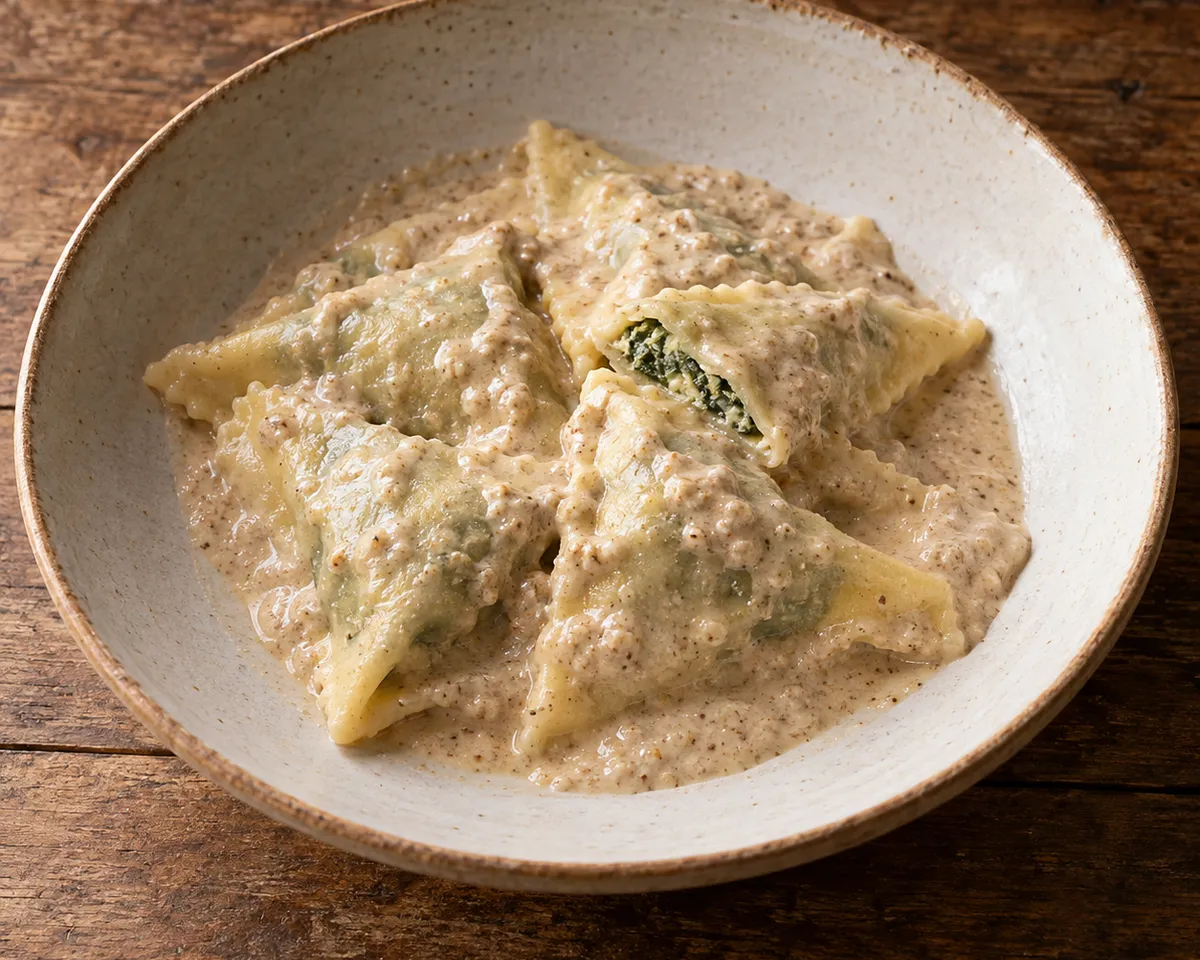
Pansoti al preboggion con salsa di noci
Herb-filled Ligurian ravioli with walnut sauce
Pansoti are the generous, soft-bellied pasta parcels of Liguria's eastern coast. Their filling is called preboggion: a seasonal gathering of greens whose exact contents change from hillside to village to market day. The filling is leafy, fragrant with marjoram, and wholly without meat.
The form belongs to the Riviera di Levante, from eastern Genova through Golfo Paradiso and the Tigullio. The name comes from the Ligurian word for belly, and a proper pansoto earns it: larger and plumper than an ordinary raviolo, with a thin sheet stretched around a real mound of filling.
Salsa di noci gives the greens their counterweight. Walnuts, pine nuts, milk-soaked bread, garlic, Parmigiano and olive oil are ground cold into a pale, delicate sauce, then loosened with the pasta water at the last moment. It should coat the pansoti rather than drown them—the gentle bitterness of the greens and the sweet depth of walnut need room to meet.
Ingredients
Pasta dough
- 300 gItalian tipo 00 flour, plus more for the work surface
- 2large eggs
- 30 ml(2 tbsp)dry white wine
- 15–30 ml(1–2 tbsp)water, only as needed
- 3 g(½ tsp)fine salt
Preboggion filling
- 250 g(9 oz)fresh borage leaves, thick stems discarded (see note)
- 200 g(7 oz)Swiss chard leaves, thick ribs discarded (see note)
- 150 g(5 oz)mature spinach leaves, tough stems discarded (see note)
- 180 g(about ¾ cup)whole-milk ricotta, drained if watery (see note)
- 45 g(about ½ cup)Parmigiano Reggiano, finely grated
- 1large egg
- 1 tbspfresh marjoram leaves, finely chopped
- 1 pinchfreshly grated nutmeg
- fine salt
Salsa di noci
- 180 g(6⅓ oz)raw walnut halves (see note)
- 25 g(3 tbsp)pine nuts
- 45 g(about 1½ oz)day-old white bread, crust removed
- 125 ml(½ cup)whole milk
- ½small garlic clove
- 35 g(about ⅓ cup)Parmigiano Reggiano, finely grated
- 45 ml(3 tbsp)mild extra-virgin olive oil
- 1 tbspfresh marjoram leaves
- fine salt
Kitchen notes
- Preboggion greens
- Preboggion is a variable Ligurian collection of seasonal wild greens, not one herb or a fixed seven-plant formula. Borage, Swiss chard and spinach make a cultivated mix for the filling. Buy borage from a farmers market, grower, or specialty produce market; its mild, faintly cucumber-like leaf is important. Do not forage unknown leaves, use a random bagged salad mix, or replace the borage with another leafy green. If it is unavailable, save this dish for another day.
- Ricotta and prescinseua
- Prescinseua is a lightly tart, softly set fresh curd from the Genovese area. Ricotta is used in another traditional pansoti filling and gives a milder result. For this recipe, choose whole-milk ricotta and drain it well; mascarpone, cream cheese, yogurt, and fresh mozzarella give a different filling.
- Raw walnuts
- Choose sweet, fresh-tasting English walnut halves. A quick blanch loosens some of the skins and keeps the sauce pale and gentle; do not worry about removing every fleck. Black walnuts are much more forceful and change the sauce entirely.
- Parmigiano Reggiano
- Use a wedge of the aged, firm cheese and grate it finely for both filling and sauce. It provides salt and structure. Shelf-stable grated Parmesan is not the same product and can make the walnut sauce dusty.
Method
Make and rest the dough
- Put the flour and salt in a wide bowl or make a well on the work surface. Add the eggs and wine, beat them together with a fork, then gradually draw in the flour. Knead until the dough is smooth and elastic, 8–10 minutes. Add water only a teaspoon at a time if dry crumbs will not join; the finished dough should feel supple, not sticky. Wrap it and let it rest at room temperature for 30 minutes.
Blanch and season the greens
- Bring a large pot of well-salted water to a boil and set a bowl of ice water nearby. Blanch the borage and chard until tender but still vividly green, about 2 minutes; add the spinach for the final 30 seconds. Drain, chill briefly in the ice water, then squeeze the greens in small handfuls until no more water drips out. Chop them very finely. You should have a compact, dry-looking mass, not a wet purée.
- Mix the greens with the ricotta, 45 g Parmigiano, egg, chopped marjoram, nutmeg and a small pinch of salt. The filling should be moist enough to hold a mound but firm enough to sit on a spoon. If the ricotta or greens left it loose, refrigerate it for 15 minutes before shaping rather than adding extra cheese.
Shape the pansoti
- Divide the rested dough in half and keep one portion covered. Roll the other through a pasta machine in stages to a thin sheet, about 1 mm thick. Cut into 7 cm (2¾ in) squares. Put a heaped teaspoon of filling in the center of each square, brush the edges very lightly with water if dry, and fold corner to corner into triangles. Press out all air around the filling and seal the edges firmly. Set the pansoti on a lightly floured tray; repeat with the remaining dough and filling.
Make the walnut sauce
- Bring a small saucepan of water to a boil. Blanch the walnuts for 1 minute, drain, and rub away only the loosened dark skins with a towel; perfect peeling is unnecessary. Soak the bread in the milk for 10 minutes, then squeeze it gently, reserving the milk. In a mortar or food processor, pound or pulse the garlic, pine nuts and a pinch of salt to a paste. Add the walnuts, bread, Parmigiano and marjoram; pound or pulse to a slightly textured cream. Gradually stir in the olive oil and enough reserved milk to make a thick sauce that slowly falls from a spoon, or pulse them in briefly if using a processor. Taste and salt cautiously. Keep it at room temperature; do not heat it.
Cook, dress and serve
- Bring a wide pot of salted water to a gentle boil. Cook the pansoti in batches so they have room to move. When they float and the water has returned to a quiet boil, cook 1 minute more; cut open one to make sure the pasta is tender with no raw floury seam. Reserve 180 ml (¾ cup) cooking water before lifting them out.
- Loosen the walnut sauce with 45–60 ml (3–4 tbsp) hot cooking water until it is creamy and fluid enough to coat a dumpling. Spoon it over the hot pansoti and turn them gently only once or twice. Serve immediately, with a little more Parmigiano only if wanted. The sauce should cling in a pale layer, never sit as a heavy pool underneath.