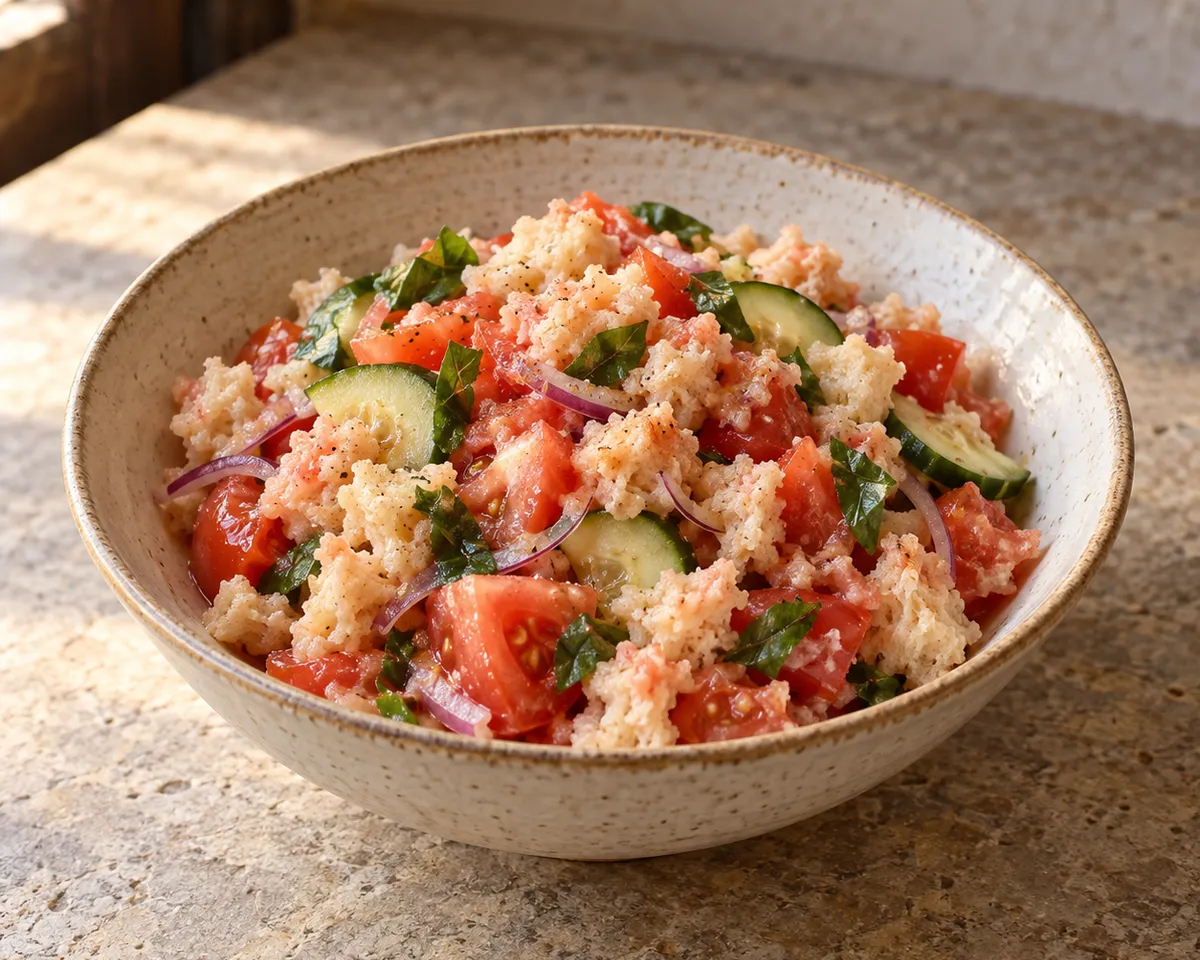
Panzanella
Tuscan bread and tomato salad
Panzanella begins with bread that has become too firm to enjoy on its own. A measured drink of water brings it back just far enough: the crumb yields, then grips the tomato juices, olive oil, and vinegar that follow. The aim is neither bruschetta nor a bowl of wet crumbs, but a loose, juicy salad whose irregular pieces still have some pull.
The bread should be Tuscan and saltless if possible. In the Firenze-area version, cucumber cools and lightens the softened crumb without displacing the bread from the center of the plate.
Ingredients
For the panzanella
- 400 gstale Pane Toscano DOP or another lean, unsalted or lightly salted country loaf, cut into 1 cm (⅜-inch) slices (see note)
- 500 gvery ripe, flavorful tomatoes, cut into irregular bite-size pieces, with all their juices
- 1 medium (about 120 g)red onion, sliced paper-thin
- 1 medium (about 250 g)cucumber, peeled, halved lengthwise, and sliced very thinly
- 15fresh basil leaves, torn by hand
- 60 ml(¼ cup)extra-virgin olive oil, plus a little more to finish
- 85 ml(about ⅓ cup)white-wine vinegar, divided
- fine sea salt, to taste
- freshly ground black pepper
Kitchen notes
- Pane Toscano
- Pane Toscano DOP is a naturally leavened wheat loaf made without added salt. Its close, porous crumb is fundamental here; use it 2–3 days old. Because the protected loaf is perishable and not routinely practical to obtain in the U.S., use a stale, lean country loaf with no fat or sugar and as little salt as possible. Avoid soft sandwich bread, brioche, focaccia, ciabatta, and crisp croutons. Salt cautiously at the end if your substitute loaf is salted.
- Tomatoes
- Use ripe summer tomatoes with real juice and acidity: beefsteak, heirloom, or similarly full-flavored field tomatoes work well. Firm winter tomatoes will not make the dressing this dish needs.
- Cucumber
- Cucumber is part of this Firenze-area version, alongside tomato, onion, and basil. Peel it if its skin is tough or waxed, halve it lengthwise, and slice it thinly so it contributes freshness without watering the salad down.
- Hydration
- Moisten the 1 cm slices with the measured water and give them time to absorb it before crumbling by hand. The endpoint matters: the bread should be soft and moist, never a uniform paste.
Method
Tame the onion and prepare the vegetables
- Put the onion in a small bowl with 70 ml (scant ⅓ cup) each cold water and white-wine vinegar. Leave it for 15–20 minutes, stirring once or twice, then drain well. Put the tomatoes and all their juices in a wide serving bowl. Keep the cucumber separate until the bread is ready.
Moisten the bread
- Lay the bread in one layer in a wide baking dish. Pour 250 ml (1 cup) cold water evenly over it, press lightly so every slice absorbs some, and leave it for 40–45 minutes. Crumble the softened bread by hand into the serving bowl. If it is visibly dripping, squeeze it very lightly; it should be moist but retain irregular, distinct pieces.
Combine and rest
- Add the drained onion, cucumber, and torn basil. Toss gently with two large spoons, lifting from the bottom so the bread stays in distinct soft pieces. Cover and refrigerate for 1 hour; the bread should absorb the tomato juices without dissolving.
Serve at a cool room temperature
- After the refrigerated rest, let the salad lose its chill, then season with the olive oil, remaining 15 ml (1 tbsp) vinegar, salt, and black pepper. Toss once more and taste: a salted substitute loaf will need less seasoning than true saltless Pane Toscano. Finish with a slender thread of olive oil and a few basil leaves. Serve at once, before the bread turns past soft into paste.