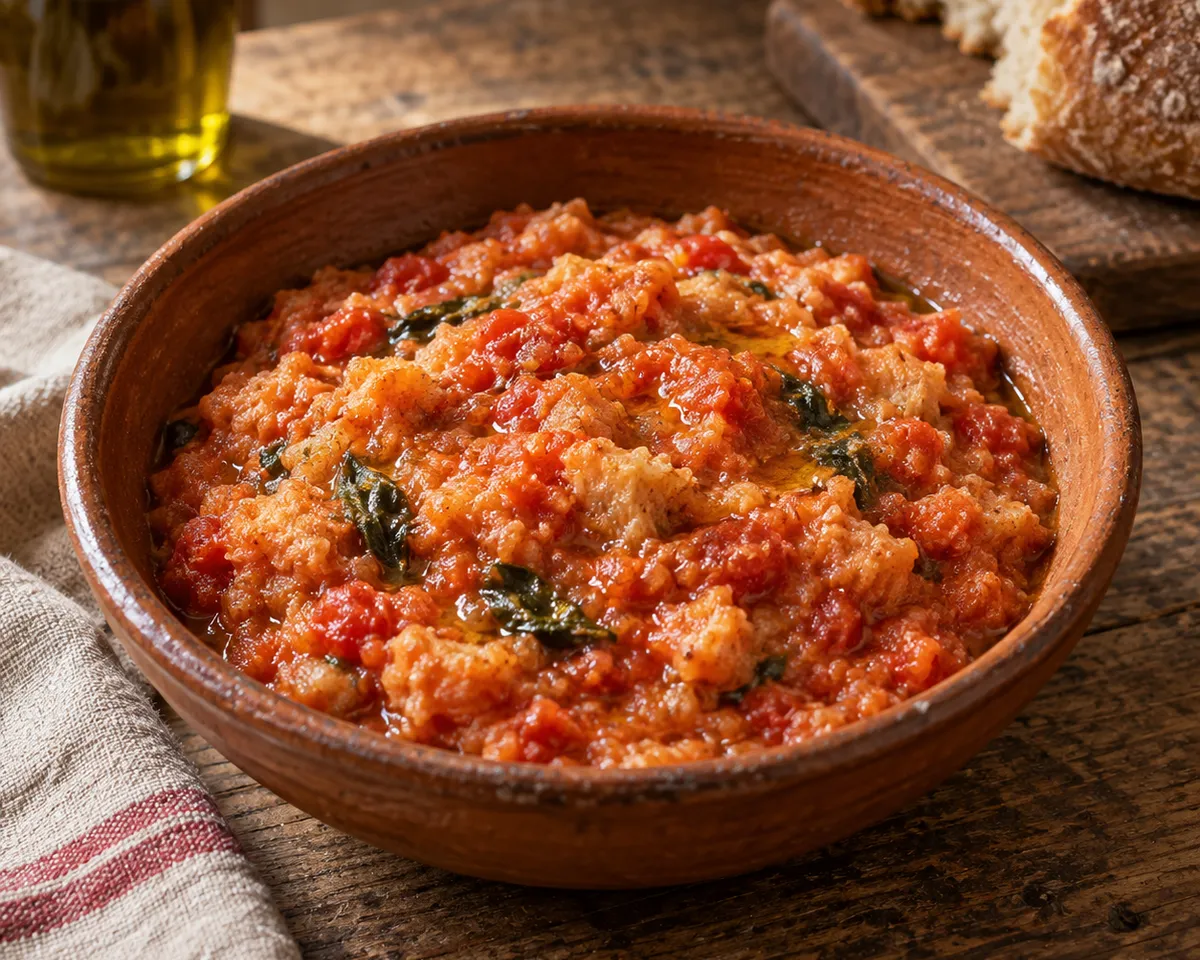
Pappa al pomodoro
Tuscan tomato and bread soup
Pappa al pomodoro takes the tomato soup idea somewhere richer and less tidy. The spoon meets no separate croutons, no broth studded with bread: day-old Tuscan loaf has cooked down into the red base until it thickens it from within. Olive oil gives the final bowl its gloss, while basil arrives late enough to remain bright.
The right bread is plain pane toscano, the famously saltless country loaf. Its apparent blandness is an advantage here. It can take tomato, garlic, and oil without imposing a bakery flavor or turning the dish briny; its stale crumb softens into body while leaving a few tender, recognizable shreds.
Basil or sage, water or vegetable broth, a brief simmer or a longer rest: family recipes vary. Around Firenze and Chianti, bread, tomato, garlic, oil, and basil make a thick, rough cream.
Ingredients
For the pappa
- 800 gcanned whole peeled plum tomatoes, crushed by hand with their juices (see note)
- 300 gstale Pane Toscano DOP, in 2 cm (¾-inch) pieces (see note)
- 60 ml(¼ cup)extra-virgin olive oil, plus more to finish
- 2garlic cloves, lightly crushed
- 10–12fresh basil leaves, torn by hand, plus a few small leaves to finish
- 250–350 g(1–1½ cups)hot water
- 5 g(¾ tsp)fine sea salt, plus more only if needed
- freshly ground black pepper
Kitchen notes
- Pane Toscano
- The traditional loaf is Pane Toscano DOP, a rustic wheat bread made without salt. Use it stale, never soft sandwich bread, brioche, or an oily ciabatta. In the U.S., actual Pane Toscano DOP can be genuinely difficult to obtain fresh: it is made and packaged only in Toscana, and this perishable bread is not practical for ordinary international shipping. If it is unavailable, choose the least salty, least enriched country bread you can find and wait to correct seasoning until the end.
- Tomatoes
- Ripe fresh tomatoes are traditional in season, while peeled canned tomatoes are established in Tuscan recipes and give a dependable all-season result. Use whole peeled tomatoes with a clean, sweet-acid balance, not seasoned pasta sauce or tomato purée.
- Texture
- Pappa means a thick, spoonable, rough cream made as the bread breaks down in the tomato. A blender makes it too uniform; bread cubes left intact make it a different soup. Pressing with a wooden spoon keeps the useful in-between texture.
- Basil and sage
- Basil gives the tomato and bread a fresh herbal finish when folded in off heat. Sage appears in other Tuscan versions. Cheese, cream, or a vegetable soffritto would change the character of this bread-and-tomato preparation.
Method
Soak the stale bread briefly
- Put the bread in a bowl and cover with cool water for 8–10 minutes, pressing it down once or twice so it hydrates evenly. The pieces should soften without becoming a paste. Squeeze them gently but thoroughly over the bowl, then crumble them with your fingers into loose, irregular bits. This is a preparation step, not a chance to wash flavor out of the bread.
Cook the tomato base
- Warm the olive oil in a wide, heavy pot or earthenware casserole over medium-low heat. Add the garlic and cook until fragrant and pale gold, about 2 minutes; do not let it brown. Add the crushed tomatoes and their juices, the salt, and a few grinds of pepper. Simmer gently, stirring occasionally, until the tomatoes have relaxed and taste cooked rather than raw, about 15–20 minutes. Remove the garlic.
Thicken with the bread
- Add the squeezed bread and 250 g (1 cup) hot water to the tomato. Stir until every piece is coated, cover partly, and cook at the barest simmer for 12–15 minutes. Stir and press the bread against the side of the pot every few minutes. Add more hot water a splash at a time only if it catches before the bread has collapsed. The finished pappa should be thick enough to mound softly on a spoon, with a few soft shreds still visible, rather than a smooth purée or a liquid soup.
Rest with basil and serve
- Turn off the heat, fold in the torn basil and a generous thread of raw olive oil, and cover for 20–30 minutes. Taste after the rest, then adjust salt and pepper. Serve warm or at room temperature with more olive oil and the reserved basil leaves.