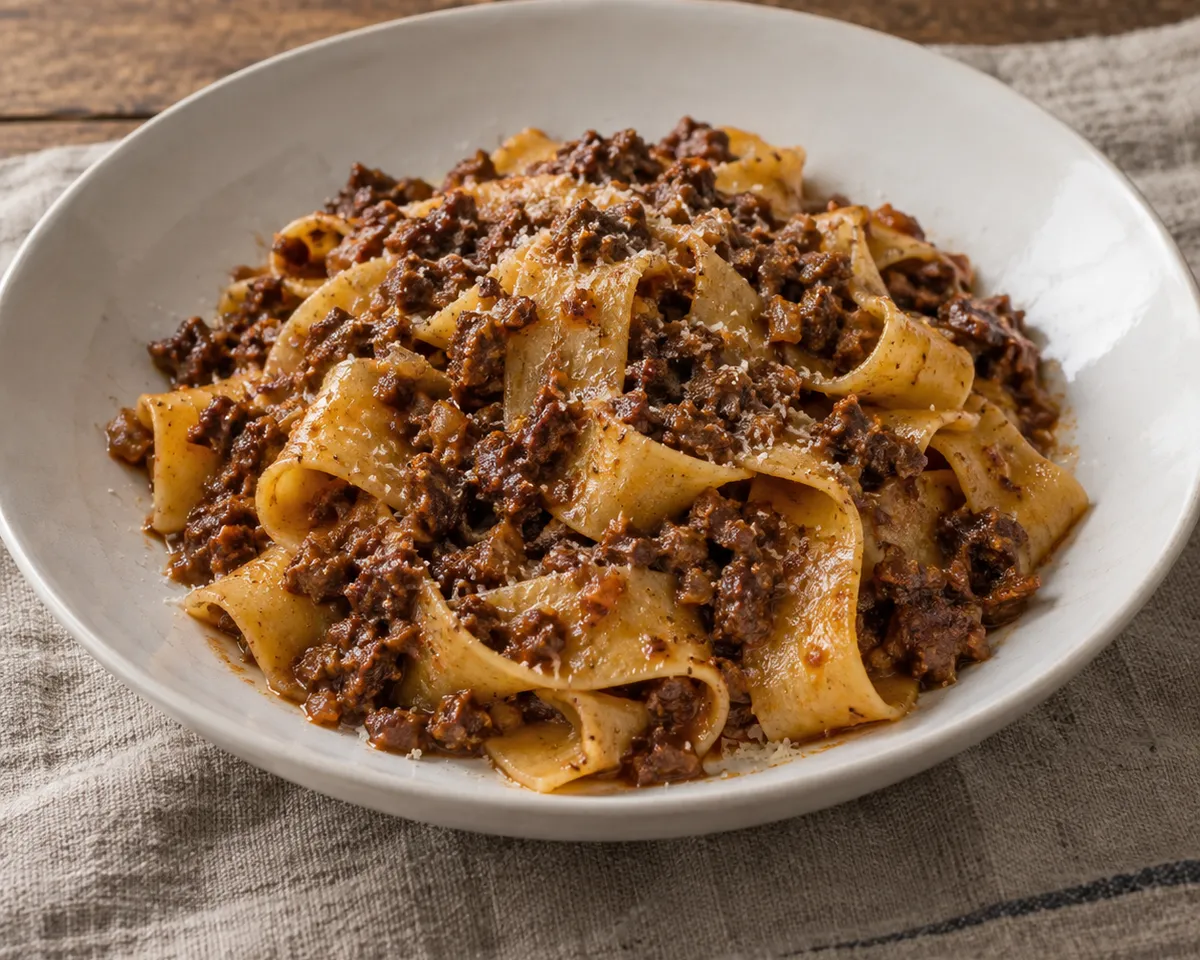
Pappardelle al ragù di cinghiale
Wide egg pasta with Umbrian wild boar ragù
Wide egg pappardelle catch the boar in their folds: coarse pieces of meat, dark juices, and the faint rasp of pecorino. This is not a bright tomato ragù. A small amount of passata gives it lift while leaving the boar, wine, and foresty spice in charge.
Around Spoleto, wild boar belongs to the cooking of the Umbrian interior, where long braises turn a muscular animal into something supple enough for Sunday pasta. The preliminary bath of wine and aromatics is discarded after marinating; the fresh wine added to the pot is what remains in the finished dish.
Juniper, clove, fennel seed, garlic, and chile should read as a low, warm perfume, never as a cabinet of spices. Cook until the sauce is dark, thick, and clinging, then toss it with the pasta rather than ladling it on top.
Ingredients
For the overnight marinade
- 700 g(1½ lb)boneless wild boar shoulder or leg, cut into 4 cm (1½ in) pieces (see note)
- 750 ml(3 cups)dry red wine
- 75 gyellow onion, cut into large pieces
- 75 gcarrot, cut into large pieces
- 1 ribcelery, cut into large pieces
- 2garlic cloves, crushed
- 2bay leaves
- 4juniper berries, lightly crushed
- 2whole cloves
- 1 teaspoonfennel seeds, lightly crushed
For the ragù and pasta
- 45 ml(3 tablespoons)extra-virgin olive oil
- 120 gyellow onion, finely chopped
- 80 gcarrot, finely chopped
- 80 gcelery, finely chopped
- 2garlic cloves, finely chopped
- 1juniper berry, crushed
- 1whole clove, crushed
- 1 small pinchdried chile flakes
- 180 ml(¾ cup)dry red wine
- 450 ml(1¾ cups)hot light chicken stock or unsalted vegetable stock, plus more as needed
- 150 g(about ⅔ cup)tomato passata
- fine salt and freshly ground black pepper
- 400 g(14 oz)fresh egg pappardelle at least 1.5 cm (⅝ in) wide
- 50 gaged pecorino, finely grated, plus more to pass at the table
Kitchen notes
- Wild boar shoulder or leg
- Buy legally sold, farm-raised wild boar from a reputable butcher or meat supplier. Choose a collagen-rich braising cut such as shoulder or leg, not tenderloin, chops, smoked meat, or ready-ground sausage. Wild boar sausage can contain domestic pork and added fat, which changes both the flavor and the long-cooked texture of this ragù.
- Tomato passata
- Passata is smooth strained tomato purée, not tomato paste or a seasoned jarred pasta sauce. It is deliberately a small part of this Umbrian ragù: enough to sharpen the meat, not enough to make the sauce bright red.
- Fresh egg pappardelle
- Look for broad fresh egg ribbons, ideally at least 1.5 cm (⅝ in) wide. This is not dried fettuccine or narrow tagliatelle; the width gives the coarse ragù a surface to hold.
- Aged pecorino
- Use a firm, grateable sheep's-milk pecorino. It is a finish here, not a creamy cheese sauce; add it off the heat so it seasons the pasta without masking the wild boar.
Method
Marinate the boar
- Put the wild boar in a nonreactive bowl with the wine, onion, carrot, celery, garlic, bay, juniper, cloves, and fennel. Turn the meat to submerge it, cover, and refrigerate for 12–18 hours. Drain it in a colander, discard the marinade and aromatics, and pat the meat very dry. Chop it by hand into a coarse mince, with pieces no larger than about 8 mm (⅓ in).
Build the base
- Warm the olive oil in a heavy casserole over medium-low heat. Add the finely chopped onion, carrot, celery, garlic, crushed juniper and clove, and chile. Cook slowly, stirring often, until the vegetables are soft and sweet but not browned, about 10 minutes. Add the boar, raise the heat to medium-high, and cook until its liquid has evaporated and the meat begins to take on color, 8–10 minutes.
Braise the ragù
- Pour in the fresh red wine and let it reduce until the raw alcoholic smell has gone. Add 450 ml hot stock and the passata, season lightly, and bring to the gentlest simmer. Cover with the lid slightly ajar and cook, stirring now and then, until the meat is tender and the sauce is dark and thick, about 1½–2 hours. Add a splash of hot stock only if the pot threatens to dry before the meat is tender. The finished sauce should be dense and brown-red, never a loose red pool.
Cook and dress the pappardelle
- Taste the ragù and correct the salt and pepper. Bring a large pot of well-salted water to a boil and warm the ragù in a wide skillet. Cook the fresh pappardelle until just al dente, then lift it directly into the skillet. Add a spoonful of pasta water and toss over low heat until the sauce clings to every ribbon; add only enough water to make it glossy. Take the skillet off the heat, toss through the pecorino, and serve immediately with more cheese at the table.