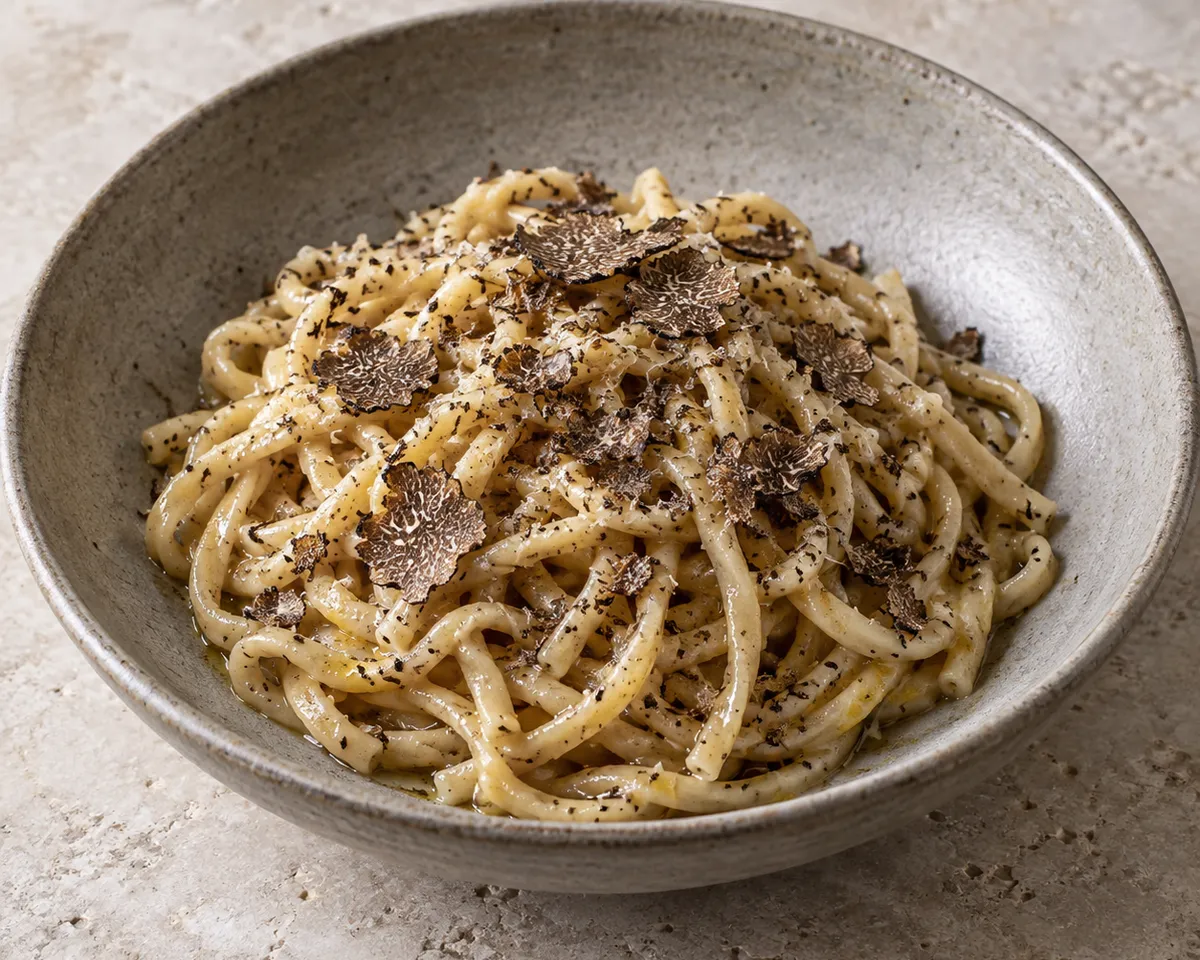
Pasta al tartufo nero
Hand-cut Umbrian strangozzi with black winter truffle
A good plate of strangozzi has a little resistance in the bite. The irregular, narrow ribbons are made from flour and water alone, with a rough surface that catches oil without demanding a heavy sauce. Across central Umbria they are familiar company for black truffle.
Here the truffle comes from the Norcia tradition: the dark, fragrant winter kind, grated into warm oil and shaved again at the table. Garlic perfumes that oil and a single anchovy lends it depth, then both retreat. There is no cream or cheese to turn the truffle into a background note.
The most consequential move is to take the pan off the heat before adding the truffle. Toss the pasta with a splash of its cooking water until the oil clings, then serve while the warmth can carry the aroma upward.
Ingredients
For the strangozzi
- 400 gItalian 00 or all-purpose wheat flour, plus a little for dusting
- 200 mllukewarm water
For the truffle dressing
- 70 gfresh black winter truffle (Tuber melanosporum), ideally from Umbria
- 60 ml(¼ cup)good extra-virgin olive oil, preferably Umbrian
- 1garlic clove, lightly crushed
- 1salt-packed anchovy fillet, rinsed, boned, and patted dry
- fine sea salt, for the pasta water
Kitchen notes
- Black winter truffle
- Ask for fresh Tuber melanosporum, often sold as black winter, Norcia black, or Périgord truffle. The Norcia name reflects this dish's regional tradition; verify the seller's stated harvest origin if that matters to you. This species differs from milder summer black truffle (Tuber aestivum), truffle oil, and flavored paste. Buy it when available and cook this dish promptly.
- Strangozzi
- The regional pasta is made from wheat flour and water, with no egg. Its hand-cut rectangular strands are thicker and rougher than ordinary dried spaghetti.
- Salt-packed anchovy
- One fillet melts into the oil for savor without making the dressing taste of fish. Rinse off the packing salt and remove the bone before it goes into the pan.
Method
Make the pasta
- Work the flour and water together on a board until no dry flour remains, then knead for about 10 minutes until smooth and firm. Cover and rest at room temperature for 30 minutes. Roll to about 2 mm thick and cut into irregular strips 3–4 mm wide and no longer than 20–30 cm (8–12 in). Separate the strands on a lightly floured tray so they do not stick.
Prepare the truffle
- Brush the truffle clean under a brief trickle of cool water only where needed, then dry it thoroughly. Grate about two thirds coarsely just before cooking; keep the rest whole for shaving over the finished pasta.
Warm the oil gently
- Bring a large pot of salted water to a boil. Meanwhile, warm the olive oil, garlic, and anchovy in a broad pan over low heat. Stir until the anchovy dissolves and the garlic scents the oil without burning, about 2–3 minutes. Remove the garlic and turn off the heat. Let the oil cool from sizzling to merely warm, then stir in the grated truffle.
Cook and dress
- Boil the fresh strangozzi until tender but still pleasantly firm, usually 4–6 minutes; taste rather than relying on the clock. Reserve a cup of pasta water, then transfer the pasta to the truffle pan. Toss off the heat, adding a little pasta water at a time until the oil lightly coats every strand rather than pooling below it. Divide among warm plates, shave over the remaining truffle, and serve immediately.