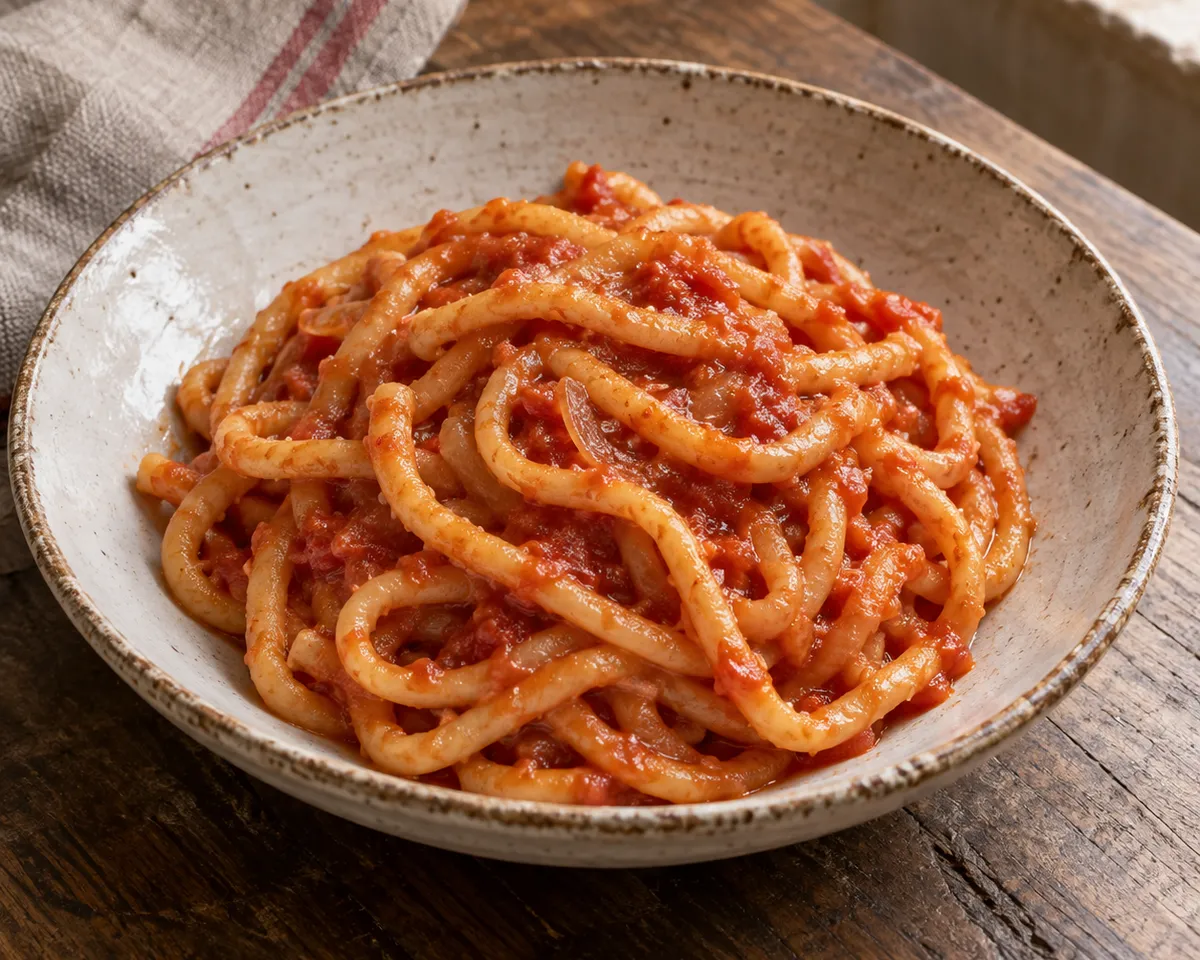
Pasta all'aglione
Val di Chiana pici with giant-garlic tomato sauce
The sauce begins with a garlic that refuses to behave like ordinary garlic. Aglione grows to a theatrical size in the Val di Chiana, but its character is softer: sweet and aromatic enough to occupy the whole tomato sauce without turning it harsh. Cooked gently until it almost dissolves, it makes a red sauce that is direct without being blunt.
Pici give that sauce the right terrain. These long, hand-rolled ropes of flour and water are rougher and more substantial than spaghetti, with enough chew to keep the dish from becoming a bowl of tomato sauce in search of pasta. In the Val di Chiana, the pairing is so natural that the pasta and sauce are named together.
There is room at the edges for a little chile, wine, fresh tomato, or passata, and cooks disagree on exactly how smooth the garlic should become. The sauce combines aglione softened slowly in olive oil, a brief white-wine reduction, and tomato cooked only until thick and bright.
Ingredients
For the pici
- 350 gItalian type 0 flour, plus more for the work surface
- 160 glukewarm water
- 15 ml(1 tbsp)extra-virgin olive oil
- 2 g (a generous pinch)fine sea salt
- 30 g(about 3 tbsp)fine semolina flour, for holding the shaped pici
For the sauce
- 400 gripe fresh tomatoes or good canned whole peeled tomatoes, chopped (see note)
- 60 gAglione della Valdichiana, peeled and sliced very thinly (see note)
- 45 ml(3 tbsp)extra-virgin olive oil
- 60 ml(¼ cup)dry white wine
- 1 smalldried red chile, crumbled, optional
- fine sea salt
Kitchen notes
- Aglione della Valdichiana
- Aglione della Valdichiana is a specific local landrace with a markedly milder, sweeter perfume than ordinary garlic. It belongs to the broad great-headed garlic group that also includes elephant garlic, but generic elephant garlic does not establish the same regional crop or flavor. Seek Valdichiana aglione in season from a specialist Italian-food source; do not replace it with ordinary garlic.
- Pici
- Pici are thick, hand-rolled flour-and-water ropes of southern Siena, Val d'Orcia, and Val di Chiana. They are not thick dry spaghetti. If buying them, use about 400 g fresh pici or 330 g dried pici for four, follow the package cooking instructions, and begin with the sauce.
- Tomatoes and cheese
- Use plain ripe tomatoes or unseasoned whole peeled tomatoes, never prepared pasta sauce. Some cooks add pecorino or Parmesan at the table; others serve it without cheese to keep aglione in focus. Taste the unadorned pasta before deciding whether you want any.
Method
Make and rest the pici dough
- Put the flour and salt in a wide bowl or make a mound on a board. Add the olive oil and most of the water, then work the flour inward until a firm, shaggy dough forms; add the remaining water only as needed to bring it together. Knead for about 10 minutes, until smooth, resilient, and no longer sticky. Cover with an inverted bowl or wrap and let rest for 20–30 minutes. The rest matters: a tight dough will resist rolling and the pici will snap back.
Roll the pici by hand
- Dust a tray lightly with semolina. Roll the dough to about 5 mm (just under ¼ inch) thick, then cut it into strips about 1 cm (⅜ inch) wide. With open palms, roll one strip at a time from the center outward, lengthening it into an irregular rope about 30 cm (12 inches) long and roughly as thick as a pencil. Do not aim for machine-perfect strands: slight variation is part of the shape. Coil each finished picio loosely on the semolina-dusted tray and cover it with a cloth while you finish the rest.
Soften the aglione without browning it
- Warm the olive oil in a broad skillet over the lowest practical heat. Add the sliced aglione and optional chile and cook, stirring often, until the slices are soft enough to crush easily against the pan with a wooden spoon, 10–15 minutes. Keep the heat gentle; brown or crisp garlic gives the wrong sharpness. Add the wine and cook until it has nearly evaporated, about 2 minutes.
Cook the tomato sauce
- Add the tomatoes and a small pinch of salt. Simmer gently, stirring and pressing the aglione now and then, until the tomato has lost its rawness and the sauce coats a spoon without becoming jammy, about 15–20 minutes for canned tomatoes and somewhat longer for fresh ones. The aglione should have nearly melted into the sauce, with no firm, acrid pieces left.
Boil and dress the pici
- Bring a large pot of well-salted water to a boil. Shake excess semolina from the pici and cook them until tender with a firm, springy bite, usually 4–6 minutes; test one, since thickness varies. Reserve 120 ml (½ cup) of the cooking water, then transfer the pici directly to the skillet. Toss over medium heat for 1–2 minutes, adding a spoonful of the reserved water only if the sauce needs loosening. Serve at once with a final thread of olive oil.