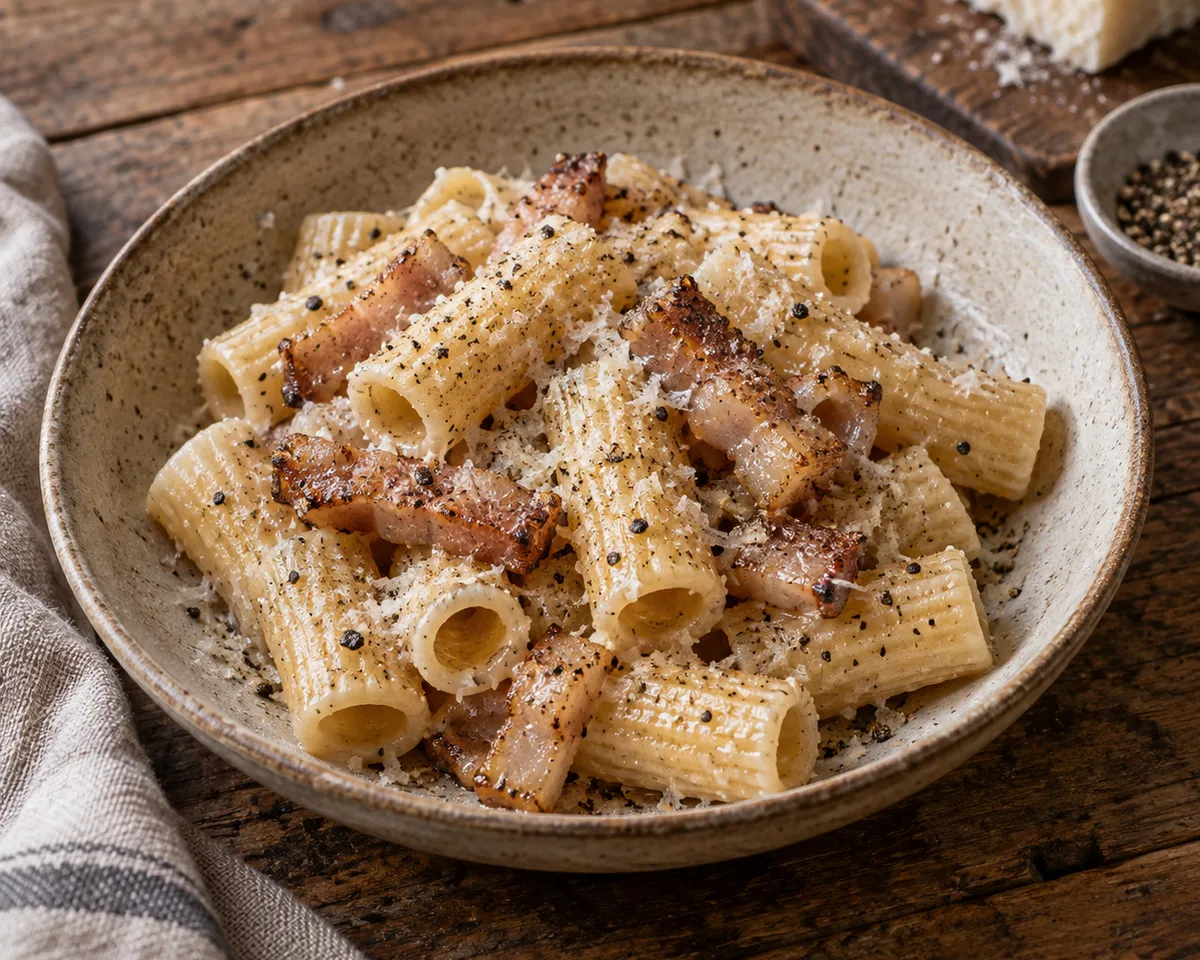
Pasta alla gricia
Roman pasta with guanciale and pecorino
In a pan of gricia, guanciale does two jobs: its golden-edged strips give the pasta substance, and its rendered fat becomes the base of the sauce. A little starchy water, grated sheep's cheese and black pepper complete it. The pork should keep a tender center, while the pasta wears a light, savory coating rather than sitting in a puddle of cheese.
The dish is strongly associated with the country around Amatrice and is firmly at home in Rome, though its precise origin is contested. Rigatoni and Pecorino Romano give it a distinctly Roman expression.
The last minute matters most. Cheese added to a scorching pan seizes into strings; cheese added to a pan that has cooled slightly can join the rendered fat and pasta water. Keep the pasta moving and serve while that coating is still supple.
Ingredients
For the pasta
- 320 gdried rigatoni
- 160 gunsmoked guanciale, rind removed and cut into thick strips (see note)
- 120 gvery finely grated Pecorino Romano DOP (see note)
- 4 gblack peppercorns, freshly cracked, or to taste
- fine salt, for the pasta water
Kitchen notes
- Guanciale
- Cured pork jowl, not smoked bacon or pancetta, supplies the fat that binds this sauce. Look for an unsmoked piece at a specialty Italian market or a well-stocked butcher. Cut strips thick enough to keep a yielding center as the edges brown.
- Pecorino Romano DOP
- The pastoral Amatrice tradition favors its own milder pecorino; this Roman interpretation uses Pecorino Romano DOP. Grate it as finely as possible and add it off the heat so it emulsifies rather than forming rubbery strands. The name on the label denotes a protected sheep's-milk cheese produced in Lazio, Sardegna or part of Toscana, not necessarily in the city of Rome.
Method
Render the guanciale
- Put the guanciale in a wide, cool skillet and set over medium-low heat. Cook slowly, turning occasionally, until plenty of clear fat has rendered and the strips are golden at the edges but still yielding inside, about 8–12 minutes. Do not let them darken and turn hard. Lift the guanciale into a bowl, leaving its fat in the pan. Toast half the pepper briefly in that fat, then turn off the heat.
Cook and coat the pasta
- Boil the rigatoni in lightly salted water; both the pork and cheese will add salt. Reserve a mug of the cloudy cooking water. Transfer the pasta to the skillet about 2 minutes before al dente, add roughly 120 ml (½ cup) of cooking water, and toss over medium heat until the pasta finishes cooking and a thin, glossy emulsion of water and pork fat clings to it. Add a splash more water if the pan dries out. Return the guanciale.
Finish off the heat
- Take the skillet off the heat and let its fierce bubbling subside. Add the finely grated pecorino in two or three additions, tossing vigorously after each with small splashes of warm pasta water. Stop when the cheese coats the pasta without clumping or pooling; the sauce should be glossy, not soupy. Add the remaining pepper, taste before adding any salt, and serve immediately.