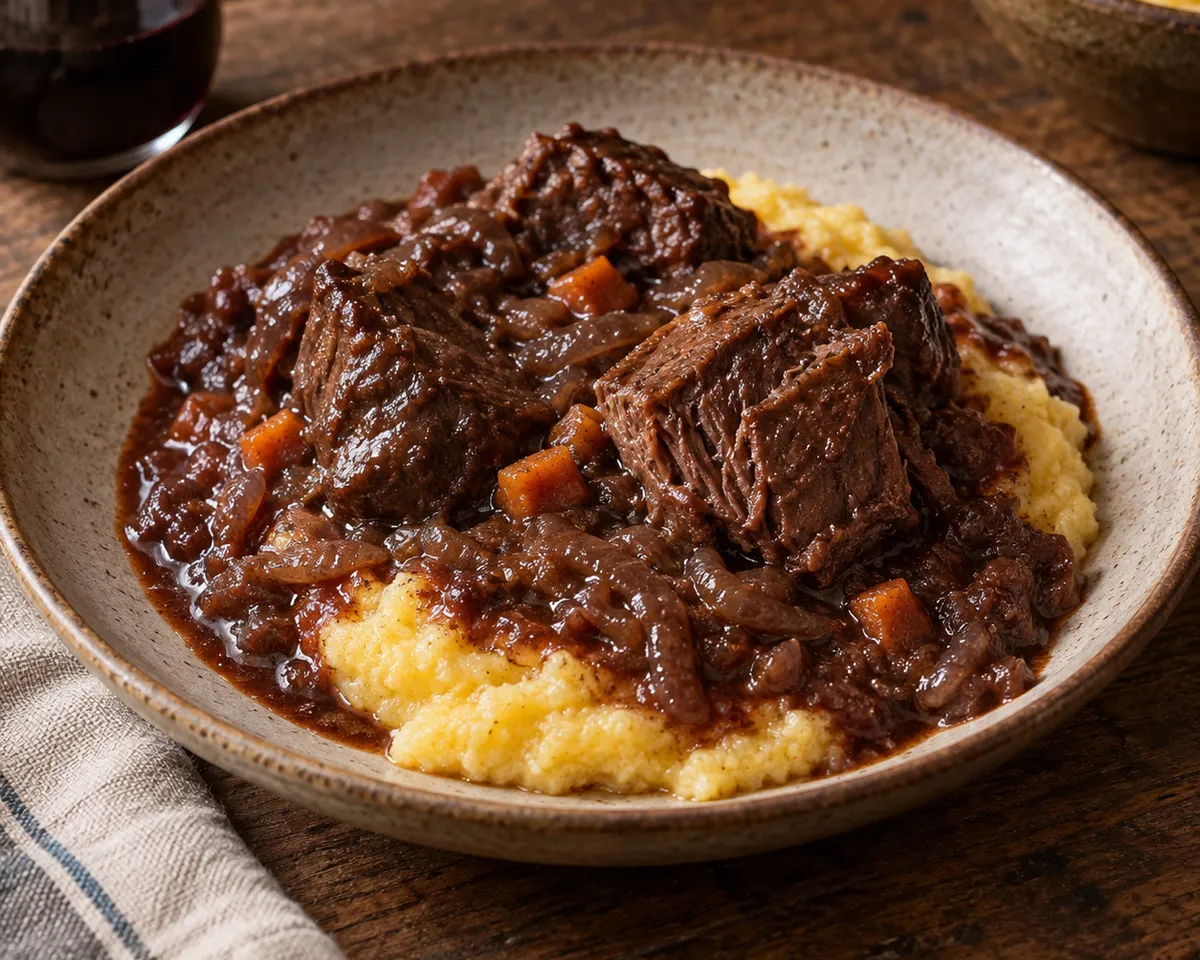
Pastisada de caval
Verona's long-braised wine stew, adapted with beef
In Verona, pastisada begins the night before. Meat rests in red wine and aromatics, then cooks slowly with a remarkable weight of onions until the sauce turns dark and the pieces yield to a spoon. Polenta gives that sauce somewhere to go; in the city it also dresses gnocchi.
Traditional pastisada de caval uses horse, as the name says. This recipe uses beef shank, an adaptation also made by Italian cooks, because horse meat is not a practical U.S. ingredient. The long wine marinade and onion-heavy braise remain; the flavor differs from the horse-meat dish.
A story places the dish after a fifth-century battle outside Verona, when fallen horses supposedly fed the city. It remains a local legend; the surviving historical evidence points to a much later development.
Ingredients
Marinade and braise
- 1.2 kg(about 2⅔ lb)boneless beef shank, cut into large 5 cm (2-inch) pieces (see note)
- 750 ml (one 750 ml bottle)dry, full-bodied red wine, preferably a Valpolicella or Valpolicella Ripasso
- 960 g(about 2 lb)yellow onions, thinly sliced
- 150 g(about 5 oz)carrots, cut into small dice
- 2garlic cloves, lightly crushed
- 2bay leaves
- 2short rosemary sprigs
- 3whole cloves
- 1small cinnamon stick
- 4juniper berries, lightly crushed
- 30 g(about 2 tbsp)unsalted butter
- 30 ml(2 tbsp)extra-virgin olive oil
- 10 g(about 1½ tsp)fine sea salt, plus more to taste
- 2 g(about 1 tsp)freshly ground black pepper
To serve
- 1 batchsoft cooked polenta, enough for 6 servings
Kitchen notes
- Beef shank
- Ask for boneless beef shank, a hard-working cut that becomes spoon-tender in the long braise. Bone-in shank needs a different weight and yield.
- Red wine
- Use a dry, robust red you would drink. Valpolicella Ripasso is regionally apt; Amarone is traditional in some recipes but its cost is unnecessary for this long braise. Avoid sweet cooking wine.
- Juniper berries
- Use whole culinary juniper berries, lightly crushed. The small quantity lets the wine, onions and meat remain the center of the stew.
Method
Marinate overnight
- Put the beef in a nonreactive dish with the wine, one-third of the onions, the garlic, bay, rosemary, cloves, cinnamon and juniper. Cover and refrigerate for 24 hours, turning the meat once if it is not fully submerged. This is a cold marinade, never a countertop soak.
Brown the beef
- Lift out the beef and pat it very dry; reserve the wine and vegetables. Heat the butter and olive oil in a heavy Dutch oven over medium-high heat. Brown the meat in batches, leaving space between the pieces, until each batch has a deep crust. Transfer to a plate.
Build the onion base
- Reduce the heat to medium. Add the remaining onions and the carrots with a pinch of the measured salt. Cook, stirring often and scraping the browned bottom, until the onions collapse and take on a rich golden color, 20–25 minutes. Pour in the reserved marinade and its vegetables and bring to a simmer, scraping up any remaining browned bits.
Braise gently
- Return the beef and its juices to the pot. Stir in the remaining salt and the pepper. The liquid should come most of the way up the meat; add a little water only if needed. Cover partly and simmer very gently, turning the pieces occasionally, until the shank is completely tender and the onions have dissolved into a dark, thick sauce, about 3–4 hours. The liquid should barely tremble, not boil hard. Add small splashes of hot water if the bottom threatens to catch; uncover for the last 20–30 minutes if the sauce is still thin.
Finish and serve
- Remove the rosemary stems, bay leaves and cinnamon stick, and any cloves you can find. Taste and adjust the salt. If the shank has not yet become spoon-tender, keep cooking rather than serving chewy meat. Spoon the pastisada and plenty of sauce over soft polenta.