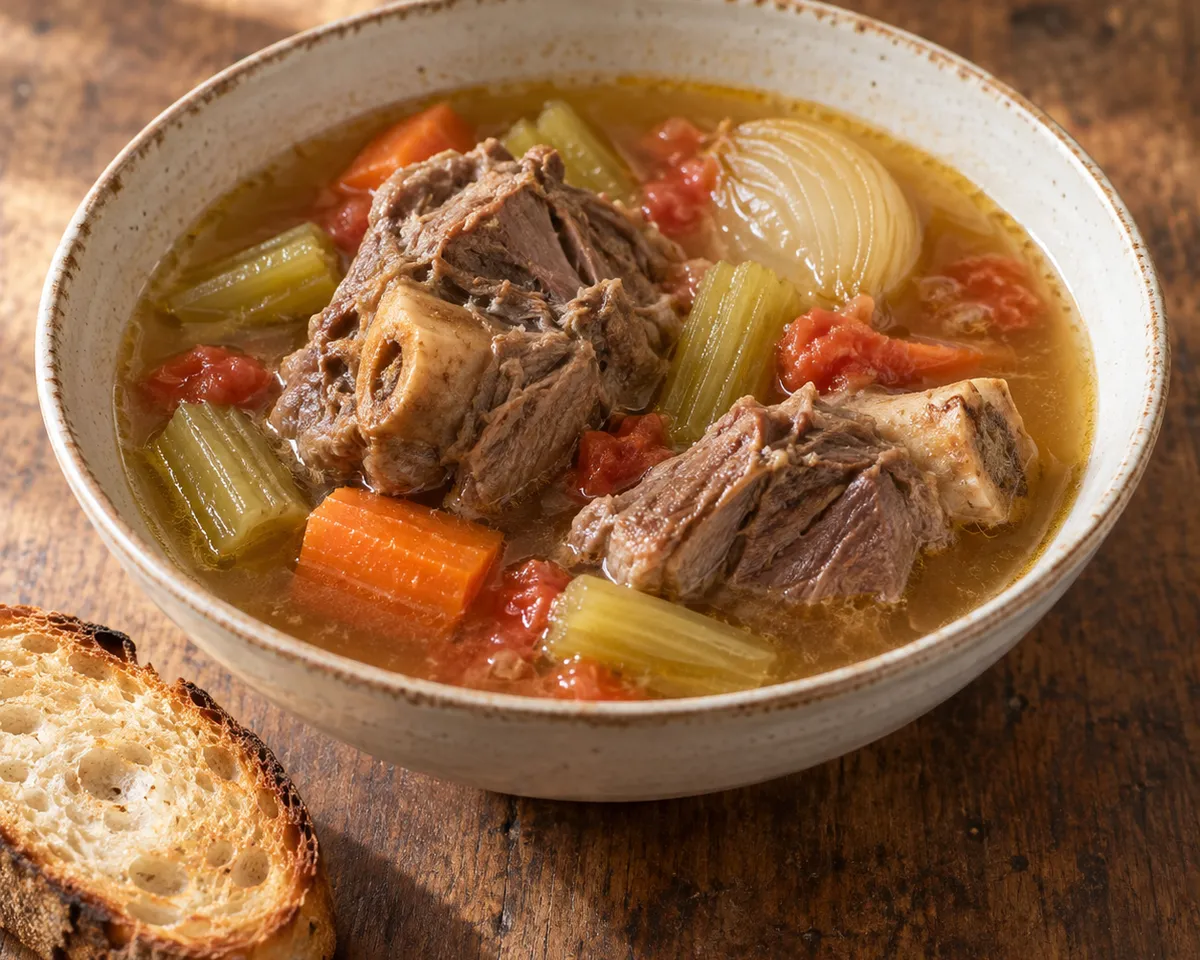
Pecora al cotturo
Abruzzese slow-cooked mutton in a shepherd’s pot
The copper pot hung over a wood fire for hours. In inland Abruzzo, mature sheep went into it with water and plain vegetables, then stayed until the tough meat yielded and the broth took body from bone and collagen. Pecora al cotturo still rewards that patience more than elaborate seasoning.
The names travel with the valleys. In the Aquilano it is cutturo or cottora; in the Teramano, callara; in the Marsica, ajiu cutturu. Recipes change with them. Some use white wine and herbs, some take tomato, and some keep the broth nearly bare. In this pot, celery, carrot, and onion flavor the broth before peeled tomatoes enter late in the simmer.
Ingredients
For the stew
- 2 kg(4½ lb)bone-in mutton shoulder, neck, and/or shank, cut into 7–8 cm (3-inch) pieces (see note)
- about 3 L(3 qt)cold water, plus more hot water as needed
- 150 gcelery stalks, cut into large pieces
- 200 gyellow onion, halved
- 150 gcarrots, cut into large pieces
- 500 g(about 18 oz)whole peeled tomatoes with their juices, crushed by hand
- 10 g(about 1¾ tsp)fine sea salt, plus more to taste
- dried red chile flakes, optional
To serve
- thick slices of country bread, lightly toasted
Kitchen notes
- Mutton
- Ask a specialty butcher for mature sheep meat, not young lamb. A mixture of bone-in shoulder, neck, and shank supplies the collagen and bones that make the broth feel complete after a long simmer. Lamb becomes tender much sooner and has a different flavor, so it is not a direct substitute for pecora.
- Heavy Dutch oven
- The traditional cottora is a large copper cauldron suspended over a wood fire, normally used outdoors for a crowd. A heavy covered pot holds a steady, gentle simmer at home, with enough room for the meat and for skimming. The smaller pot gives a different result from the outdoor cauldron.
- Peeled tomatoes
- Tomatoes appear in some regional versions of pecora alla cottora. Added after the first two hours, they retain some freshness against the long-cooked mutton broth.
Method
Start the mutton gently
- Put the mutton in a 7–8 L (7–8 qt) heavy Dutch oven or similarly deep pot. Add the cold water; the meat should be covered by about 3 cm (1 inch), so add a little more if needed. Bring it slowly to a bare simmer over medium heat. As gray foam and excess fat rise, skim them off with a shallow spoon for the first 30 minutes. Add the celery, onion, carrots, and salt. Adjust the heat so the liquid stays between 185°F and 200°F (85°C and 93°C), with occasional lazy bubbles rather than a rolling boil.
Give it the long first cook
- Partially cover and simmer very gently for 2 hours, turning the larger pieces once or twice. Keep the liquid level steady with hot water, never cold water. The meat will still be firm at this stage; that is expected. Skim any fresh fat that gathers on the surface so the eventual broth stays full rather than greasy.
Add tomato and finish
- Stir in the crushed tomatoes and their juices. Continue the bare simmer, partially covered, for another 1½–2 hours, until a fork slides into the thickest mutton pieces with little resistance and the meat begins to pull from the bone. Add a small pinch of chile only in the final 20 minutes if you want it. Taste the broth and correct the salt. If it seems thin after the meat is tender, uncover and simmer for 10–15 minutes; do not rush the earlier cooking with a hard boil.
Rest and serve
- Let the pot stand, covered, for 15 minutes so the fat rises clearly and skim once more if needed. Lift the mutton and vegetables into warm bowls, spoon over the broth and tomatoes, and serve with toasted country bread. The dish is best hot and brothy, not reduced into a thick sauce.