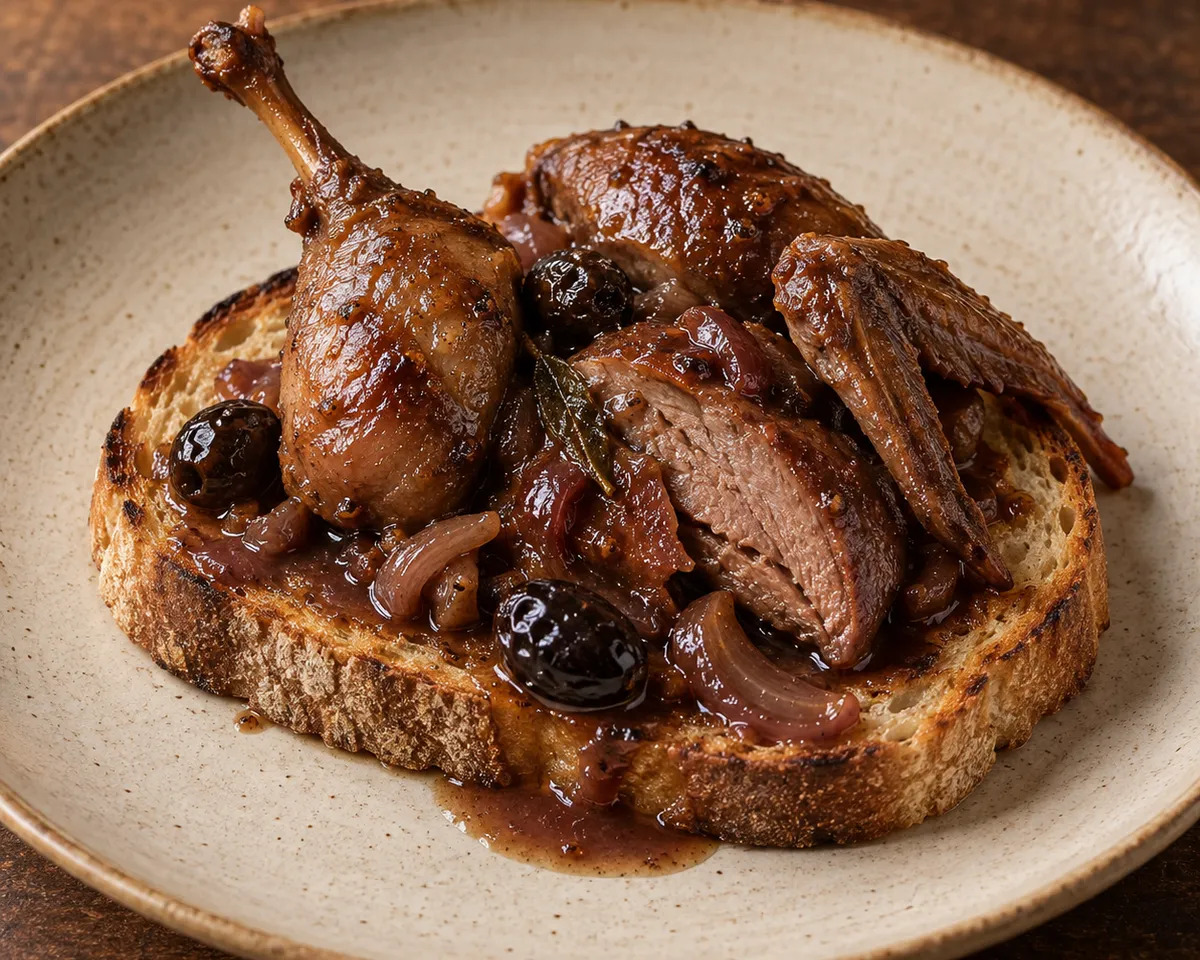
Piccione all'orvietana
Orvieto pigeon with red wine and black olives
Toast beneath the pigeon catches a dark, fragrant sauce sharpened with vinegar and studded with black olives. The bird is small, its flavor deeper than chicken's, and the bread takes up the concentrated wine juices.
Orvieto's leccarda was the long pan set beneath a spit to catch drippings; its name has stayed with a local way of cooking pigeon. Versions differ from kitchen to kitchen. Red wine, herbs, and olives flavor this braise. The legs cook slowly, and the leaner breasts go in only near the end.
There is no need to make the sauce thick with flour. Let the wine reduce, keep the braise gentle, and finish by boiling the juices down until they cling to the meat and soak into the toast. The olives give little bursts of salt and bitterness against the sweet onion and concentrated wine.
Ingredients
For the pigeon
- 2young farmed pigeons (squab), about 500–600 g (1–1¼ lb) each, jointed into breast and leg portions
- 40 ml(2 tbsp plus 2 tsp)extra-virgin olive oil
- 120 gyellow onion, finely chopped
- 2garlic cloves, lightly crushed
- 1 small sprigfresh rosemary
- 6fresh sage leaves
- 250 ml(1 cup)dry red wine
- 150 ml(⅔ cup)water, plus more if needed
- 80 gpitted, dry-cured black olives
- 15 ml(1 tbsp)red wine vinegar
- fine sea salt and freshly ground black pepper
- 4 thick slicesrustic country bread, toasted, for serving
Kitchen notes
- Pigeon or squab
- Buy farmed birds sold for cooking, not wild-caught urban pigeons. In the United States a young pigeon is commonly sold as squab. Ask the butcher to joint the birds and keep the legs separate from the breast portions; the staggered braise protects the lean breast meat.
- Dry-cured black olives
- Look for wrinkled, fully ripe black olives cured in salt or oil. Ordinary canned black olives are milder and wetter, and would flatten this dark, concentrated sauce.
- Leccarda
- The historic leccarda was a long pan used to collect drippings beneath a spit. A broad covered sauté pan or shallow braiser is the practical home vessel for this wine-braised version.
Method
Brown the bird
- Pat the pigeon pieces dry and season lightly with salt and pepper. Heat the olive oil in a broad, heavy pan over medium-high heat. Brown the legs for about 5–7 minutes total and the breasts for about 2–3 minutes per side, skin side first, until golden. Work in batches so they brown rather than steam. Transfer them to a plate; they will finish cooking later.
Build the braise
- Lower the heat to medium. Cook the onion in the pan fat until soft and beginning to color, about 7–8 minutes. Add the garlic, rosemary, and sage for a minute. Pour in the red wine, scrape up the browned bits, and simmer until it has reduced by about half. Return the legs and their juices to the pan with the water. Cover partially and simmer very gently for 35–45 minutes, adding a splash of water if the pan threatens to dry out.
Finish the breast pieces and sauce
- When the legs yield easily at the joint, add the olives and vinegar, then return the breast pieces to the pan. Cover and simmer gently just until the thickest breast and leg portions reach 165°F (74°C), checking after 3–4 minutes to avoid overcooking the lean breasts. Transfer the bird to a warm plate and discard the rosemary stem and garlic. Boil the pan juices briefly if needed, until they are glossy and concentrated enough to coat a spoon; taste before adding any more salt because the olives are salty.
Serve
- Lay the toasted bread on four warm plates, place the pigeon pieces over it, and spoon the olive-studded sauce over both bread and bird. Serve immediately.