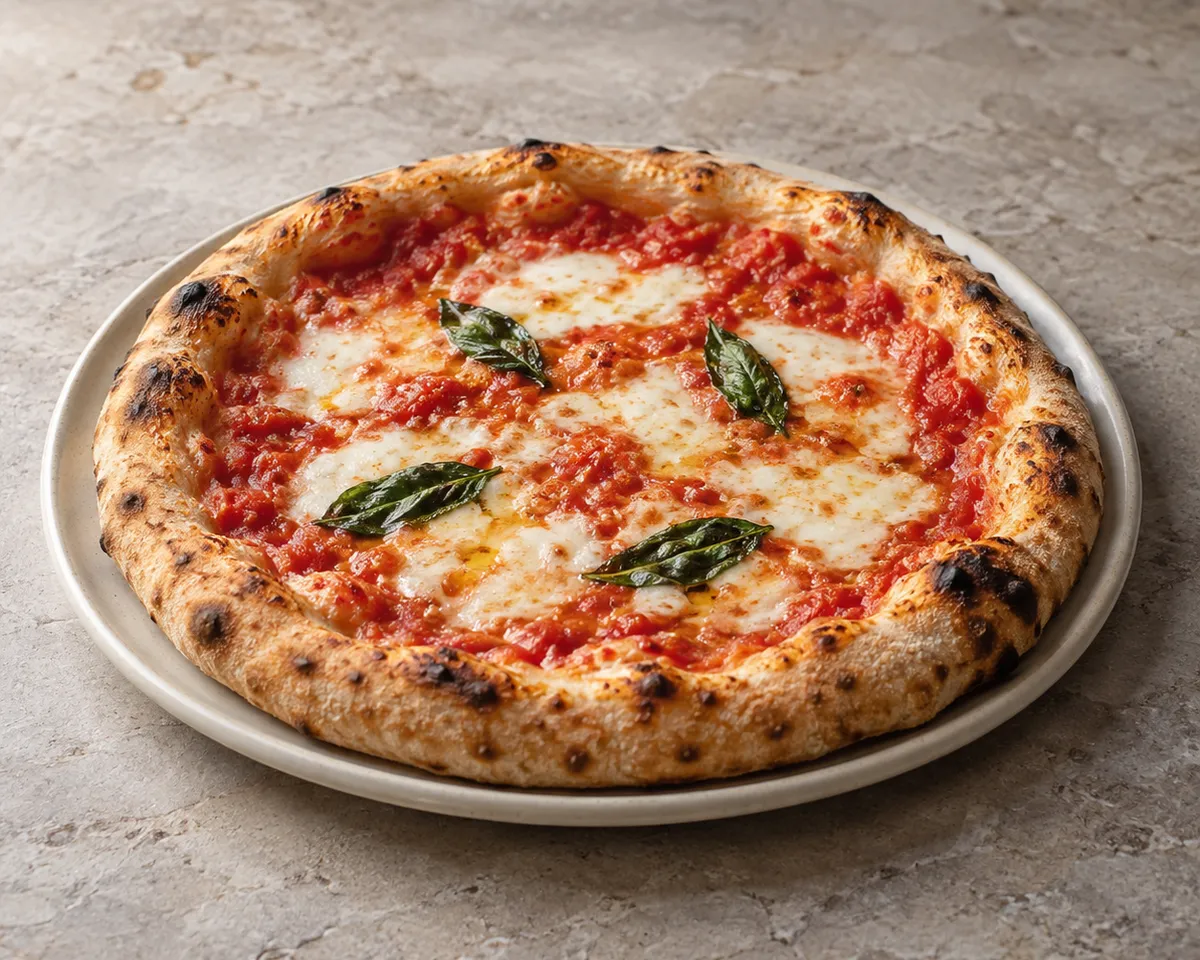
Pizza napoletana Margherita
Neapolitan pizza with tomato, mozzarella and basil
A Neapolitan Margherita should bend at the center and swell at the rim. Lively tomato, soft cow's-milk mozzarella, basil and oil sit on a thin, tender base, each in a measured amount. A heavy load of cheese or sauce would overwhelm the dough that makes this pizza distinctive.
The dough is mixed in one stage, then given time to ferment and relax. Pressing it outward by hand moves trapped gas toward the edge. That untouched ring becomes the cornicione, the airy rim around the tender center.
Ingredients
Dough
- 650 gtype 00 pizza flour, plus a little more for shaping (see note)
- 390 gcool water
- 18 gfine sea salt
- 0.3 g(a scant ⅛ tsp)instant dry yeast, or 0.9 g fresh yeast
Margherita topping
- 280 gwhole peeled tomatoes, preferably San Marzano DOP, crushed by hand
- 2 gfine sea salt
- 360 gwell-drained fior di latte, cut into thin strips (see note)
- 26 g(about 2 tbsp)extra-virgin olive oil
- 16small fresh basil leaves
Kitchen notes
- Type 00 pizza flour
- Choose a medium-strength Italian-style pizza flour labeled type 00 or type 0, suitable for a long pizza fermentation. It should make a soft, extensible dough at roughly 60% hydration. Bread flour or all-purpose flour produces a different dough and is not offered here as a casual substitute.
- Fior di latte
- For this version, use fresh cow's-milk mozzarella, cut into strips and drained well; it is not the low-moisture, pre-shredded mozzarella common in the United States. Fior di latte is the classical cow's-milk choice for a Neapolitan Margherita. Mozzarella di Bufala Campana DOP is also traditional, but is wetter and needs especially careful draining.
- A home oven
- Neapolitan pizza cooks directly on the floor of a pizza oven at roughly 715–805°F (380–430°C) for 60–90 seconds. A thoroughly heated steel and broiler give a home oven its closest practical setup. The longer bake produces a firmer, somewhat drier base and a less spotted rim.
Method
Mix the dough
- Put the water in a large bowl, dissolve the salt in it, then stir in about one-tenth of the flour. Sprinkle in the yeast and add the remaining flour gradually, mixing until no dry flour remains. Knead on an unfloured counter for 10–15 minutes, until the dough is smooth, moist and elastic but no longer sticky. Do not add oil or sugar: they are not part of this dough.
- Cover the dough and leave it at a moderate room temperature, about 68–72°F (20–22°C), for 2 hours. Divide it into four pieces of about 265 g and form each into a taut ball by tucking the edges underneath. Put the balls in lightly covered containers with room to expand and leave them for 10–14 hours more. They should be relaxed, aerated and expanded, but still hold a rounded shape; a very warm kitchen will shorten this timing.
Prepare the topping and oven
- Combine the hand-crushed tomatoes and salt; do not cook them into a sauce. Drain the fior di latte thoroughly on paper towels so it will melt without flooding the pizza. Put a pizza steel, or the heaviest baking steel or stone you own, on an upper rack about 6 inches below the broiler. Heat the oven at its maximum bake setting, ideally 500–550°F (260–290°C), for at least 45 minutes. Have the tomatoes, cheese, basil, oil, peel and a turning tool ready before shaping the first pizza.
Stretch by hand
- Work with one dough ball at a time and keep the others covered. Lightly dust the counter with flour, set down a ball, and press from the center outward with your fingertips, leaving a 1–1½ cm (½ in) rim untouched. Lift and gently stretch the disk over your hands, turning it as you go, until it is about 28–30 cm (11–12 in) across and the center is thin but unbroken. The air pushed into the untouched rim is what makes the cornicione. Do not use a rolling pin, which flattens it.
- Lay the disk on a lightly floured peel. Quickly spread one-quarter of the tomato over the center, leaving the rim bare; scatter one-quarter of the fior di latte, add 4 basil leaves, and drizzle about 1½ teaspoons of the oil in a loose spiral. Shake the peel before launching: the pizza must still slide freely.
Bake one pizza at a time
- Launch the pizza directly onto the hot steel, immediately switch the oven to high broil, and cook for 2–4 minutes, turning once if one side colors faster. It is ready when the rim is puffed and deeply browned in spots, the underside is crisp and browned, and the cheese has melted without separating into a puddle. Broilers vary sharply, so stay at the oven; if the top colors too fast before the base sets, move the rack down one position for the remaining pizzas.
- Transfer the pizza to a plate and eat it at once. Return the steel to the maximum bake setting for 5 minutes between pizzas, then repeat the shaping, topping and broiling steps with the remaining dough balls.