Polenta
Firm Bergamasca cornmeal polenta
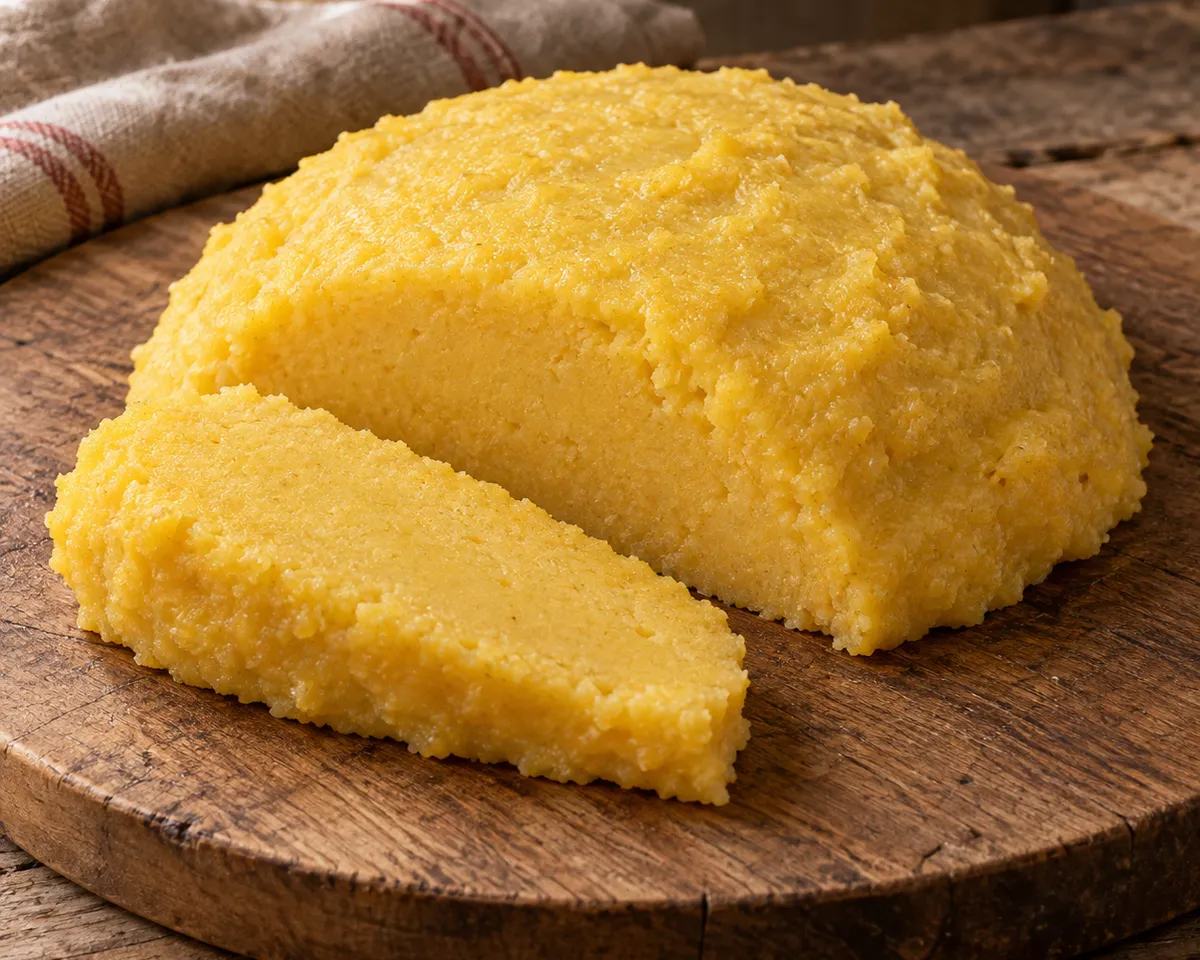
Firmness is a matter of local pride in the Bergamasca. A plain polenta comes off the heat as a golden, coarse-grained mound that can be turned onto a cloth-covered board, held warm under the cloth, and cut into substantial slices. Water, cornmeal, and salt cook slowly until the mass pulls cleanly from the pot.
Bergamo's bramata meal is milled from vitreous or semi-vitreous corn to a coarse grain, giving the cooked polenta a rougher texture and deep yellow color. For generations it was daily sustenance in the province; the enduring nickname polentoni tells you how fully the food entered local identity.
The firm slices accompany a braise, roast, mushrooms, or local cheese. In the Bergamo valleys, polenta taragna brings buckwheat flour and cheese into the pot, making a darker, richer relative.
Ingredients
For the polenta
- 500 gcoarse yellow cornmeal for polenta (farina di mais bramata; see note)
- 1.8 L(about 7½ cups)water, plus boiling water if needed
- 10 gcoarse salt
Kitchen notes
- Farina di mais bramata
- Bramata is coarse yellow cornmeal for long-cooked polenta, traditionally stone-milled and made in the Bergamasca from vitreous or semi-vitreous corn. Look for Italian coarse polenta meal or stone-ground coarse yellow cornmeal. Do not use instant or precooked polenta, fine corn flour, corn starch, or masa harina: each hydrates differently and will not give this firm, granular result.
- Pot and board
- A copper paiolo and wooden polenta board are traditional, but a heavy, wide-bottomed pot and a heatproof serving board or platter work well at home. The pan must be large enough to let the thickening cornmeal bubble safely while you stir; do not try this quantity in a small saucepan.
Method
Bring the water to a boil
- Set a heavy 5 L (5- to 6-quart) pot or traditional copper paiolo over high heat with the 1.8 L water. Bring it to a full boil, then add the salt. Keep a small pan or kettle of water hot alongside; coarse meal and individual pots can need a little extra before the polenta is done.
Work in the cornmeal
- Lower the heat so the water bubbles steadily but does not surge. With one hand, pour in the cornmeal in a thin, continuous rain; with the other, whisk vigorously from the bottom and around the sides. Do not rush this first minute: every dry pocket must disappear before the mass starts to thicken. When all the meal is incorporated, exchange the whisk for a long wooden spoon or polenta paddle.
Cook until firm
- Cook at a gentle, steady bubble for 55–60 minutes. Stir from the bottom up and scrape around the sides at least every 2–3 minutes, more often whenever the polenta catches or thickens sharply. It will shift from a loose porridge to a heavy mass that pulls together as the spoon passes through it. If it becomes too stiff to stir before the grains are tender, beat in boiling water a tablespoon at a time; do not dilute it with cold water.
Turn out and serve
- The polenta is ready when the grains no longer taste chalky, the mass comes away from the pot's sides, and a spoon or paddle can stand briefly in its center. Wet a broad wooden board or a heatproof platter, turn the polenta out in one confident motion, and shape it into a low mound with a wet spoon. Cover loosely with a clean damp kitchen towel for 2–3 minutes to keep the surface supple, then cut into slices with a taut cotton string or a knife and serve hot.