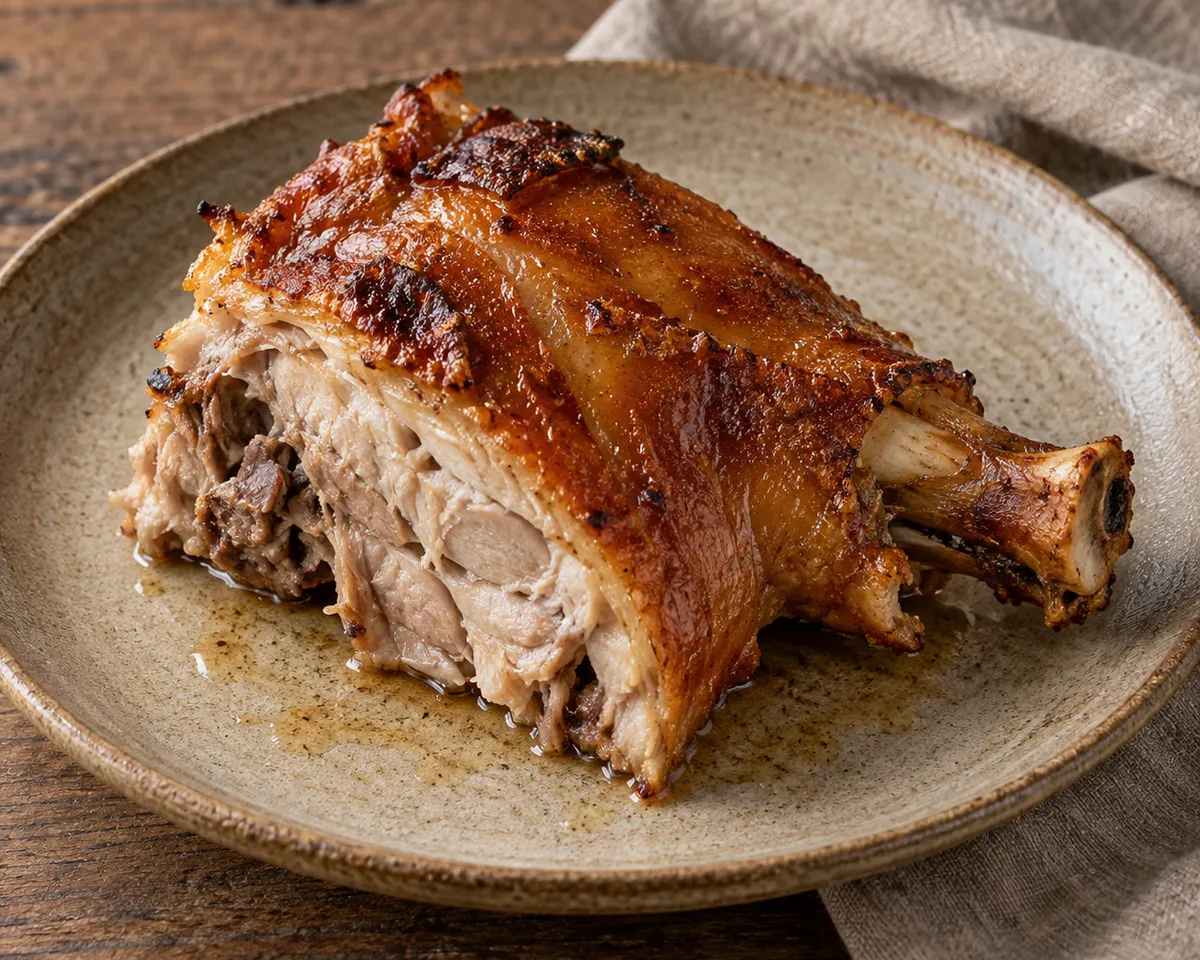
Porceddu
Myrtle-scented Sardinian suckling pig
A carraxiu is a way of making the earth into an oven. A fire burns down inside a pit; the whole young pig lies between thick layers of myrtle, with embers above and below. Covered with stones and soil, it cooks out of sight. The leaves protect the meat from the coals and leave their resinous scent behind.
Porceddu more often turns on a spit, but this buried version belongs to Sardinia's interior roasting tradition. The pig is still a milk-fed animal, small enough for its flesh to stay delicate, and the seasoning remains spare: salt and myrtle.
A domestic oven cannot reproduce the embers or the sealed earth. Here, a rear quarter of suckling pig cooks beneath a loose cover of fresh myrtle and is then exposed to dry heat to bronze its skin.
Ingredients
For the roast
- 1.8–2.2 kg(4–5 lb)skin-on, bone-in rear quarter of milk-fed suckling pig (see note)
- 16 gfine sea salt
- 8–12 generous sprigsfresh culinary myrtle, Myrtus communis, enough to make a bed and cover the meat (see note)
Kitchen notes
- Suckling pig
- Ask a specialty butcher for a rear quarter cut from a milk-fed suckling pig, with skin and bone intact; the whole animal is usually around 4–8 kg before quartering. An ordinary pork shoulder, pork belly, or mature pig is not the same meat and will not give the same delicate roast. The traditional a carraxiu roast buries a whole animal; the quarter is the workable home scale.
- Fresh myrtle
- Use aromatic, untreated Myrtus communis sprigs sold for culinary use or harvested from a known edible plant. Sardinian mirto here means leaves and branches, not the sweet berry liqueur. Lemon myrtle, wax myrtle, and California bay sold as 'Oregon myrtle' are different plants; none is a like-for-like replacement. The abundant leaf cover is integral to this interpretation, so source it before starting.
Method
Salt and enclose the pork
- Pat the pig dry and check that the skin is clean and intact. Rub the salt over the flesh and skin, getting some into the joints. Heat the oven to 325°F (165°C). Spread about half the myrtle in a snug roasting pan and lay the pork on it, skin up. Tuck the remaining sprigs around and loosely over the meat. Cover the pan tightly with a lid or foil, keeping the foil off the skin if possible. Do not add water, wine, oil, or a spice rub: the pork will supply its own juices.
Roast gently
- Roast covered for about 1½ hours, then check the thickest part of the hind leg with an instant-read thermometer, avoiding bone. Continue in 15-minute intervals until the meat reaches 150–155°F (66–68°C) and a skewer enters the joint with little resistance; a large or especially thick quarter may take closer to 2 hours. The skin will look pale at this stage. Lift off and discard the myrtle lying on top, but leave the bed beneath the pork.
Brown the skin
- Raise the oven to 450°F (230°C), uncover the pan, and roast skin up for 10–20 minutes, watching closely. The skin should turn deep gold and feel firm, with a few crisp patches; do not let the branches catch fire. If the pan juices begin to scorch, move the pork to a clean rack set over a clean pan for this finish. Rest 15 minutes, then chop through the joints into serving pieces. Serve warm with the meat's juices, leaving the cooked myrtle branches behind.