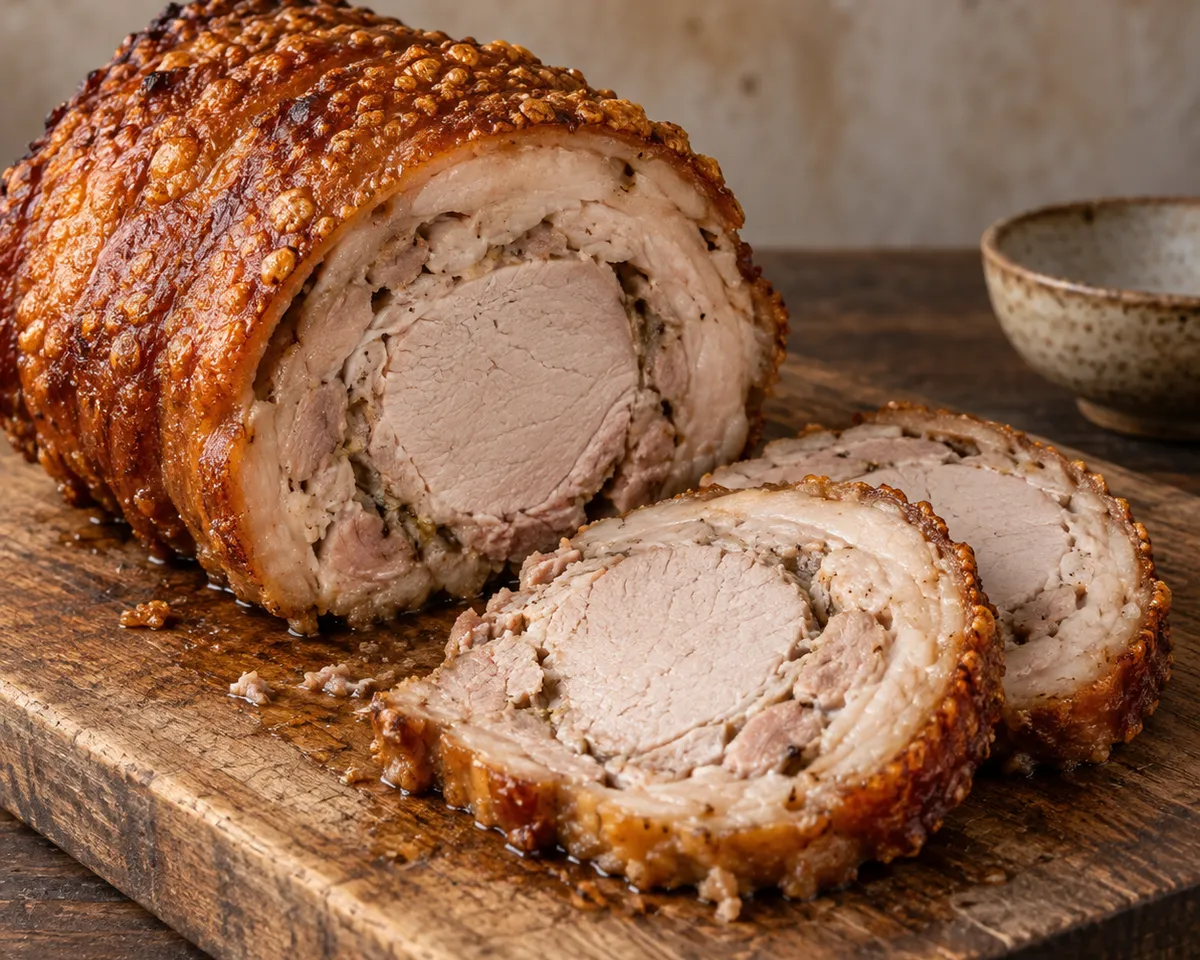
Porchetta di Ariccia
Ariccia’s rosemary-scented roast pork
Rosemary gives Ariccia’s porchetta its characteristic perfume. Garlic and black pepper sharpen the sweetness of the pork beneath its dark, brittle skin. A few slices tucked into plain bread make an Ariccia meal with little else to distract from the roast.
Ariccia’s protected porchetta is made from a boned whole female pig or a substantial central section, seasoned, bound and roasted within the town. The IGP name ties the pork to that place and method. Rosemary, garlic and pepper distinguish its flavor from the fennel-and-offal porchetta made in Umbria.
The roll uses fresh skin-on belly around lean loin, so each slice has its share of meat, fat and crackling. Long, gentle heat cooks the center; a final close watch on the rind decides whether the roast is ready to carve.
Ingredients
For the roast
- 1(about 2 kg / 4 lb 7 oz)rectangular skin-on fresh pork belly, ribs removed, large enough to wrap around the loin (see note)
- 650 g(1 lb 7 oz)boneless pork loin, in a single long piece
- 45 gfine sea salt
- 2 gfresh rosemary leaves, very finely chopped
- 2 ggarlic, finely minced to a paste
- 2 gfreshly ground black pepper
- 250 ml(1 cup)water, for the roasting pan
To serve
- plain crusty country bread, if making sandwiches
Kitchen notes
- The cuts and the IGP name
- The certified Porchetta di Ariccia IGP is made in Ariccia from a boned whole pig or a large central section that includes loin and belly. This roughly 2.7 kg roll approximates the latter in a household oven. It is not an IGP product, even when made with the same core seasoning. Ask a butcher for fresh skin-on belly and a piece of loin; cured pancetta or American bacon is not suitable.
- Seasoning
- Rosemary, garlic and black pepper supply the aromatic seasoning. The small weighed amounts suit this size of roast. Fennel, liver, sage and wine would give it a different regional character.
- Scale and oven
- Ariccia producers roast much larger whole animals or sections with specialized equipment and controlled cooling. A smaller roll in a home oven cooks differently. Follow the thermometer and the condition of the rind to judge readiness.
Method
Season and bind
- Lay the belly skin-side down with its long edge facing you. Butterfly any thick part of the loin so it lies as an even strip. Mix the rosemary, garlic and black pepper. Rub 34 g of the salt over the exposed belly meat and all sides of the loin, then distribute the seasoning evenly over both. Set the loin lengthwise near one long edge and roll the belly tightly around it, skin outward; avoid folding a thick layer of skin inside the roll. Tie firmly with kitchen twine every 3–4 cm (1¼–1½ in), then pass twine lengthwise once to keep the roll compact. Rub the remaining 11 g salt over the skin.
Dry the surface
- Set the roll on a rack over a pan and refrigerate uncovered for 8–12 hours. Before roasting, prick the skin all over with the tip of a thin skewer without piercing the meat. The surface should feel dry, not slick.
Roast and crisp
- Heat the oven to 425°F (220°C). Set the rack and pork over a deep roasting pan; add the water below the meat. Roast for 30–40 minutes, until the skin begins to tighten and color. Reduce the oven to 325°F (160°C) and continue roasting for roughly 2–3 hours, turning the pan once and replenishing a little water only if the drippings threaten to burn. Check the thickest part of the loin with an instant-read thermometer; cook until it reaches 160°F (71°C) and the belly is tender. If the skin still needs crisping, briefly raise the heat to 450°F (230°C), watching constantly until it blisters and becomes hard and brittle rather than merely brown.
Rest and slice
- Rest the roast uncovered for at least 30 minutes; longer cooling makes the tight roll easier to cut for sandwiches. Remove the twine and slice across the roll with a sharp serrated knife so each portion includes crackling, belly and loin. Serve warm or at room temperature, plain or in crusty bread.