Ragù d'anatra (sugo d'anatra)
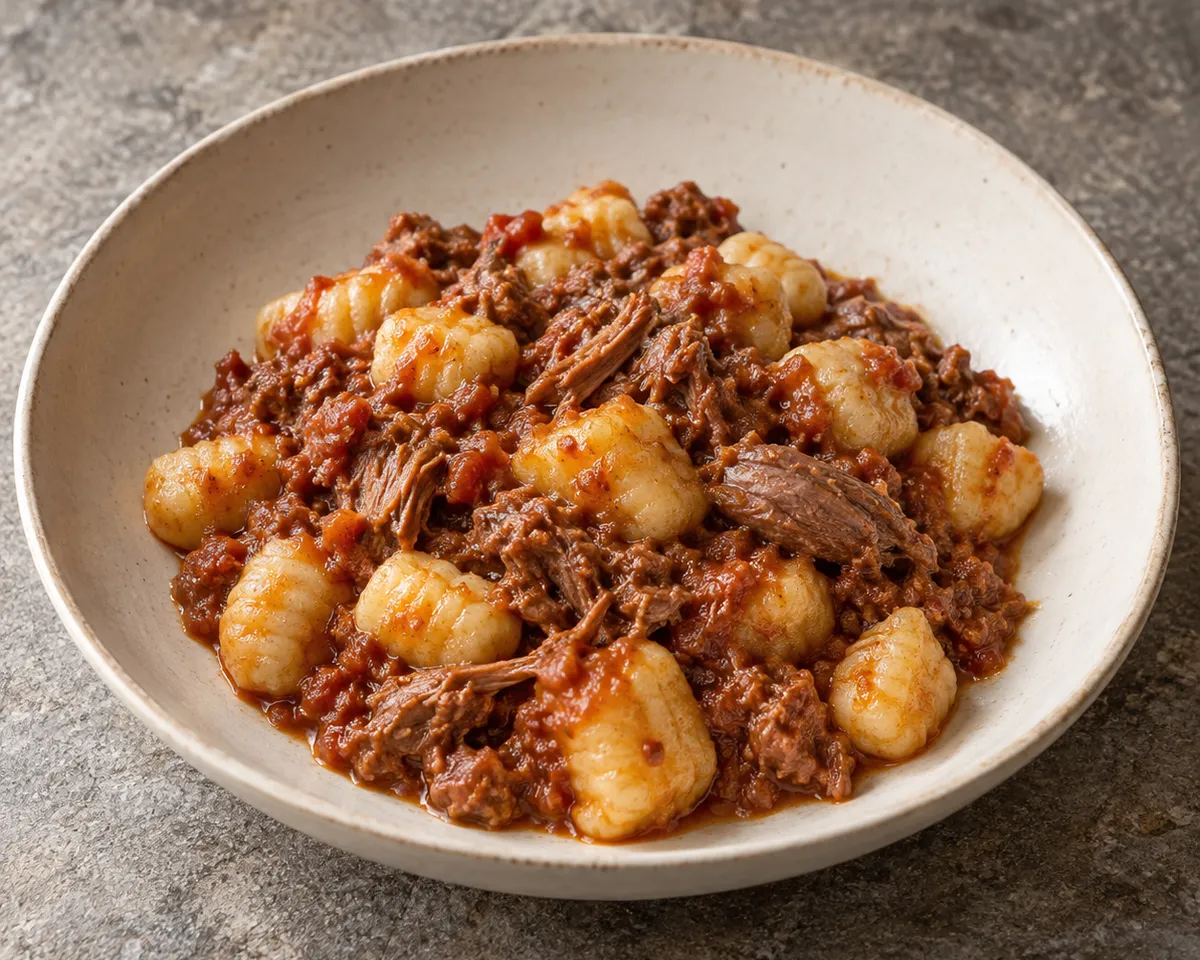
Veneto duck ragù with potato gnocchi
Duck gives this Veneto sauce its depth. Its meat cooks slowly with a little soffritto, white wine, bay and just enough tomato to bind the juices, then is pulled back into the pot in tender, irregular shreds.
Around Venezia, potato gnocchi with duck sauce have their own place at the table. Their soft, mild potato crumb takes up the dark ragù. Elsewhere in Veneto, the Vicentino has its own duck-and-bigoli tradition, bigoli co’ l’arna.
Ingredients
For the duck ragù
- 1.4 kg(3 lb)young domestic duck, cut into serving pieces, with skin and bones (see note)
- 30 ml(2 tablespoons)extra-virgin olive oil
- 1 mediumyellow onion, finely chopped
- 1 mediumcarrot, finely chopped
- 1 ribcelery, finely chopped
- 1garlic clove, lightly crushed
- 2bay leaves
- 120 ml(½ cup)dry white wine
- 350 g(about 1½ cups)tomato passata
- 250 ml (1 cup), plus more as neededhot light poultry stock or water
- fine salt and freshly ground black pepper
To serve
- 800 g(1¾ lb)fresh potato gnocchi
- finely grated Grana Padano, optional
Kitchen notes
- Young domestic duck
- Ask a butcher for a whole young domestic duck cut into serving pieces, and keep the skin and bones for the braise. Do not use smoked duck, confit, or boneless duck breast: the bones and skin give the sauce its duck fat and depth. Remove the skin and bones before tossing the gnocchi.
- Tomato passata
- Passata is smooth, strained tomato purée, sold in bottles or cartons at Italian markets and many larger groceries. It supplies a restrained sauce base here; do not replace it with sweet ketchup, tomato paste, or a heavily seasoned jarred pasta sauce.
- Fresh potato gnocchi
- Buy fresh, tender potato gnocchi, usually refrigerated or vacuum-packed; shelf-stable, very dense dumplings can need a little longer after floating and should be treated by their texture rather than the clock.
Method
Brown the duck
- Pat the duck pieces dry and season them with salt and pepper. Warm the olive oil in a wide, heavy casserole over medium heat. Add the duck in a single layer, working in batches if necessary, and brown it well on several sides, 10–12 minutes total per batch. Transfer the pieces to a plate. Spoon off all but about 2 tablespoons of the rendered fat from the casserole.
Build the sauce
- Lower the heat to medium-low. Add the onion, carrot, and celery and cook in the duck fat until soft and translucent, about 8 minutes. Add the garlic and bay and stir for 30 seconds, just until fragrant. Return the duck and any juices to the pot, pour in the wine, and simmer until its sharp alcoholic smell has gone and it has reduced by about half.
- Add the passata and 250 ml hot stock or water. Bring the sauce just to a simmer, cover with the lid slightly ajar, and cook at the barest bubble, turning the pieces once or twice, until the leg meat pulls easily from the bone, 1¼ to 1¾ hours. Add small splashes of hot liquid only if the pot becomes dry before the duck is tender; the finished sauce should be thick enough to coat gnocchi, not soupy.
Shred and reduce
- Lift the duck onto a board and discard the skin, bones, bay, and any visible large pieces of fat. Pull the meat into coarse shreds, leaving some small and some larger pieces. Skim any clear excess fat from the sauce, return the meat to the pot, and simmer uncovered for 10–15 minutes until the sauce is glossy and clings to the duck. Taste and correct the salt and pepper.
Cook the gnocchi and toss
- Bring a large pot of well-salted water to a boil. Cook the gnocchi in batches if necessary; once they rise, give them about 30 seconds, then lift them out with a spider or slotted spoon directly into the ragù. Add a spoonful of their cooking water and turn them very gently over low heat until the sauce coats every piece. Serve immediately, with Grana Padano at the table only for those who want it.