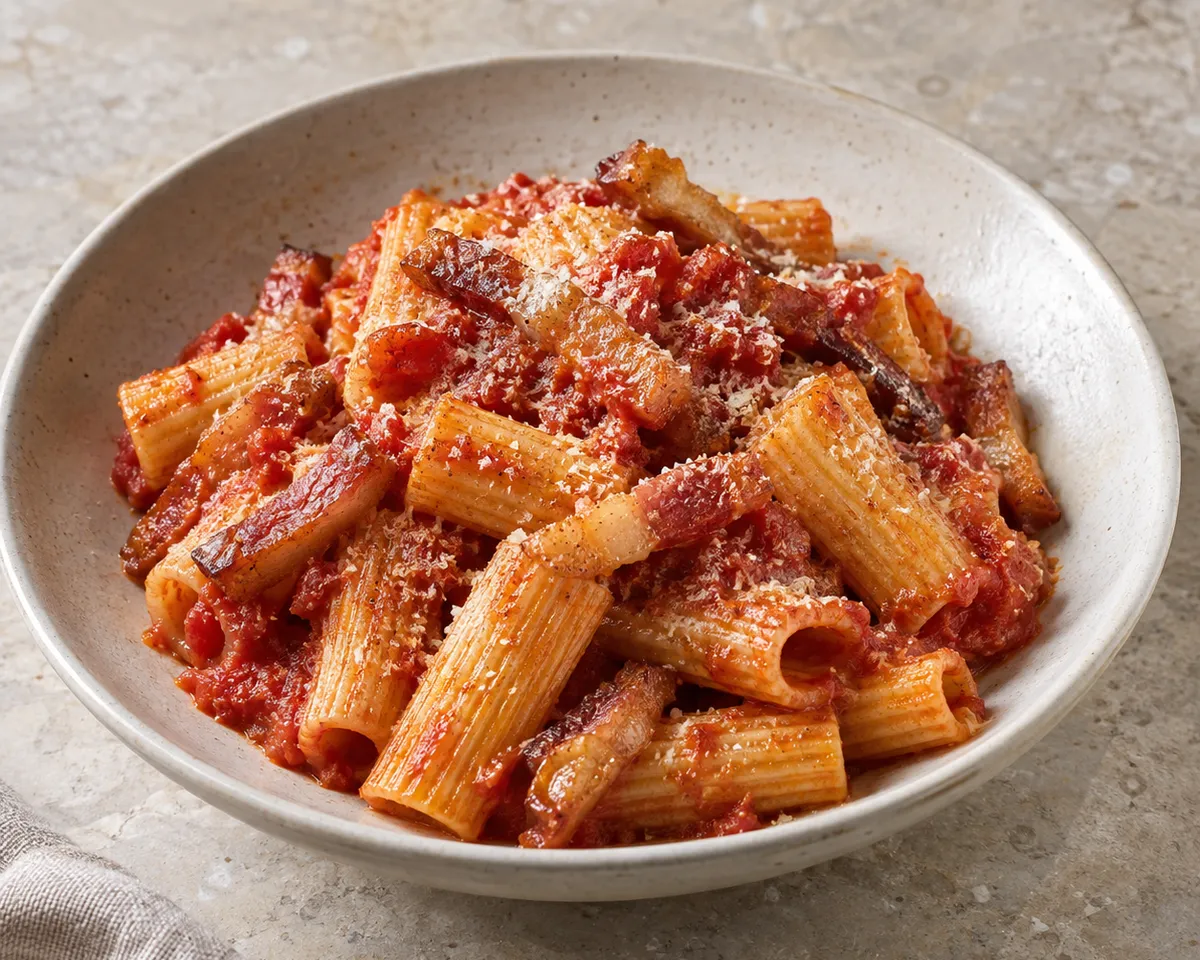
Rigatoni all'amatriciana
Guanciale, tomato and pecorino pasta
Amatriciana begins in the high country around Amatrice, where cured pork jowl and sheep's cheese made sense as foods that traveled well. The red sauce came later, when tomato joined that pastoral pantry; Amatrician cooks and innkeepers helped carry it to Rome, where it became one of the city's defining pastas.
Guanciale supplies both the fat and the chewy, salted pork note; tomato supplies ripe sweetness; pecorino finishes the sauce with a sharp, sheepy edge. The result ought to be glossy and compact, with enough sauce to cling to the pasta rather than pool beneath it.
Spaghetti and bucatini are the classic pairings in Amatrice, but short pasta belongs to the tradition too. In Rome, a sturdy ridged rigatone is a well-established choice: it catches the tomato in its grooves and gives the guanciale something substantial to work against.
Ingredients
For the sauce and pasta
- 320 gdried rigatoni
- 120 gunsmoked guanciale, rind removed and cut into 1 cm (⅜-inch) strips (see note)
- 5 ml(1 tsp)extra-virgin olive oil
- 30 ml(2 tablespoons)dry white wine
- 400 g(14 oz)whole peeled tomatoes, crushed by hand with their juices
- 1 smalldried red chile, or a small pinch of dried chile flakes
- 80 gfinely grated Pecorino Romano DOP (see note)
- fine salt
- freshly ground black pepper, optional
Kitchen notes
- Guanciale
- Use cured pork jowl, not pancetta. Its higher proportion of soft fat renders into the sauce while its lean streaks stay pleasantly chewy; pancetta comes from the belly and changes both texture and flavor. Look for unsmoked guanciale at a specialty Italian market or a well-stocked butcher counter.
- Pecorino Romano DOP
- The Amatrice ideal is local pecorino, which is rarely available in the United States. Pecorino Romano DOP from Lazio is a traditional alternative. Choose a finely grated, moderately aged wedge and season cautiously because both cheese and guanciale are salty.
Method
Render the guanciale
- Put the guanciale and olive oil in a wide skillet over low heat. Cook, stirring occasionally, until the fat has rendered, the initial foam has subsided, and the strips are yellow-gold with crisp edges but not hard or dark, 8 to 12 minutes. Add the wine and let it cook away completely. Lift the guanciale to a bowl, leaving the rendered fat in the skillet.
Make the sauce
- Add the tomatoes, chile, and a small pinch of salt to the skillet. Simmer over medium-high heat, stirring now and then, until the tomato is thick, cohesive, and lightly creamy rather than watery, about 15 minutes. Return the guanciale and cook for 5 minutes more. Remove the chile if using whole.
Toss and finish
- Meanwhile, boil the rigatoni in salted water until 2 minutes shy of al dente. Transfer it to the skillet with a splash of pasta water and toss over medium heat until the sauce coats the ridges and the pasta is al dente. Take the pan off the heat; add the pecorino in two additions, tossing vigorously and adding just enough pasta water to make a glossy coating. Taste before adding salt, then finish with black pepper if wanted and serve at once.