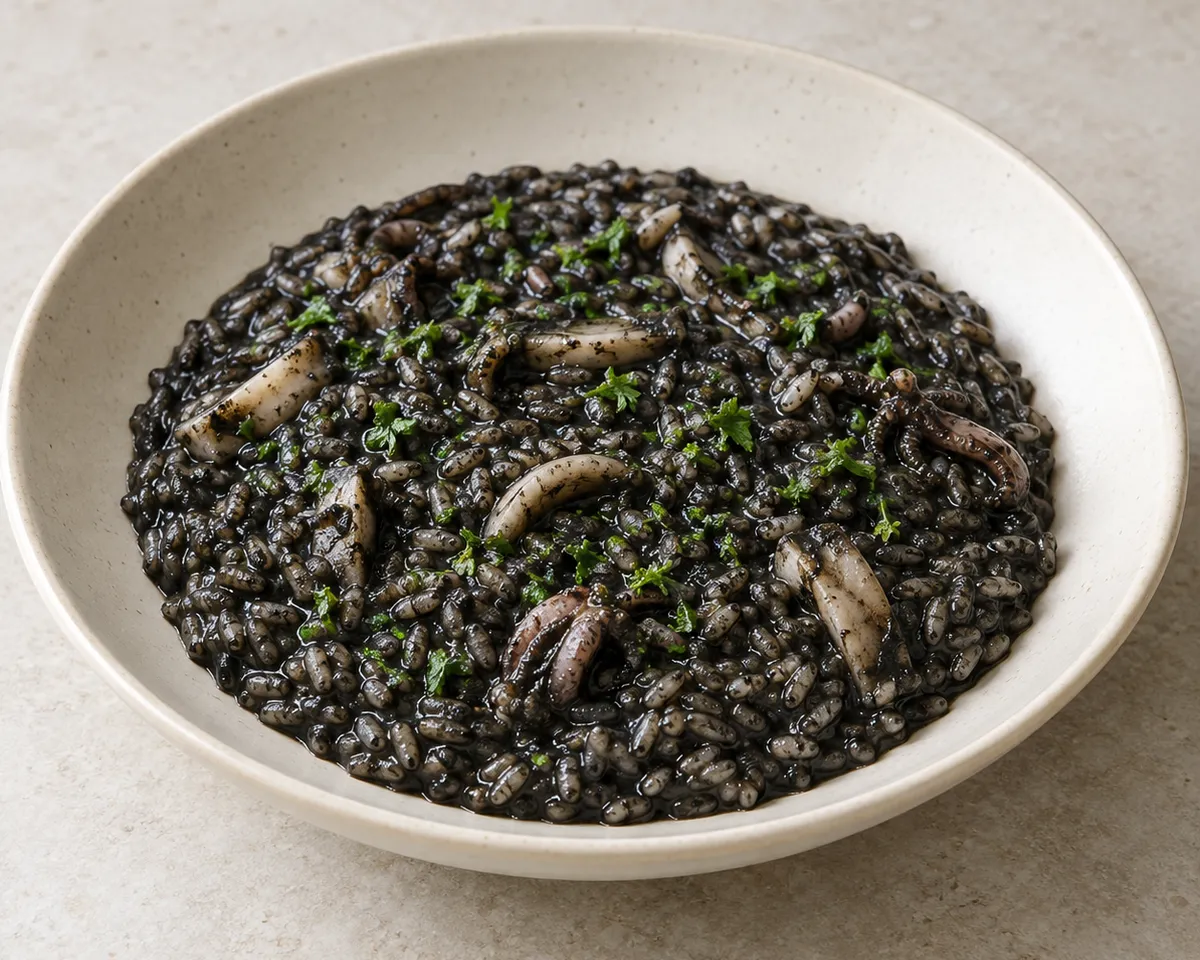
Risotto al nero di seppia
Venetian cuttlefish-ink risotto
The color can make this look theatrical; the flavor is direct. In Venice, cuttlefish ink turns the rice black and gives it a briny, faintly mineral depth. The cuttlefish itself remains in the bowl, cooked until tender enough to yield without turning into rubber.
Olive oil, soffritto, white wine, fish broth, cuttlefish and its ink give this lagoon risotto its flavor. Vialone Nano is a natural Veneto choice: a small, absorbent grain that carries the inky cooking liquor while staying distinct.
The ink goes in late, diluted with hot broth, so it disperses evenly and keeps its marine character. Finish with a loose, spoonable consistency rather than packing the rice into a mound.
Ingredients
- 600 gcleaned cuttlefish, with its ink sacs reserved if buying whole (see note)
- 320 gVialone Nano rice (see note)
- 2cuttlefish ink sacs, or 8–10 g prepared cuttlefish ink (see note)
- 60 ml(4 tablespoons)extra-virgin olive oil, divided
- 100 gwhite or yellow onion, very finely chopped
- 1small garlic clove, lightly crushed
- 100 ml(about ⅓ cup plus 1 tablespoon)dry white wine
- 1.25 liters(about 5¼ cups)lightly salted fish broth, kept hot, plus more if needed
- 15 g(about ½ cup loosely packed)flat-leaf parsley leaves, finely chopped
- fine salt, if needed
Kitchen notes
- Cuttlefish
- Buy actual cuttlefish, fresh or properly thawed, from a good fishmonger. A cleaned frozen product is the same ingredient and is often the realistic U.S. route. Seppia means cuttlefish; squid is a different animal with a different texture.
- Cuttlefish ink
- Ask the fishmonger to reserve the sacs, or order a prepared Italian product whose label specifically identifies cuttlefish ink (nero di seppia). Do not use black food coloring or a vague dyed seafood product.
- Vialone Nano rice
- Use Italian Vialone Nano sold for risotto; it is a Veneto grain with the absorbency and timing this loose, broth-cooked risotto needs. Do not rinse it, and do not use parboiled or long-grain rice.
- Fish broth
- Choose a clean, lightly salted fish broth. The cuttlefish and ink bring enough marine flavor themselves, so a strongly flavored shellfish stock or a salty bouillon can overwhelm the dish. The stated amount is a working supply; the pan may need a little more or less.
Method
Prepare the cuttlefish
- If working from whole cuttlefish, ask the fishmonger to leave the ink sacs intact, or remove them very gently before cleaning; discard the cuttlebone, eyes and beak. Rinse the cleaned bodies and tentacles briefly, dry them well, and cut the bodies into thin strips and the tentacles into small pieces. Bring the fish broth to a quiet simmer and keep it there.
Braise until tender
- Warm 45 ml of the olive oil in a wide heavy pan over low heat. Add the onion and garlic and cook until the onion is soft and translucent, about 7 minutes; do not let it color. Add the cuttlefish, raise the heat for 2 minutes, then add the wine and let it evaporate completely. Add about 250 ml hot broth, cover partly, and simmer gently until a strip of cuttlefish is tender when tasted, usually 25–40 minutes. Add a splash of broth whenever the pan threatens to dry out. Remove and discard the garlic.
Toast and cook the rice
- Lift the tender cuttlefish and its cooking liquid into a warm bowl. Wipe the pan dry, add the remaining 15 ml oil, then the dry rice; stir for 1–2 minutes until the grains are hot and translucent at the edges. Return the cuttlefish and all its cooking liquid, then add hot broth a ladle at a time, stirring regularly and waiting until the previous addition is mostly absorbed before adding more. Keep the rice moist and moving, never submerged. Cook until nearly al dente, usually 14–17 minutes after the first broth.
Add the ink and serve
- Open the sacs over a small bowl, or measure the prepared cuttlefish ink, and loosen it with a ladle of hot broth. Stir it into the rice during the final 4–5 minutes, when it will color the grains evenly without prolonged cooking. Continue until the rice has a small firm core and the cuttlefish is tender. Stir in most of the parsley, taste cautiously for salt, and loosen with a final splash of hot broth until the risotto flows slowly when the pan is shaken. Spoon into warm shallow bowls, scatter with the remaining parsley, and serve at once.