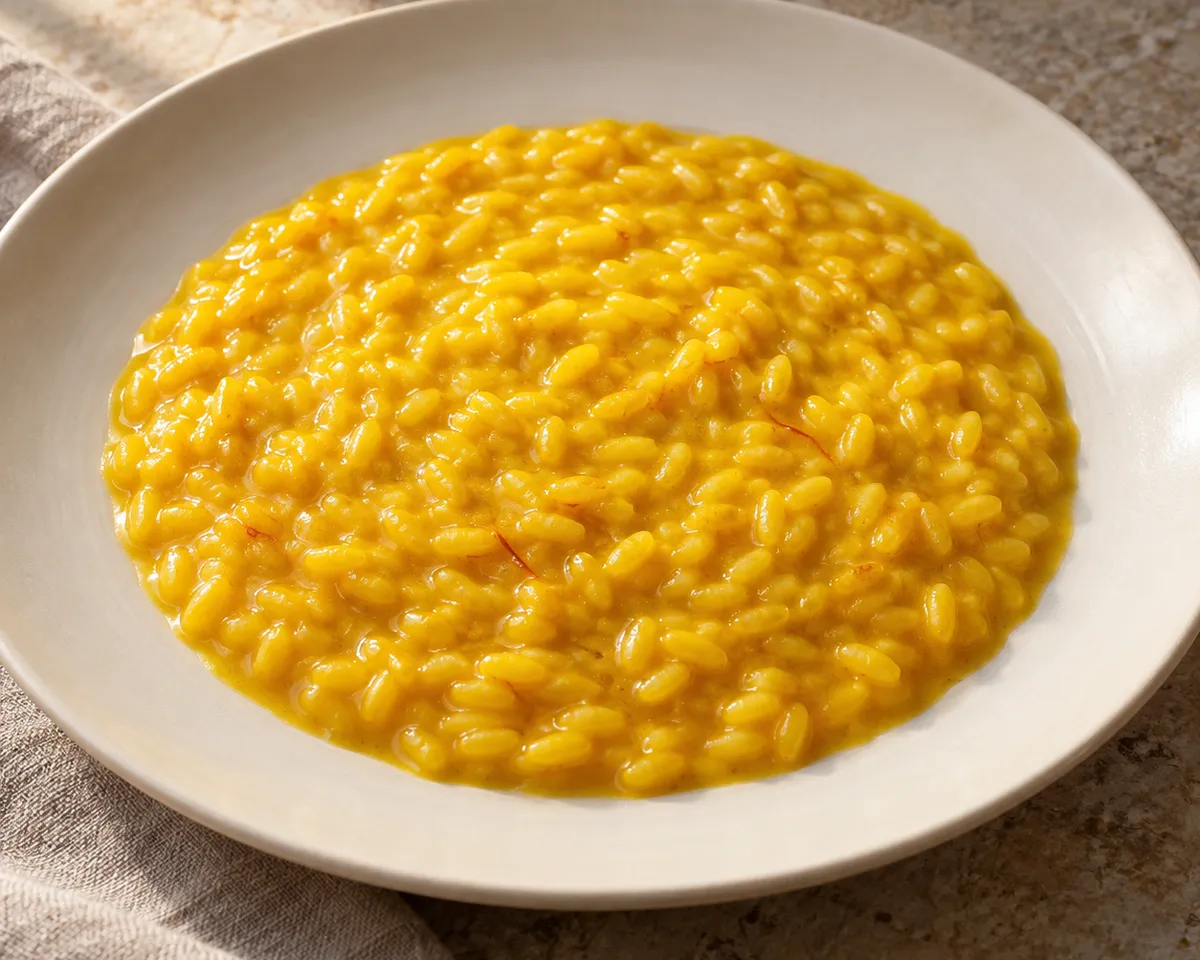
Risotto alla milanese
Milanese saffron risotto with bone marrow
Milan's ris giald is rich with bone marrow and saffron. Bone marrow melts into the rice at the start, beef broth carries it through the pan, and saffron turns the grains gold without making the dish taste merely of spice. The finish is fluid and glossy: tip the pan and the risotto should move in a slow wave, with each grain still distinct.
Some Milanese cooks use white wine or roast drippings in their risotto. Here the marrow supplies the savory depth, with no wine to interrupt the saffron's perfume. The final vigorous stir with cold butter and grated cheese brings the broth and fat together into a creamy coating.
Ingredients
- 320 gCarnaroli risotto rice (see note)
- 40 gbeef or ox bone marrow, removed from the bones and finely chopped (see note)
- 50 gunsalted butter, divided, with 30 g kept cold for finishing
- 40 gonion, very finely chopped
- 0.3 ggood saffron threads (see note)
- 1.3 liters(about 5½ cups)good, lightly salted beef broth, plus more if needed (see note)
- 45 gGrana Padano DOP, finely grated
- fine salt, if needed
Kitchen notes
- Carnaroli rice
- Use Italian Carnaroli rice sold for risotto. The regional tradition also uses Vialone or Arborio, but Carnaroli's firm grain gives this home version a forgiving window for the fluid all'onda finish. Do not rinse it or use parboiled or long-grain rice.
- Bone marrow
- Ask a butcher for beef marrow bones and about 40 g of the marrow itself; it melts into the rice and gives the finished dish a beefy richness that butter alone cannot supply.
- Saffron
- Buy pure saffron threads, not a yellow rice seasoning or saffron-flavored mix. Steeping them in a little hot broth disperses their color and aroma. Use a kitchen scale that reads tenths of a gram to weigh the small quantity accurately.
- Beef broth
- Use a clean-tasting, lightly salted meat broth, ideally homemade or from a good butcher. Concentrated bouillon can make the finished rice harshly salty; the measured amount is a working supply, and the rice may need slightly less or more.
Method
Warm the broth and saffron
- Bring the beef broth to a gentle simmer in a saucepan and keep it hot. Ladle about 100 ml into a small bowl, add the saffron threads, and let them steep while you start the rice. Have the cold finishing butter and grated Grana ready beside the stove.
Soften the onion and toast the rice
- Put the marrow and 20 g butter in a wide, heavy saucepan over medium-low heat. When the marrow has melted, add the onion and cook gently, stirring, until soft and pale gold, about 6–8 minutes; do not brown it deeply. Add the dry rice and stir over medium heat for 2–3 minutes, until the grains are hot, lightly translucent at the edges, and make a faint dry sound against the pan.
Cook with hot broth
- Add two ladles of hot broth and stir regularly over a lively simmer. Add more broth a ladle at a time as the rice drinks it, keeping the grains moist and moving but never swimming. When the rice is about two-thirds cooked, usually after 11–12 minutes, stir in the saffron infusion, including the threads. Continue adding broth and cooking until the center of a grain has just a little firm resistance, usually 16–19 minutes from the first broth; taste rather than relying on the clock. Use additional hot broth or water if the rice needs it.
Mantecare all'onda
- Remove the pan from the heat while the risotto is still a little looser than you want to serve it. Add the remaining 30 g cold butter and the Grana Padano. Stir and shake the pan vigorously until the fat and broth form a glossy cream around distinct grains. If it stands in a stiff mound, stir in a little more hot broth; when you tilt the pan, it should flow back in a soft wave. Rest for 1 minute, taste for salt, and serve immediately in warm shallow bowls.