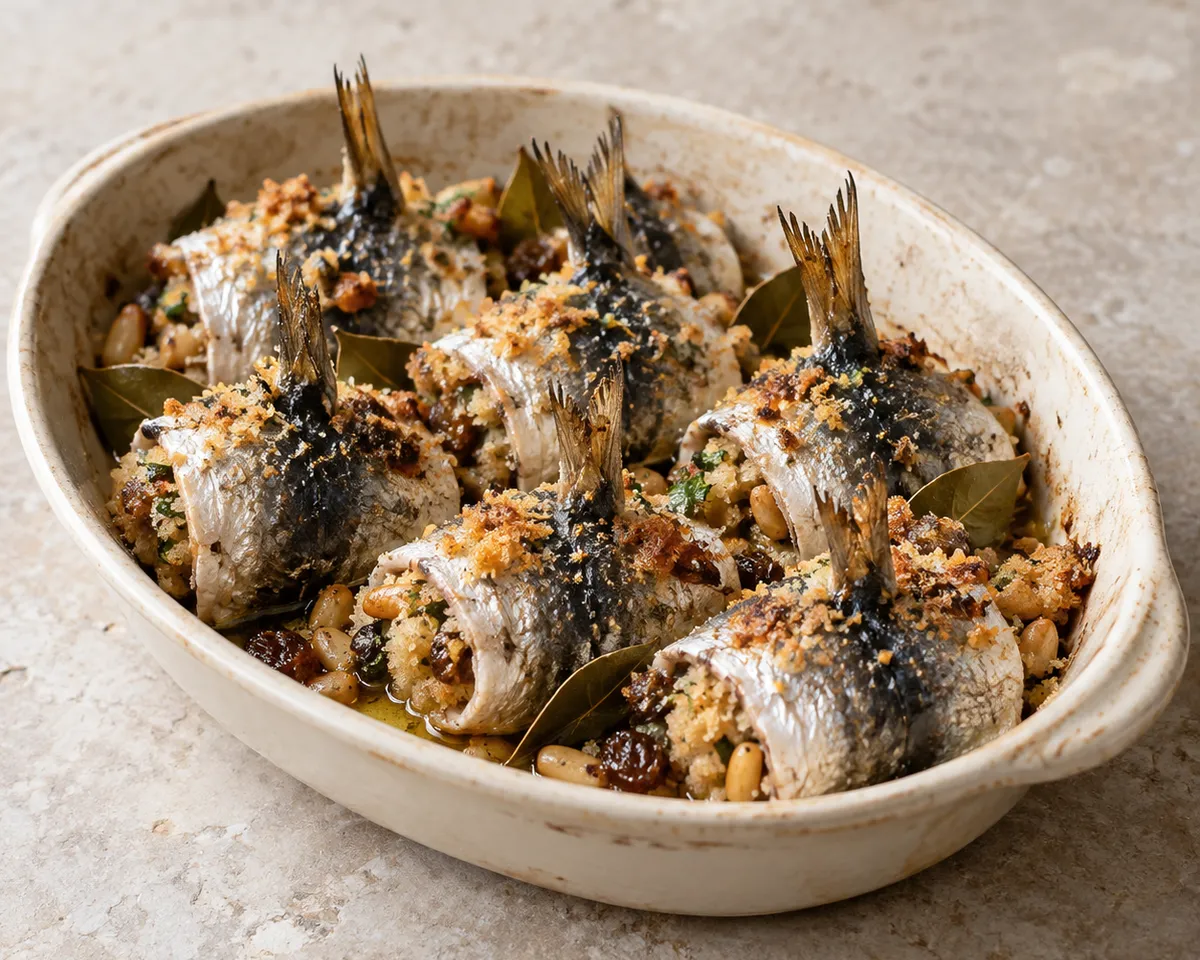
Sarde a beccafico
Palermo baked sardines with sweet-sour breadcrumbs
Sarde a beccafico have the flash and thrift of Palermo cooking: small oily fish made extravagant with bread, raisins, pine nuts and citrus. The tails stand upright from the baking dish, echoing the little birds that gave the dish its name, while bay leaves punctuate the rows.
A sardine is opened flat, given a small mound of filling, and rolled around it. Toasted breadcrumbs drink in olive oil and the savor of anchovy; raisins and pine nuts bring sweetness and softness. Lemon and a pinch of sugar make the characteristic sweet-sour finish without turning the fish into dessert.
This is Palermo's baked form. In other Sicilian towns, cooks may pair the fish, add cheese, or fry it. The rolled sardines fit snugly in a shallow dish, packed closely enough to hold their shape.
Ingredients
Sardines and filling
- 600 g(about 1 1/3 lb)whole fresh medium sardines, about 12, cleaned and butterflied with tails left on (see note)
- 100 gfine, unseasoned dry breadcrumbs (see note)
- 30 ml(2 tbsp)extra-virgin olive oil, plus more for the dish
- 4oil-packed anchovy fillets, drained and finely chopped
- 30 graisins
- 30 gpine nuts, coarsely chopped
- 10 g(about 2 tbsp)flat-leaf parsley, finely chopped
- 1unwaxed lemon, finely zested and juiced
- 4 g(1 tsp)granulated sugar
- 6fresh bay leaves, halved, or 12 small leaves
- fine salt
- freshly ground black pepper
Kitchen notes
- Fresh sardines
- Ask a fishmonger for whole fresh sardines and request that they be butterflied with the tails intact. These are not the salty, cured anchovy fillets sold in tins or jars. Sardines are a defining part of the dish, so seek them out rather than replacing them with canned fish.
- Oil-packed anchovy fillets
- The anchovies season the breadcrumb filling; they are cured fillets and are different from the fresh sardines that form the rolls. Rinse salt-packed anchovies well if using them, then pat dry before chopping.
- Fine dry breadcrumbs
- Use fine, unseasoned breadcrumbs from stale bread or a plain Italian-style product. Panko is too coarse and dry for the compact filling.
- Bay leaves
- Fresh bay leaves are best here, but dried bay leaves work if fresh ones are unavailable. They perfume the fish in the oven; remove them before eating.
Method
Prepare the fish and raisins
- If the sardines have not been cleaned by your fishmonger, remove the heads and innards, open each fish along its belly, and lift out the central bone while leaving the tail attached. Do not split the two fillets apart. Rinse only if necessary, then dry very thoroughly. Cover the raisins with hot water for 10 minutes; drain and squeeze them dry.
Make the filling
- Warm the 2 tablespoons olive oil in a skillet over medium-low heat. Add the anchovies and mash them until they dissolve into the oil. Add the breadcrumbs and pine nuts; toast, stirring constantly, until the crumbs are evenly pale gold and smell nutty, about 3–4 minutes. Transfer to a bowl and cool for 5 minutes. Stir in the raisins, parsley, lemon zest, 15 ml (1 tbsp) lemon juice, sugar, a pinch of pepper, and a small pinch of salt. The mixture should clump lightly when squeezed; add a teaspoon of olive oil only if it is too dry to hold together.
Fill the sardines
- Heat the oven to 400°F (200°C). Oil a shallow baking dish just large enough to hold the rolls snugly. Put a rounded teaspoon of filling at the head end of each opened sardine, then roll it toward the tail so the tail remains visible. Arrange the rolls seam-side down in the dish, close together, with a piece of bay leaf between each one. Scatter any remaining filling over the top.
Bake and rest
- Whisk the remaining lemon juice with 15 ml (1 tbsp) olive oil and drizzle it over the sardines. Bake until the fish is just opaque through the thickest part, the crumbs are golden, and the tails have begun to crisp, 12–15 minutes. Let the dish rest for 10 minutes before serving; the filling settles and the sweet-sour flavors become clearer as it loses its furnace heat.