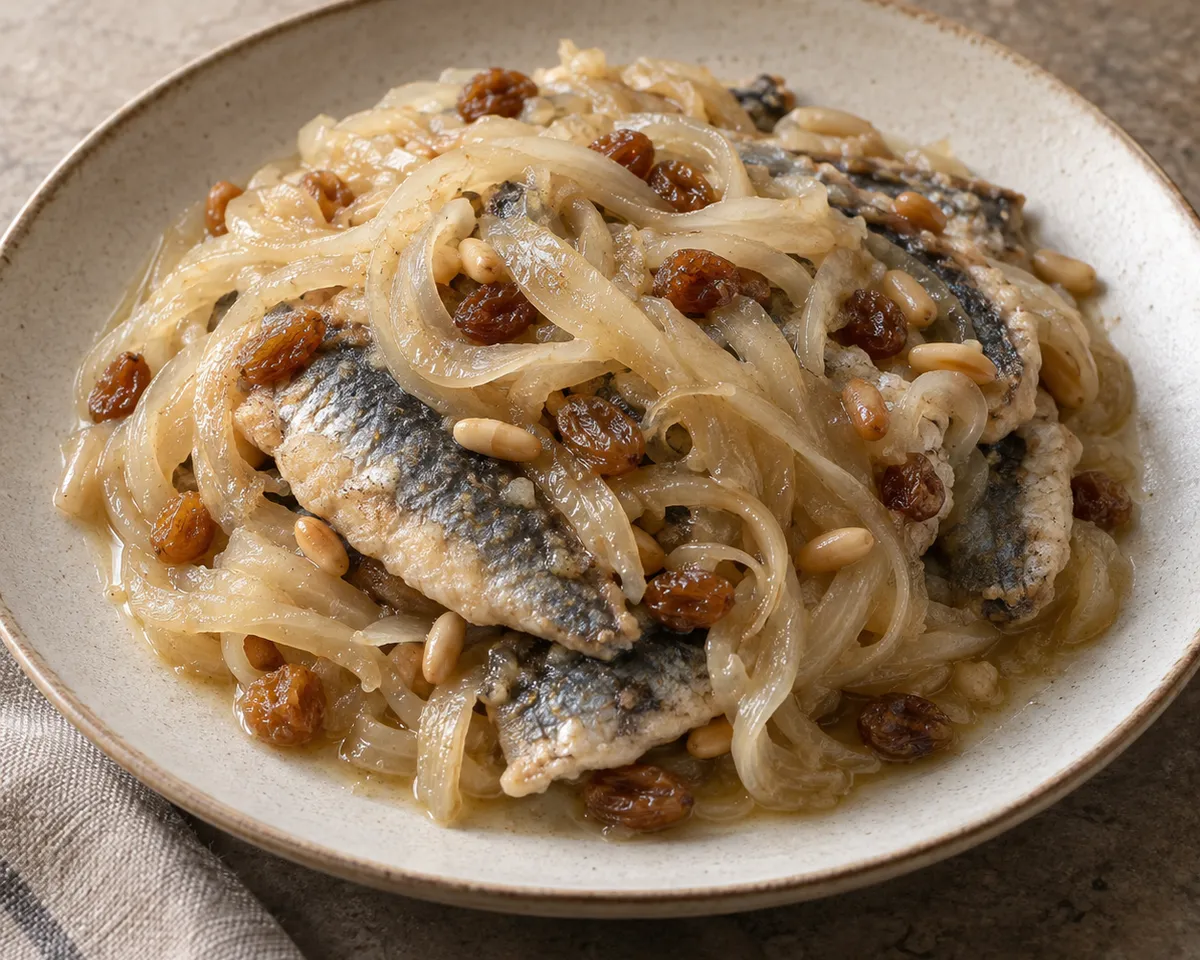
Sarde in saor
Venetian sardines in sweet-and-sour onion
Venetian saor develops its flavor during the long rest after cooking. Fried sardines are buried under soft, vinegared onions and left to settle, so the fish takes on acidity, sweetness, and a deep allium savor.
The method began as practical preservation for people at sea, though its exact early form is hard to pin down. The lean foundation is sardines, onions, and wine vinegar. Raisins and pine nuts are the later, richer Venetian expression, and they belong here as accents rather than as a sticky glaze.
Make it a day ahead. The rest is not an optional flourish; it is when the fried fish softens into the onions and the vinegar loses its raw edge. Serve the dish cool, not refrigerator-cold, with a glass of something dry and a little bread or grilled polenta if you like.
Ingredients
For the sardines
- 750 g(about 1⅔ lb)very fresh whole sardines, to yield about 600 g after cleaning, heads removed, and butterflied (see note)
- 80 g(about ⅔ cup)00 flour or all-purpose flour, for dusting
- neutral frying oil, enough for 2.5 cm (1 inch) depth in a wide pan
- fine salt
For the saor
- 600 g(about 1⅓ lb)white onions, halved and sliced very thinly
- 75 ml(5 tbsp)extra-virgin olive oil
- 120 ml(½ cup)good white-wine vinegar
- 30 g(about 3 tbsp)golden raisins
- 25 g(about 3 tbsp)pine nuts
- freshly ground black pepper
Kitchen notes
- Fresh sardines
- Use whole fresh sardines, not canned sardines or salt-cured anchovy fillets. Ask a fishmonger to scale, gut, and butterfly them if possible. The vinegar rest gives flavor; it is not a substitute for thoroughly cooking and promptly refrigerating the fish.
- Raisins and pine nuts
- The oldest, leanest saor is sardines, onion, and vinegar. Raisins and pine nuts are a later Venetian enrichment, used lightly alongside the onion and vinegar.
- Resting and storage
- Cool the dish and refrigerate it within 2 hours. Eat within 3 days of frying and keep it cold between servings.
Method
Prepare the fish and fruit
- Rinse the sardines only if necessary, then dry them exceptionally well, inside and out. Spread the flour on a plate. Put the raisins in a small bowl and cover with hot water for 10 minutes; drain. Toast the pine nuts in a dry small skillet over medium-low heat until pale gold and fragrant, 2–4 minutes, then transfer them out at once.
Make the onion saor
- Warm the olive oil in a wide, heavy pan over low heat. Add the onions with a pinch of salt and cook, stirring regularly, until completely soft and pale gold but not browned, 25–35 minutes. Add the vinegar, raisins, and a few grinds of pepper. Simmer gently for 2 minutes, then take the pan off the heat. The onions should be succulent and distinctly tart, with enough liquid to dress every layer.
Fry the sardines
- While the onions cook, heat the frying oil to 350°F (175°C). Dust the sardines lightly in flour and shake off the excess flour. Fry in small batches until crisp and golden, turning once, about 2–3 minutes total for small fish. They are done when the flesh is opaque and separates easily; for a thermometer check, the thickest fish should reach 145°F (63°C). Drain briefly on a rack or paper, then season lightly with salt.
Layer and rest
- Put a thin layer of the onion-and-raisin mixture and its liquid in a shallow, nonreactive dish. Arrange a layer of sardines over it, cover with more onion and raisins, and scatter over some pine nuts. Repeat, finishing with onions, raisins, pine nuts, and all remaining liquid. Cool promptly, cover, and refrigerate for 24 hours; 36–48 hours is excellent. Bring the dish toward cool room temperature for 20–30 minutes before serving.