Spaghetti all'assassina
Bari's charred spicy spaghetti
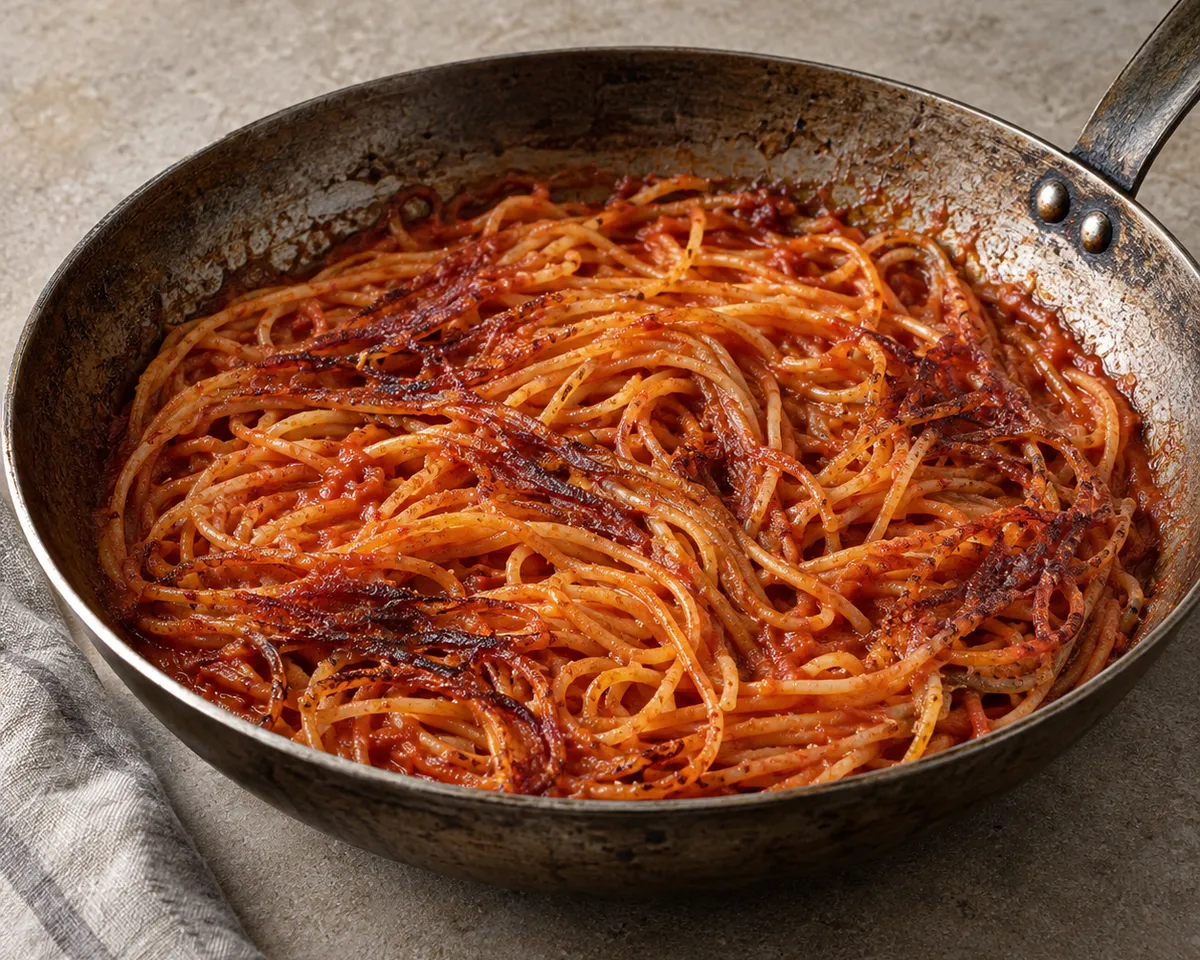
Spaghetti all'assassina is Bari's most aggressive answer to pasta al pomodoro. The spaghetti go into the pan dry, meet garlic, chile, and fierce heat, then are fed tomato broth in measured installments. Parts of the tangle stick, darken, and turn crisp at the edges while the rest finishes in the red liquid.
The dish emerged in central Bari in the late 1960s and remains a point of local conviction. Its name has invited plenty of folklore, but its character is easier to pin down: hot, lightly charred, and properly spicy. This is a technique, not a sauced plate of boiled pasta given a quick second life in a skillet.
The essential skill is patience at each pause. Let the liquid cook away until the pan returns to a hard sizzle; wait a few beats longer; then lift the browned strands up and lay the paler ones down before adding more broth. The finish should be red-brown, not black, with crackly sections that taste toasted rather than bitter.
Ingredients
For the tomato broth
- 700 gwater
- 300 gtomato passata
- 50 gdouble-concentrated tomato paste
- 8 gfine sea salt
For the spaghetti
- 100 ml(scant ½ cup)extra-virgin olive oil
- 3garlic cloves, peeled; leave 2 whole and finely chop 1
- 2dried hot chiles, crushed or broken (see note)
- 100 gtomato passata
- 320 gsmooth, dry spaghetti or vermicelli, not bronze-cut (see note)
- 4 g(1 tsp)sugar, only if the tomato broth tastes sharply acidic
Kitchen notes
- Pan
- The Bari tradition favors a well-seasoned iron pan, today commonly a professional carbon-steel lyonnaise pan, because it takes high heat and lets the spaghetti make controlled contact with the base. Use a pan wide enough to lay the dry pasta nearly flat. Do not try this in nonstick cookware: the required heat can damage its coating.
- Spaghetti
- Choose smooth, dry spaghetti or vermicelli with relatively little surface starch. Rough bronze-drawn pasta releases more starch and resists the characteristic browning.
- Chile
- The dish should be clearly hot, not merely perfumed with pepper. Two dried chiles are a practical medium-hot starting point; vary the variety and number according to its actual heat rather than adding cheese, herbs, or a creamy garnish to soften the result.
Method
Make the tomato broth
- Whisk the water, 300 g passata, tomato paste, and salt in a saucepan and bring to a steady simmer. It should taste vividly tomatoey and savory but remain thin enough to ladle, rather than becoming sauce. Keep it hot beside the stove. Taste now and add the sugar only if the tomatoes are noticeably sharp; the broth must not taste sweet.
Start the sear
- Set a 14-inch (36 cm) seasoned carbon-steel or professional iron skillet over high heat. Have a wide wooden spatula or tongs and the hot broth immediately beside it. Add the olive oil, garlic, and chiles. When the garlic turns pale gold and fragrant, add the 100 g passata; it should spit and reduce quickly. Remove the two whole garlic cloves and, if preferred, the chile pieces. Spread the tomato over the pan's base.
Cook the dry pasta in intervals
- Lay the dry spaghetti flat in the pan, keeping as much of it in contact with the hot tomato as possible. Do not stir or turn it at once. Let the bottom strands attach and begin to brown, without letting them turn black and bitter. After roughly 1 minute the pan should return to a hard sizzle; use that sound as the cue and wait another 10 seconds, then use the spatula to turn the browned strands upward and lay paler strands against the pan. Pour 2 medium ladles of hot tomato broth around the edges of the skillet, not over the center; it should sizzle and bubble fiercely.
Repeat until red-brown and al dente
- Let the broth cook down without constant stirring. When its sound changes back from a simmer to a hard fry, wait a few seconds for another controlled scorching, then lift and rearrange the pasta as before. Add another ladle or two of broth around the edge. Continue the cycle until the spaghetti bends easily and is cooked through but still pleasantly firm, usually 8–10 minutes after the first broth addition. You may not use every drop of broth. The pan should end almost dry, with a red-brown tangle and scattered crisp, darkened strands rather than a pool of sauce.
Serve at once
- Taste a strand and adjust only for salt or heat. Serve immediately, ideally from the skillet. The crisp parts soften as the pasta sits, so do not hold it or cover it.