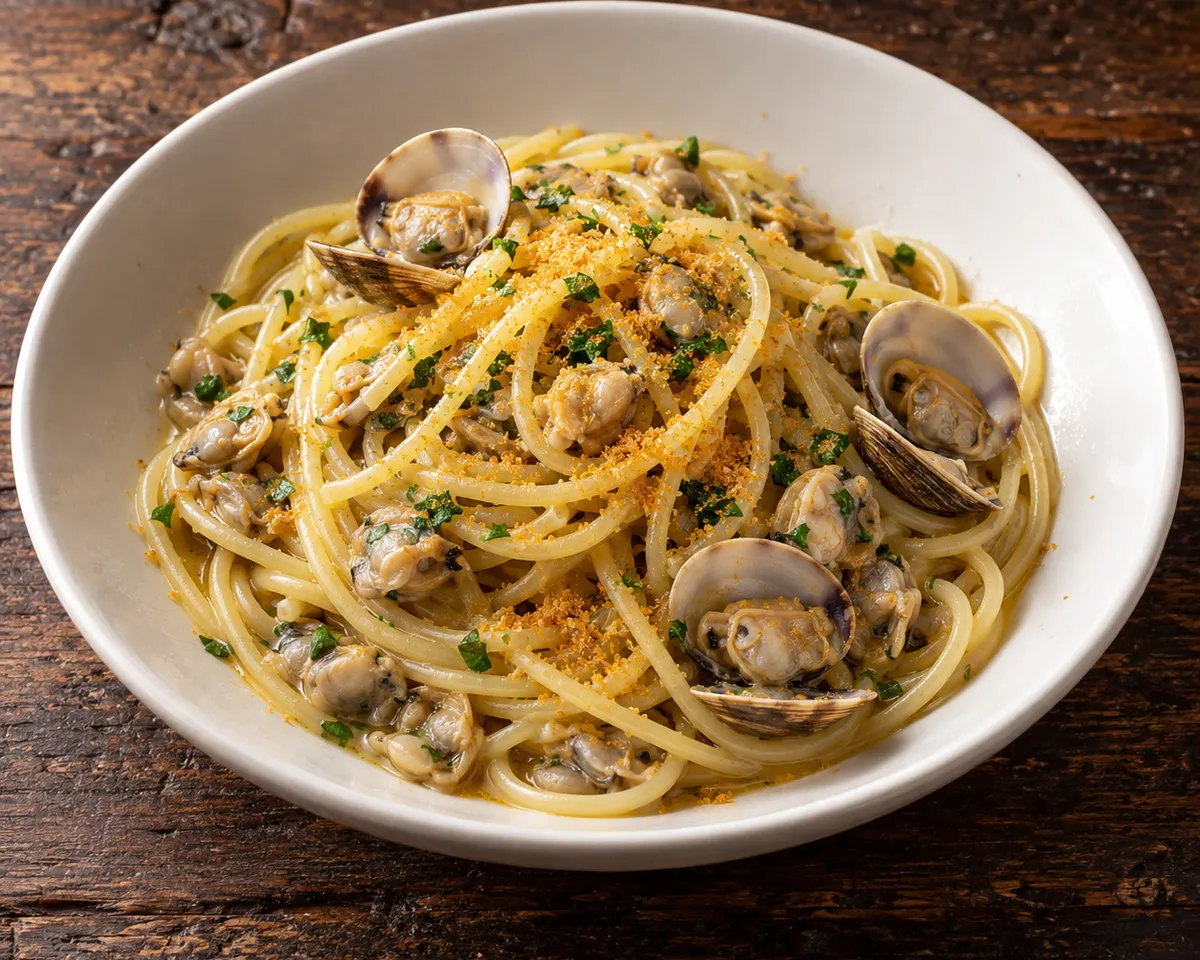
Spaghetti alle vongole e bottarga
Sardinian spaghetti with clams and mullet bottarga
The clams make the sauce before anything is added to them. Their liquor, strained of grit and drawn into the starch of the pasta, turns olive oil into a light coating that tastes of the sea rather than a heavy emulsion. Most of the shellfish can leave its shell; a few opened clams on the plate make clear where that flavor began.
Sardinian bottarga gives the dish its second register of salinity. The mullet roe is salted and dried as a whole lobe, then grated over the pasta after the heat is off. That timing protects its aroma and keeps it from disappearing into a hot pan. The result should taste distinctly of clams first, with the bottarga arriving in each bite as a deep, savory finish.
Ingredients
- 1 kg(about 2¼ lb)live small hard-shell clams, such as Manila clams, scrubbed and purged if gritty (see note)
- 400 gbronze-die dried spaghetti
- 40 gwhole dried Sardinian mullet bottarga (bottarga di muggine), peeled and finely grated just before use (see note)
- 45 ml(3 tbsp)extra-virgin olive oil
- 1garlic clove, lightly crushed
- 10 gflat-leaf parsley, finely chopped
- fine sea salt, for the pasta water only
Kitchen notes
- Mullet bottarga
- Buy bottarga di muggine, the salted, dried roe of flathead gray mullet (Mugil cephalus), preferably as an intact lobe to grate fresh. Bottarga di tonno is tuna roe, darker and more forceful than mullet bottarga. Peel away the outer membrane before grating; add it off heat.
- Clams
- Sardinian recipes may call the small local clams arselle or vongole. Live Manila clams are a practical U.S. market choice for this preparation, although they may differ in species from the local Sardinian catch. Buy live shellfish, remove grit, and use the filtered opening liquor as the sauce's base.
Method
Open the clams
- Discard any broken clams and any open ones that do not close when tapped. Rinse and scrub them; if they are sandy, purge them in lightly salted cold water for 1–2 hours, then lift them out rather than pouring the gritty water over them. Warm 30 ml (2 tbsp) olive oil with the crushed garlic in a wide pan over medium heat until fragrant but not browned. Add the drained clams, cover, and cook just until they open, usually 3–5 minutes, shaking the pan once. Transfer each opened clam to a bowl as it opens and discard any that remain closed.
Save the liquor
- Pour the clam liquid carefully through a fine sieve lined with damp cheesecloth or a coffee filter into a clean bowl, leaving the sandy last spoonful behind. Remove most of the clams from their shells; keep a few in the shells for serving. Cover them so they do not dry out. Discard the garlic.
Finish the pasta in the pan
- Cook the spaghetti in water salted more lightly than usual until about 2 minutes short of al dente. Reserve a mug of the cooking water. Return the pan to medium heat with the filtered clam liquor and remaining 15 ml (1 tbsp) olive oil. Add the spaghetti and toss, adding small splashes of pasta water, until it is tender with a firm center and lightly glossy rather than swimming. Return the clam meat for only the final 30 seconds to warm it through.
Add the bottarga off heat
- Take the pan off the heat. Fold in half the grated bottarga and most of the parsley, tossing briefly. Taste before adding any salt: clam liquor and bottarga are both saline. Divide among warm plates, add the reserved clams, and finish with the remaining bottarga and parsley. Eat immediately.