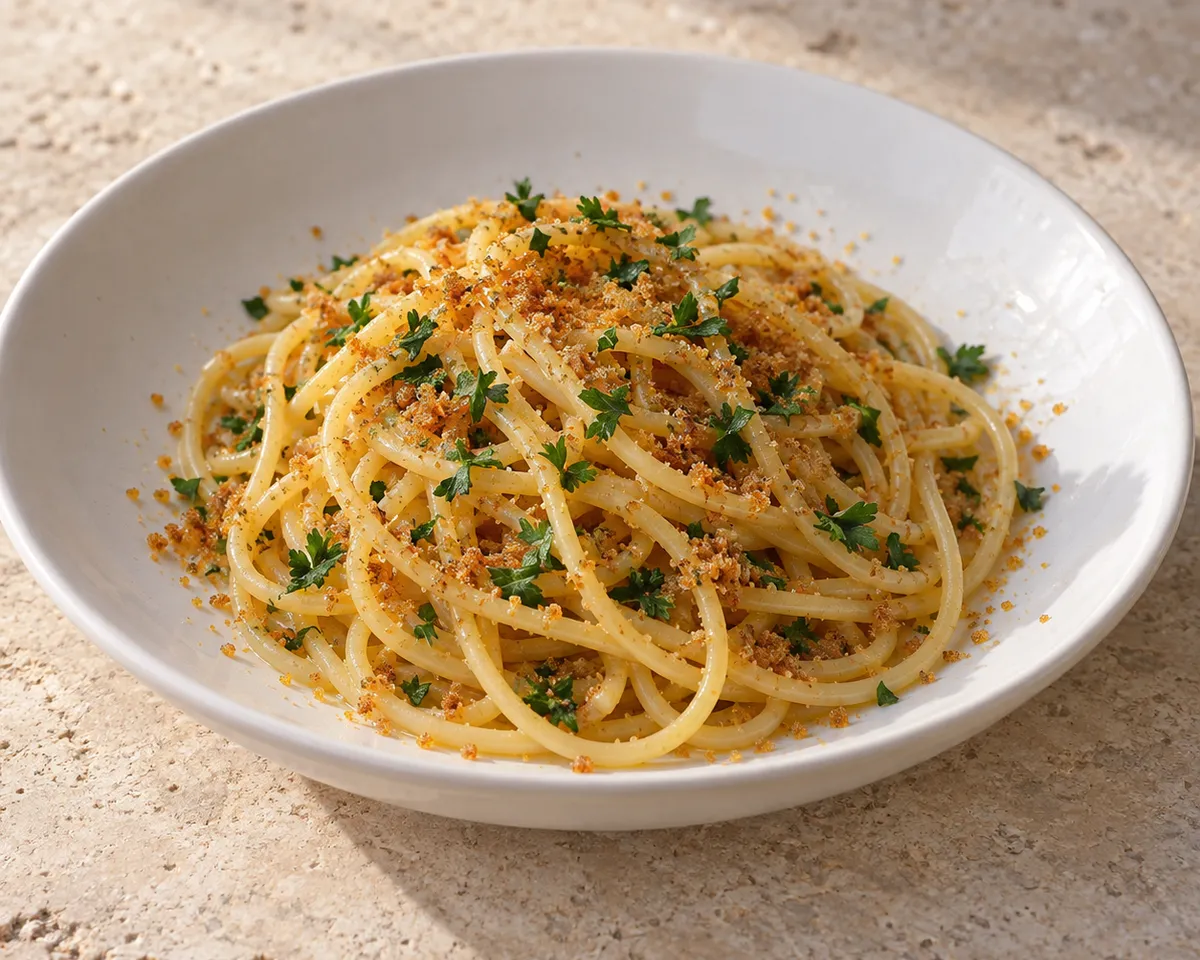
Spaghetti con la bottarga
Spaghetti with Favignana tuna bottarga
At Favignana, tuna once meant an entire economy, not just a fish for dinner. Its salted, dried roe survives as bottarga: firm enough to shave or grate, and powerful enough to season a whole pan of pasta in a few strokes.
This is the spare western Sicilian version. Garlic scents the oil, a little parsley freshens it, and the bottarga goes in after the heat is off. Cooking the roe hard would flatten its sea-deep flavor. The spaghetti should be glossy and loose, with no heavy sauce to hide the ingredient that gives the dish its name.
Use tuna bottarga rather than the more familiar mullet version. They are related preserves, but the darker, more forceful tuna roe gives this Egadi preparation its flavor. Salt the pasta water cautiously; the bottarga will finish the seasoning.
Ingredients
- 360 gdried durum-wheat spaghetti
- 40 gwhole cured tuna bottarga, finely grated just before use (see note)
- 60 ml(¼ cup)extra-virgin olive oil
- 2garlic cloves, lightly crushed
- 10 gflat-leaf parsley leaves, finely chopped
- fine salt, for the pasta water
Kitchen notes
- Tuna bottarga
- Buy a piece labeled bottarga di tonno and grate it just before serving. It is salted and dried tuna roe, not canned tuna, and not the milder, golden bottarga di muggine made from mullet roe. A whole piece keeps its aroma better than a long-opened jar of powder; look at a specialty Italian market or a reputable online Italian-food supplier.
Method
Infuse the oil
- Bring a large pot of water to a boil. Meanwhile, warm the olive oil and crushed garlic in a wide skillet over low heat until the garlic smells fragrant and turns only pale gold, about 3–4 minutes. Remove the garlic and take the skillet off the heat. The oil should taste of garlic without a browned, bitter edge.
Cook and dress the spaghetti
- Salt the boiling water lightly, then cook the spaghetti until just shy of al dente. Before draining, reserve at least 250 ml (1 cup) of the starchy cooking water. Transfer the pasta to the skillet and return it to low heat. Add about 90 ml (⅓ cup plus 1 tbsp) of the cooking water and toss until the oil and water lightly coat every strand; add a little more water if the pasta tightens or looks greasy.
Finish off the heat
- Turn off the heat. Add about three-quarters of the freshly grated tuna bottarga and most of the parsley. Toss promptly, adding another spoonful of warm pasta water if needed, until the spaghetti is glossy rather than dry. Taste before adding any more salt. Divide among warm plates and scatter over the remaining bottarga and parsley. Serve immediately.