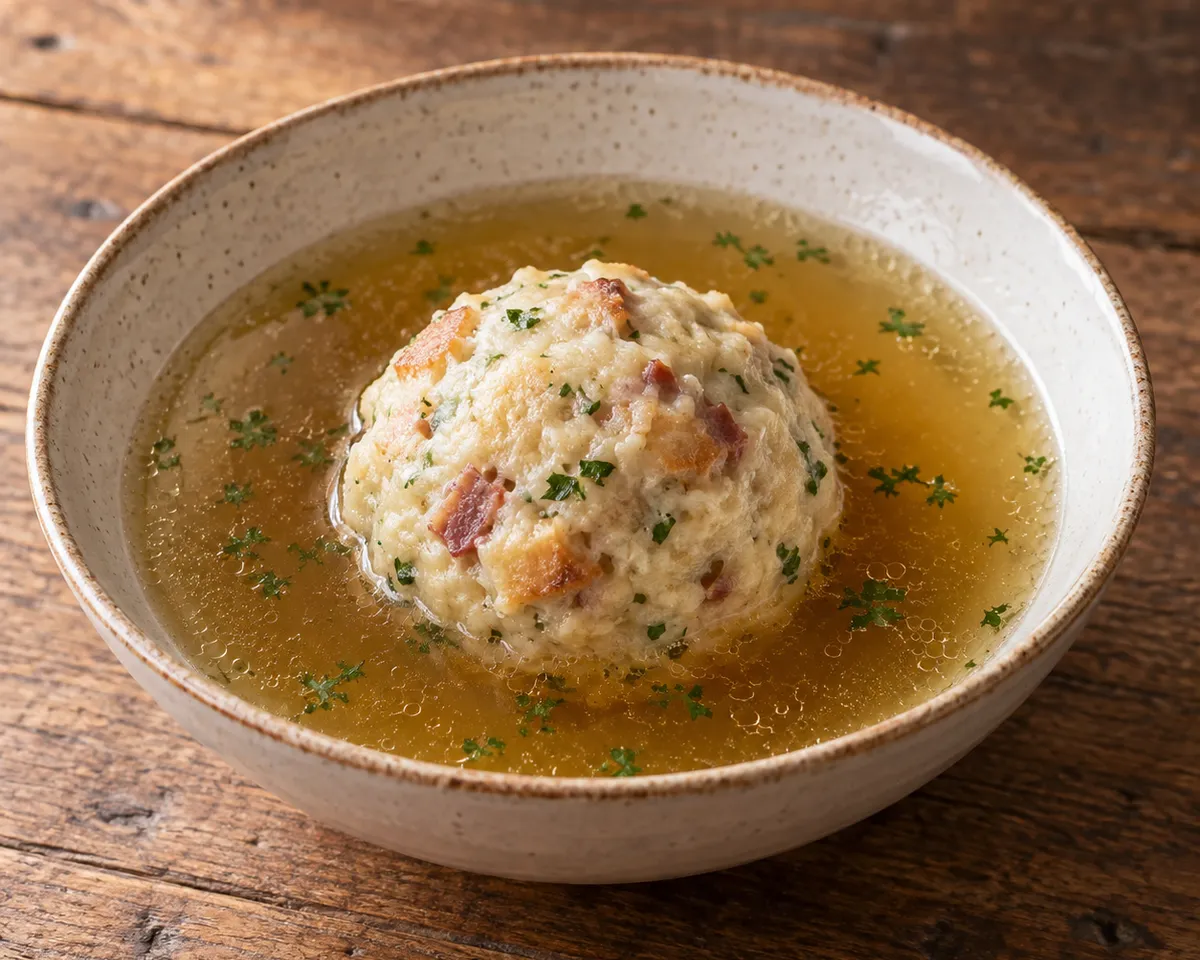
Speckknödel
South Tyrolean speck bread dumplings in broth
Speckknödel make a proper meal out of yesterday's bread. The cubes soften just enough to become a dumpling, while their edges remain distinct beneath the perfume of speck, onion, and chives. One large dumpling in a bowl of clear broth makes a filling first course.
The wider Knödel family includes cheese and greens, and bread dumplings can sit beside a roast or salad. Here they go into clear broth, which leaves room for the lightly smoked pork. The dumpling should stay tender in the spoon yet retain its small pieces of bread.
Ingredients
For the Speckknödel
- 150 gdry, firm white bread or Knödelbrot, cut into 1 cm (⅜-inch) cubes (see note)
- 40 gyellow onion, very finely diced
- 15 g(1 tbsp)unsalted butter
- 80 gSpeck Alto Adige IGP, cut into very small dice (see note)
- 20 g(about 2 tbsp)all-purpose flour
- 2large eggs
- 100 ml(scant ½ cup)whole milk
- 4 g(about 1 tbsp)finely chopped flat-leaf parsley or chives, plus more to finish
- fine salt and freshly ground black pepper
- 10–20 g(about 1–2 tbsp)fine dry breadcrumbs, only if the test dumpling needs tightening
For cooking and serving
- fine salt, for the cooking water
- 1.5 L(6 cups)well-seasoned clear beef broth, preferably homemade
Kitchen notes
- Dry bread or Knödelbrot
- Use firm white bread that is at least a day or two old, or German/Austrian-style Knödelbrot: dry cubes made for bread dumplings. Fresh, soft sandwich bread turns pasty before it can hold the dumpling's characteristic structure. Do not use panko, croutons, or packaged stuffing mix.
- Speck Alto Adige IGP
- This is a lightly smoked, air-cured pork leg from Alto Adige, sold in a piece for dicing. It is not American bacon, German Bauchspeck, pancetta, or thin deli prosciutto. Seek a specialty Italian market or order it online; its restrained smoke and firm cured texture are characteristic of these South Tyrolean dumplings.
- Test dumpling
- Bread moisture varies with the loaf and its age. A gently simmered test dumpling shows whether the mixture holds together. Add breadcrumbs only if it fails to hold; adding extra flour indiscriminately makes the dumplings hard.
Method
Soften the bread and cook the aromatics
- Put the bread cubes in a wide bowl. Melt the butter in a small skillet over medium-low heat. Add the onion and cook until soft and translucent, about 5 minutes, without browning it. Tip the onion and butter over the bread. Add the speck and flour, then toss gently so the cubes are coated but not crushed.
Make the mixture
- Whisk the eggs, milk, parsley or chives, a small pinch of salt, and several grinds of pepper together. Pour over the bread and fold with your hands until the liquid is evenly absorbed. Cover and let stand for 15 minutes. The mixture should feel damp and cohesive but still show distinct bread cubes; it should not be a smooth paste. Because the speck is salty, do not add more salt until after the cooked test.
Test, then shape
- Bring a broad pot of well-salted water to a quiet simmer. With damp hands, form a small test dumpling from about 1 tablespoon of mixture. Simmer it gently for 5–6 minutes; the water should tremble rather than batter it. If it cracks badly or begins to loosen, fold 10 g breadcrumbs into the remaining mixture, wait 5 minutes, and test another small piece. Add the remaining breadcrumbs only if the second test also loosens. When the mixture holds, shape it into four dumplings about 6 cm (2½ inches) across without compressing them hard.
Cook and serve in broth
- Keep the cooking water at the same gentle simmer and cook the four dumplings, half covered, for 15–18 minutes, turning them once carefully with a slotted spoon. They are ready when hot through, firm enough to lift intact, and tender at the center rather than rubbery. Warm the beef broth separately to a bare simmer. Put one dumpling in each warm bowl, ladle in the broth, and finish with the remaining chives or parsley. Serve immediately.