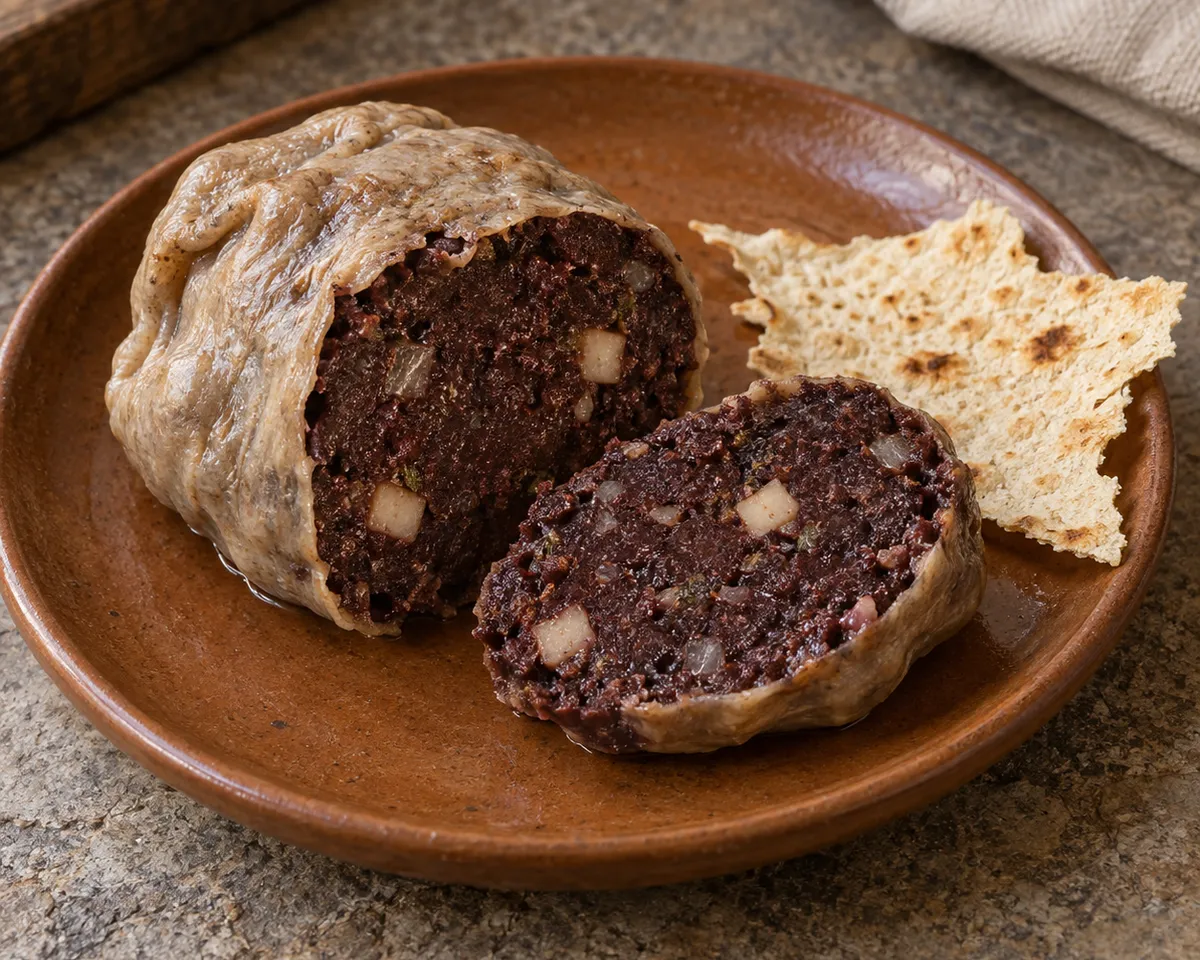
Su zurrette
Oliena sheep's-blood pudding in a sheep stomach
Su zurrette gives the whole sheep a place at the table. In the Barbagia around Oliena, blood is stirred with crumbled pane carasau, pecorino, mint and wild thyme, then gently cooked inside a sheep's stomach until it becomes a soft, sliceable pudding. This is pastoral cooking built around whole-animal use and hospitality.
The herbs do more than perfume it. Their cool, resinous edge keeps the blood and fat from becoming heavy, while the bread gives the filling body and the cheese brings salinity. Household versions vary in their use of fresh or aged pecorino and milk.
A proper version requires two ingredients that many American cooks will need to special-order: inspected edible sheep blood and a food-grade, pre-cleaned sheep stomach. The stomach holds the filling as it sets. The pudding is served hot in thick spoonfuls or slices with crisp carasau alongside.
Ingredients
For the pudding
- 1food-grade, pre-cleaned sheep stomach, about 1 L (1 qt) capacity (see note)
- 350 ml(1½ cups)inspected edible sheep or lamb blood, kept cold (see note)
- 30 glamb caul fat or unsalted pork lard, finely diced
- 75 gyellow onion, very finely chopped
- 40 gpane carasau, finely crumbled
- 75 gfresh sheep's-milk pecorino, cut in small dice (see note)
- 4 g(about 1½ tbsp)fresh mint leaves, finely chopped
- 1.5 g(about 1½ tsp)fresh wild thyme leaves, finely chopped
- 4 g(about ¾ tsp)fine sea salt
For cooking and serving
- about 3 L(3 qt)water
- additional pane carasau, to serve
Kitchen notes
- Edible sheep or lamb blood
- Use only sheep or lamb blood collected, packaged, and sold for human consumption from inspected livestock. It is difficult to find in the United States; arrange it through a licensed specialist butcher before planning this dish. Do not use blood intended for pet food, blood collected on a farm, or another animal's blood.
- Food-grade sheep stomach
- The stomach is the dish's traditional cooking vessel. Ask a specialist butcher for a pre-cleaned, food-grade sheep stomach; its actual capacity varies, so leave at least a third empty when filling it. The stomach gives the pudding its shape and is cooked until tender along with the filling.
- Fresh sheep's-milk pecorino
- Look for a young, lightly salted pecorino made from sheep's milk, not a dry supermarket Romano-style grating cheese. The young cheese stays in distinct cubes in the set pudding.
- Wild thyme
- Wild thyme (timo selvatico) is a small-leaved, intensely aromatic thyme. Fresh common thyme is a reasonable botanical stand-in only when it is all that is sold, used sparingly; mint and thyme are both traditional in the Oliena seasoning.
Method
Prepare only inspected ingredients
- Keep the blood refrigerated until the last moment. Use only blood sold for human consumption and a food-grade, pre-cleaned sheep stomach; do not collect blood or clean a raw stomach at home. Rinse the prepared stomach inside and out under cold running water, drain it well, and inspect it for holes. Leave the opening accessible for filling.
Make the filling
- Warm the caul fat or lard in a small skillet over medium-low heat until it begins to render. Add the onion and cook until soft and translucent, about 8 minutes, without browning. Scrape it, including its fat, into a large bowl and let it cool to lukewarm. Whisk the cold blood briefly to disperse any settled clot, then stir it into the onion mixture with the carasau crumbs, cheese, mint, thyme, and salt. The mixture should be fluid with suspended crumbs and cheese, not thick like stuffing.
Fill and tie
- Set the stomach in a bowl for support. Pour in the filling, stopping when it is no more than half to two-thirds full; it needs room to expand and the bread will swell. Press out any large pocket of air, then close the opening securely with butcher's twine or a trussing needle and food-safe kitchen twine. Avoid puncturing the stomach before the doneness check. If the prepared stomach is much smaller than 1 L (1 qt), make only enough filling to keep it under two-thirds full and reserve the remainder rather than overfilling it.
Poach gently until tender and set
- Put the filled stomach in a pot wide enough for it to lie without being crowded and cover by 5 cm (2 inches) with cold water. Bring the water slowly to a bare simmer, then keep it between 185°F and 200°F (85°C and 93°C), never at a violent boil, for 1½–2 hours. Turn it once or twice with a wide spoon. Near the 90-minute mark, insert an instant-read thermometer through the thickest part of the stomach into the filling. If it is below 160°F (71°C), continue poaching and recheck through the same small probe hole; it must reach at least 160°F before serving. Continue the gentle poach until the pouch is plump and set but still yielding, with no raw-liquid movement inside and a stomach wall that can be pierced easily with the tip of a knife.
Rest, slice, and serve
- Lift the zurrette onto a plate and rest it 10 minutes before removing the twine. Cut into thick slices or spoon the soft filling from the opened pouch. Serve hot with plain pane carasau. The cooked stomach is part of the traditional vessel and may be eaten if tender.