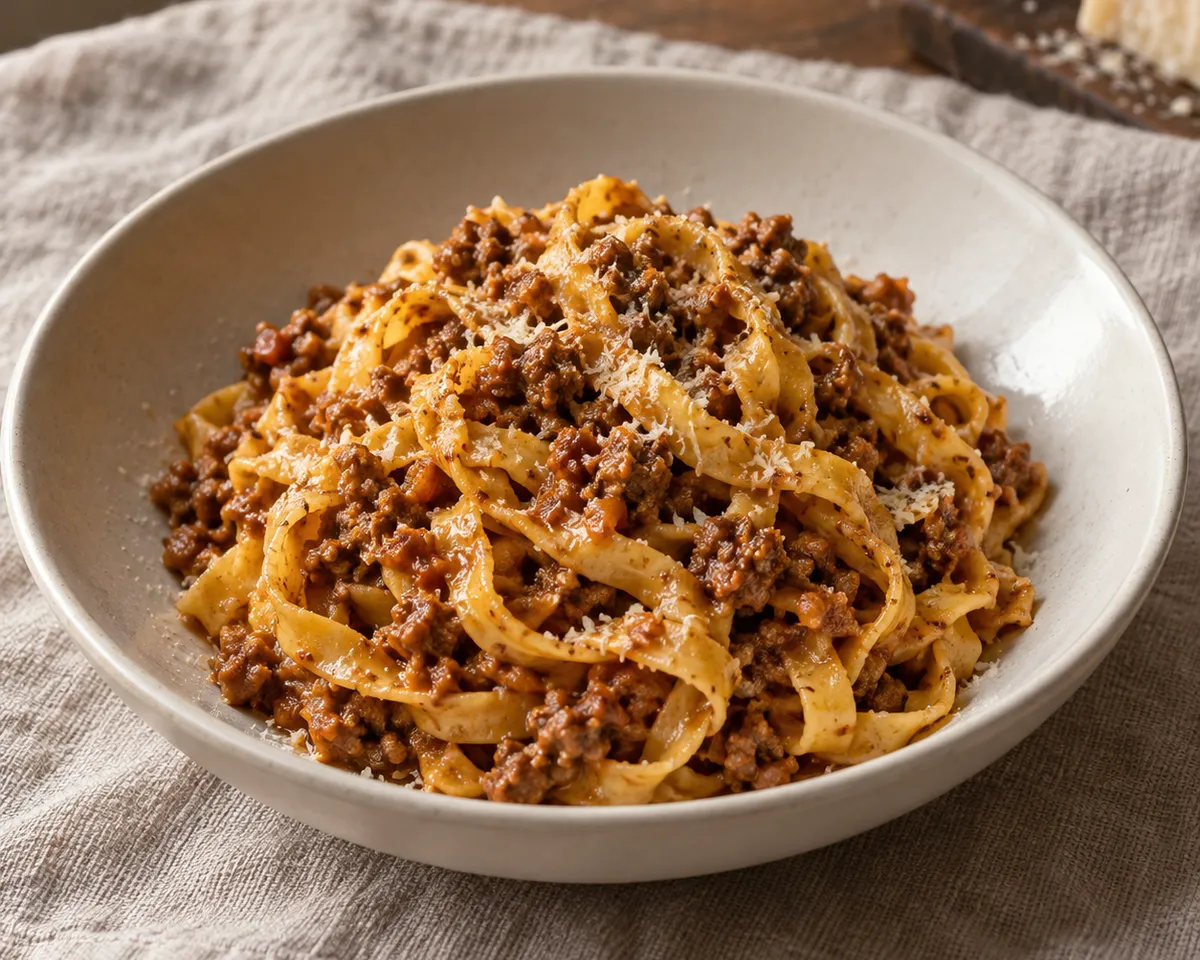
Tagliatelle al ragù
Bologna's egg tagliatelle with slow-cooked meat ragù
The famous sauce is often mistaken for something to pour over pasta. In Bologna, its purpose is more intimate: a measured amount of ragù works its way into broad, rough egg ribbons, so that the meat clings to the pasta instead of settling below it. The plate should look burnished and generous, never drowned.
The ragù begins with coarsely ground beef, fresh pork belly, and the quiet sweetness of onion, carrot, and celery. Tomato is present but not dominant. Wine cooks away completely; milk enters midway through the long simmer and disappears into a sauce that is dark orange, creamy, and unmistakably about meat.
Tagliatelle are the proper companion because their porous egg dough takes hold of the ragù. Bolognese tagliatelle are traditionally eight millimeters wide when cooked. A thin, evenly cut sheet retains a little roughness from the board and rolling pin, giving the sauce a surface to cling to.
Ingredients
For the ragù
- 45 ml(3 tbsp)extra-virgin olive oil
- 150 gfresh pork belly, finely chopped (see note)
- 60 gyellow onion, finely chopped
- 60 gcarrot, finely chopped
- 60 gcelery, finely chopped
- 400 gcoarsely ground beef from chuck, shoulder, brisket, or another collagen-rich cut
- 125 ml(½ cup)dry red or white wine
- 1 tbspdouble-concentrated tomato paste
- 200 gtomato passata
- about 500 ml(2 cups)light beef or vegetable broth, kept hot
- 125 ml(½ cup)whole milk
- fine salt and freshly ground black pepper
For the tagliatelle
- 400 gItalian 00 flour, plus a little for the work surface
- 4large eggs
- fine salt, for the pasta water
- about 400 gfinished ragù from the batch above
- 30 gParmigiano Reggiano, finely grated, plus more to pass at the table
Kitchen notes
- Fresh pork belly
- Pancetta fresca means raw, unsmoked pork belly, not American breakfast bacon. Ask a butcher for fresh belly if it is not in the case. Unsmoked Italian pancetta is a traditional alternative, but avoid smoked pancetta.
- Coarsely ground beef
- Collagen-rich cuts such as diaphragm (cartella), shoulder, brisket, and belly become tender during the long simmer. Do not use very lean ground beef: it cooks dry before the ragù has had time to become rounded and cohesive.
- Tomato passata
- Passata is smooth, uncooked strained tomato purée. It is not thick American tomato paste or a jarred pasta sauce; use it with the small measured amount of double-concentrated paste.
- Tagliatelle
- The traditional Bolognese ribbon is 8 mm wide when cooked, roughly 6.5–7 mm before cooking. A small variation at home is normal; the aim is a broad egg ribbon, not spaghetti or fettuccine.
Method
Start the ragù
- Warm the olive oil in a heavy 24–26 cm (9½–10 in) pot over medium-low heat. Add the fresh pork belly and let it soften and render without browning hard. Stir in the onion, carrot, and celery. Cook slowly, stirring often, until the vegetables are soft and sweet and the onion has not colored, about 10 minutes.
Brown, deglaze, and simmer
- Raise the heat, add the beef, and break it up while stirring until it has lost its raw color and begins to sizzle, about 10 minutes. Pour in the wine and cook until it has evaporated completely; there should be no raw wine smell. Stir in the tomato paste and passata, then add 240 ml (1 cup) hot broth. Cover with the lid slightly ajar and simmer very gently for about 2 hours, adding more hot broth only as needed to keep the ragù loose enough to stir. About halfway through the simmer, stir in the milk and let it cook away completely as the ragù finishes cooking.
Finish the ragù
- When the sauce is thick, glossy, and dark orange rather than red, season with salt and pepper. It should be creamy and enveloping, not watery. Cool and refrigerate the extra ragù for another meal; it improves after a night's rest.
Make the tagliatelle
- Mound the flour on a board, make a well, and add the eggs. Beat the eggs with a fork, gradually drawing in flour, then knead until smooth and elastic, about 10 minutes. Cover and rest for 30 minutes. Roll the dough into thin sheets with a rolling pin or pasta machine. Loosely roll each sheet, then cut ribbons 6.5–7 mm (about ¼ in) wide and unroll them onto a lightly floured cloth or tray; they will widen to the traditional 8 mm when cooked.
Dress and serve
- Bring a large pot of salted water to a boil. Warm 400 g ragù in a wide skillet. Cook the tagliatelle until just al dente; fresh pasta will need only a few minutes. Lift it into the skillet with a little cooking water and toss over low heat until every ribbon is coated. Add the Parmigiano Reggiano and toss once more. Serve at once, with more cheese on the table if wanted.