Taralli
Apulian ring crackers
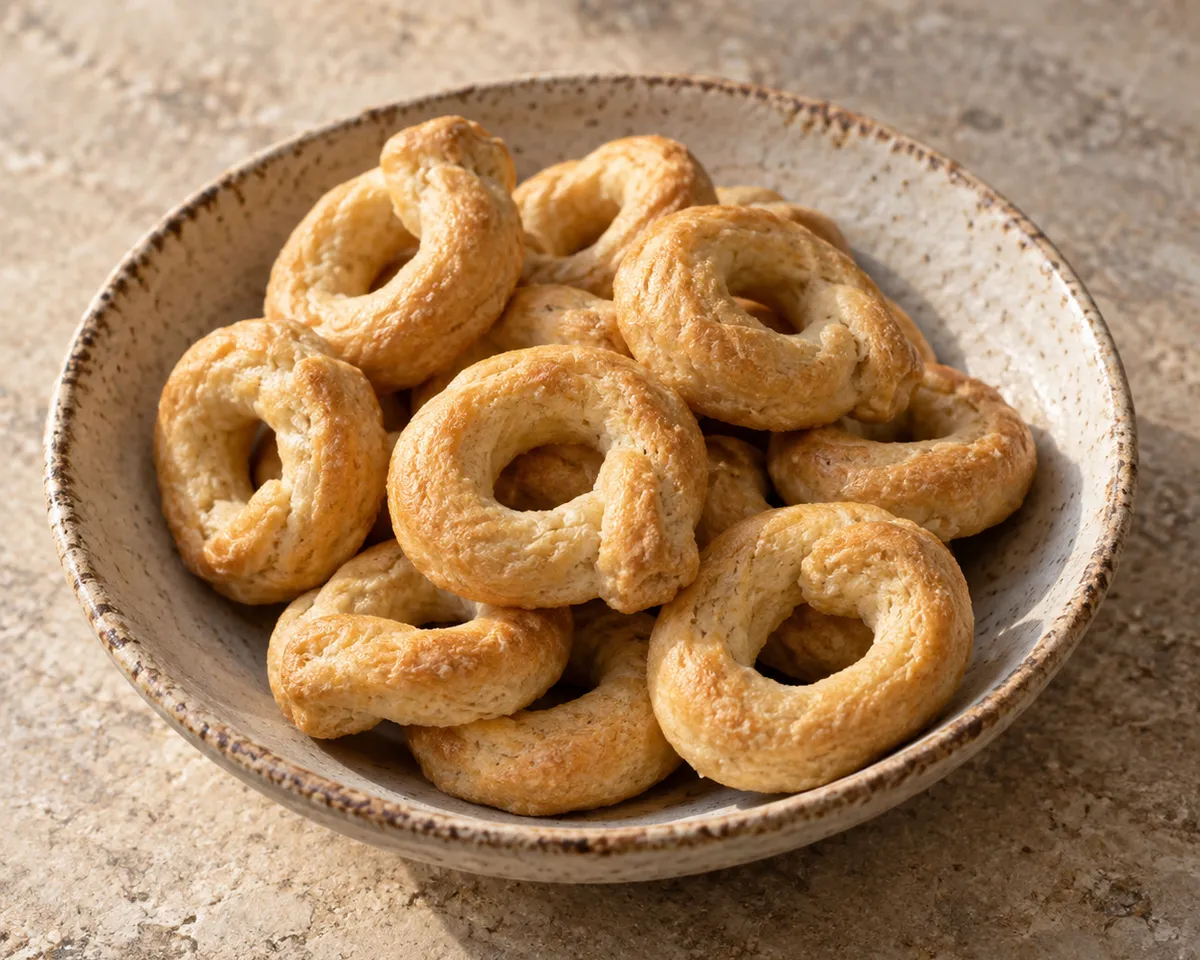
Taralli are small Apulian rings of dough made fragrant by wine and olive oil, boiled just long enough to set their surfaces, then baked until dry and crackly. Their shape is practical as much as charming. It gives a lot of crisp edge for a very small snack.
Dry wine and clean-tasting olive oil give the plain version its fragrance, and the finished rings should be golden rather than blond or jaw-breakingly dark. Fennel seed, pepper, onion, and chile all belong to other familiar variations, alongside the plain rings.
They are an aperitivo snack, good with a drink and very easy to keep reaching for. Let them cool fully before judging the texture; the oven bake finishes its work as the steam leaves the rings.
Ingredients
For the taralli
- 550 gItalian type 0 flour (see note)
- 200 gdry white wine, at room temperature
- 120 gextra-virgin olive oil
- 10 gfine sea salt
For boiling
- water
Kitchen notes
- Flour
- Seek type 0 soft-wheat flour at an Italian grocery or a well-stocked specialty market. Do not use self-rising flour, bread flour, or coarse durum semolina. Taralli need a compact, short dough rather than a chewy bread dough.
- White wine
- Use an inexpensive but drinkable dry white wine. It is a defining ingredient, not an optional splash: its acidity and aroma are part of the traditional dough. Use it at room temperature so the dough comes together evenly.
- Olive oil
- Choose a good extra-virgin olive oil with a clean flavor. A sharply bitter, aggressively peppery oil can dominate a four-ingredient dough, while neutral vegetable oil removes one of its main flavors.
- Plain taralli
- Fennel seed is widely loved in Puglia, and chile, onion, pepper, and other seasonings have their own established taralli. The plain wine-and-oil rings need no added seasoning.
Method
Make a smooth, firm dough
- Put the flour and salt in a large bowl and mix them together. Add the olive oil and work it through with your fingers or a fork until the flour looks sandy. Add the wine and mix until a rough dough forms. Turn it onto an unfloured work surface and knead until smooth and compact, about 8–10 minutes. It should feel firmer than bread dough and should not stick. Cover and let rest for 30 minutes so the flour fully hydrates and the dough rolls without snapping back.
Roll and join the rings
- Heat the oven to 375°F (190°C) and line two baking sheets with parchment. Pinch off pieces of dough about the size of a walnut, roughly 15 g each. Roll each under your palms into a rope about 12 cm (4¾ inches) long and 1 cm (⅜ inch) thick. Bring the ends together with a slight overlap and press firmly to seal. Keep the rings covered with a clean towel as you shape them so they do not develop a dry skin.
Boil until they float
- Bring a wide pot of plain water to a gentle boil. Drop in 8–10 rings at a time without crowding. As soon as they rise to the surface, usually within 20–40 seconds, lift them out with a skimmer and drain them briefly on a clean kitchen towel. The float is the cue: leaving them in longer makes the rings waterlogged and compromises their snap. Transfer the boiled taralli to the lined sheets with a little room between them.
Bake dry and golden
- Bake, rotating the sheets halfway through, until the taralli are evenly golden, dry, and crisp, 35–40 minutes. If the outside colors before they feel dry, lower the oven to 350°F (175°C) for the final 5–10 minutes. Cool completely on racks before serving or storing. They firm up as they cool; a warm tarallo can seem softer than the finished one.