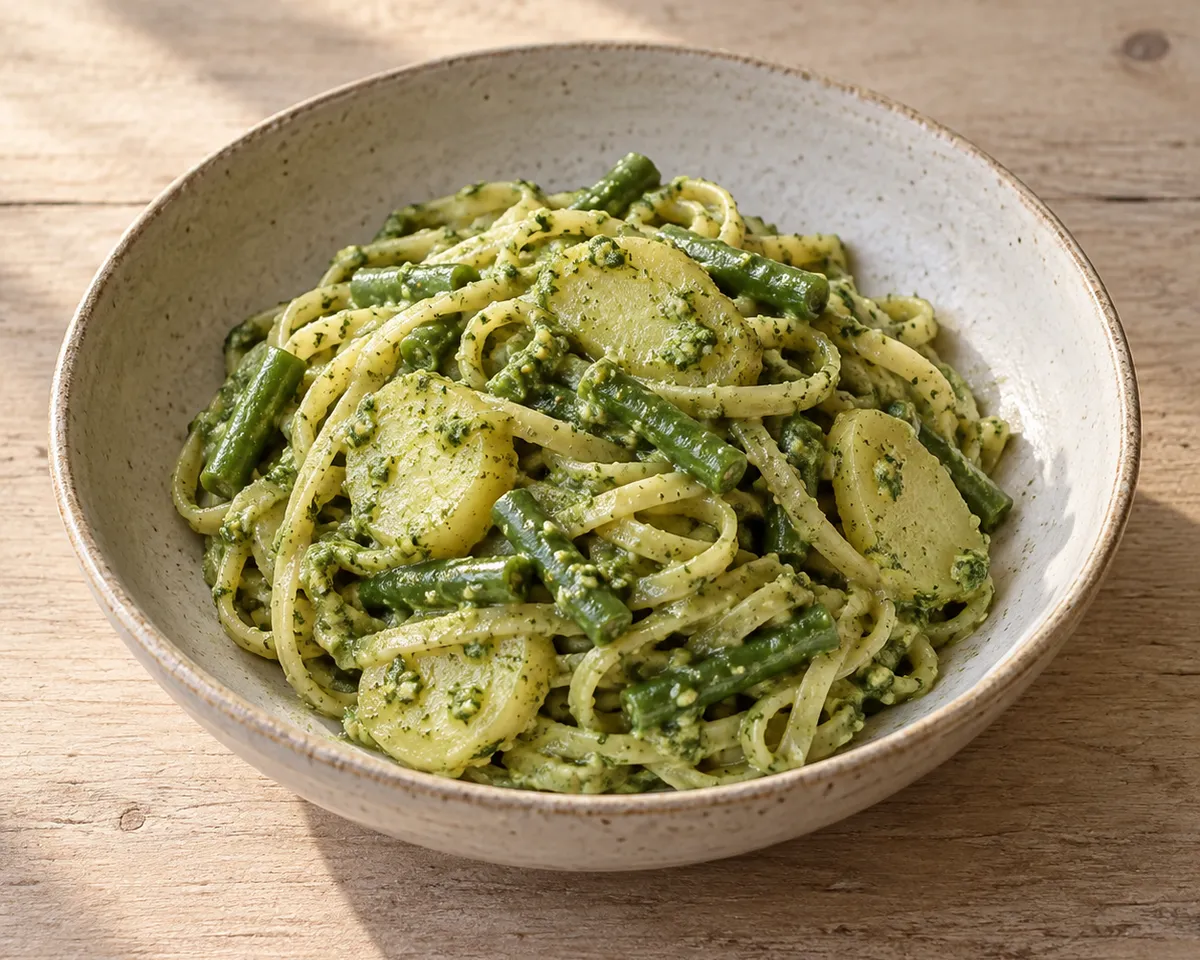
Trenette al pesto (con patate e fagiolini)
Genoese pesto pasta with potatoes and green beans
Trenette al pesto brings together long, slightly rough pasta, tender potato, green beans, and a bright green sauce worked without direct heat. The vegetables are cooked alongside the pasta, then the whole lot is turned through pesto loosened with just enough of that starchy water to coat every strand.
In Genova, this is the generous, vegetable-laced treatment known as avvantaggiata. The potato does more than fill out the plate: it gives the pesto a soft, starchy partner. The beans keep their snap and a faint vegetal sweetness, which makes the richness of cheese, pine nuts, and olive oil feel less insistent.
The pesto's perfume comes from tender basil leaves, a restrained clove of garlic, pine nuts, Parmigiano, and Fiore Sardo, all worked cold. The result should be creamy and vivid but still smell of basil first; if it tastes cooked, the essential thing has been lost.
Ingredients
For the pesto
- 60 gyoung fresh Genovese basil leaves, washed and dried very thoroughly (see note)
- 1small garlic clove, peeled
- 25 gMediterranean pine nuts
- 45 gParmigiano Reggiano DOP, finely grated
- 15 gFiore Sardo DOP, finely grated (see note)
- 60 ml(¼ cup)delicate extra-virgin olive oil, preferably Ligurian if available
- coarse sea salt
For the pasta and vegetables
- 320 gdried trenette (see note)
- 200 gyellow-fleshed potatoes, peeled and sliced 3 mm (⅛ in) thick
- 180 gsmall green beans, trimmed and cut into 3 cm (1¼ in) lengths
- fine salt
Kitchen notes
- Genovese basil
- Basilico Genovese DOP is the protected Ligurian ingredient. Outside Liguria, buy the freshest small-leaf Genovese basil you can find, remove only the leaves, and dry them completely after washing. Large, minty, or bruised leaves make a coarser, less characteristic pesto.
- Fiore Sardo DOP
- Fiore Sardo is a firm, aged Sardinian sheep's-milk cheese. It supplies the savory, slightly sharp note alongside Parmigiano; it is not Pecorino Romano. Look for it at a specialty Italian market and grate it finely.
- Trenette
- Trenette are Ligurian long, flat strands, similar to linguine but characteristically a little thicker and rougher. Seek dried trenette at a specialty Italian market or online; their surface takes up the diluted pesto especially well.
Method
Make the pesto
- Put the garlic and a pinch of coarse salt in a mortar and work them to a smooth paste. Add the pine nuts and crush them until coarse but creamy. Add the basil a small handful at a time, using a gentle circular motion against the mortar's sides rather than pounding hard. When the leaves have become a bright green paste, work in the Parmigiano and Fiore Sardo, then stir in the olive oil in a thin stream. The pesto should be thick, fragrant, and cool; set it aside at room temperature. (A small blender may be used in short pulses, but do not let the blades heat the basil.)
Cook the vegetables and pasta together
- Bring a large pot of water to a rolling boil and salt it. Add the potato slices and green beans. After 5 minutes, when the vegetables are still firm, add the trenette. Cook until the pasta is al dente, following its package time from this point; the potatoes should be tender enough to yield to a fork without breaking apart, and the beans tender with a little bite.
Dress without heat
- Before draining, reserve 250 ml (1 cup) of the cooking water. Put the pesto in a warmed serving bowl and stir in 30 ml (2 tbsp) of the water to make a loose green cream. Drain the pasta and vegetables together, add them to the bowl, and toss thoroughly. Add more cooking water a tablespoon at a time only until the pesto clings glossily to the trenette and lightly coats the potato and beans. Do not return the dressed pasta to the heat.
- Taste before adding salt, since both cheeses season the dish. Serve immediately, while the basil is aromatic and the potato pieces are still intact.