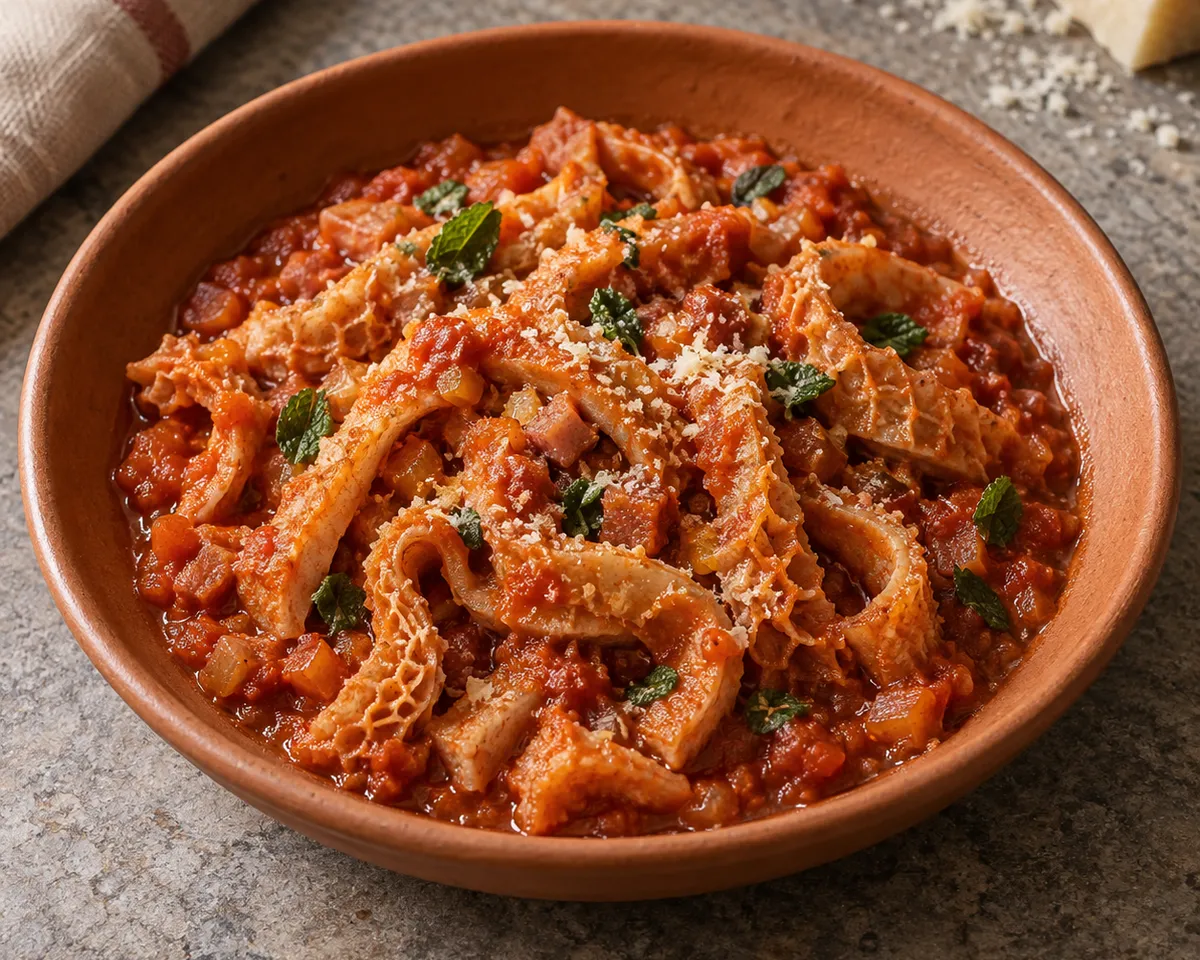
Trippa alla romana
Roman tripe in tomato with mint and pecorino
The pocketed surface of honeycomb tripe catches the tomato sauce in every fold. Given enough time, this once modest butcher's cut becomes one of Rome's most satisfying offal dishes, rich with cheese and lifted by fresh herbs.
The Saturday tripe pot became a fixture of the city's trattorie, especially in the old working quarters. Its flavor is less about spice than a precise trio. Tomato supplies warmth and sweetness; Pecorino Romano brings its firm sheep's-milk salt; fresh mentuccia or menta romana cuts through the richness with a clean, wild-green lift.
Guanciale seasons the soffritto in this generous, saucy trattoria form. Honeycomb tripe braises in the tomato before pecorino and mint are stirred in off the heat, leaving plenty of sauce for a piece of bread.
Ingredients
For the tripe
- 1 kg(2.2 lb)fully precooked honeycomb tripe, rinsed and cut into 1 cm (⅜-inch) strips (see note)
- 60 g(2 oz)guanciale, cut into small dice (see note)
- 15 ml(1 tablespoon)extra-virgin olive oil
- 1 medium (about 120 g)yellow onion, finely chopped
- 1 medium (about 80 g)carrot, finely chopped
- 1 large rib (about 70 g)celery, finely chopped
- 1garlic clove, finely chopped
- 400 g(14 oz)whole peeled tomatoes, crushed by hand with their juices
- 250 ml (1 cup), plus more as neededhot water or light unsalted beef stock
- 10 g (1 small bunch)fresh mentuccia or menta romana leaves, torn by hand (see note)
- 80 g(about 2¾ oz)Pecorino Romano DOP, finely grated (see note)
- fine salt and freshly ground black pepper
Kitchen notes
- Fully precooked honeycomb tripe
- Look for the reticulum, also called honeycomb tripe or cuffia, with its distinctive pocketed surface. This recipe assumes tripe that has already been fully boiled until tender, the form commonly sold by Italian butchers. In the United States, a package marked cleaned or blanched may still be uncooked; simmer that tripe separately in water with aromatic vegetables until fork-tender before beginning the recipe. The 45–60 minute tomato braise will not tenderize raw tripe from scratch.
- Guanciale
- Guanciale is cured pork jowl, not pancetta or bacon. Its soft fat and cured flavor are traditional in one common Roman version; use it unsmoked and cut it small so it seasons the soffritto rather than becoming the dish's main texture.
- Mentuccia or menta romana
- Buy fresh mentuccia or menta romana from an Italian market or a grower who can identify it for Roman cooking. Italian herb names vary by place and seller, but peppermint is not the right herb: its cool, sweet menthol note changes the dish. Do not use dried mint as a substitute; this is a defining fresh finish.
- Pecorino Romano DOP
- Use the firm, salty sheep's-milk cheese, grated very finely from a wedge. Add it off the heat so it enriches the tomato sauce without turning stringy. Parmigiano Reggiano is not an interchangeable substitute here.
Method
Start the soffritto
- Set a heavy, wide Dutch oven or casserole over medium-low heat. Add the guanciale and olive oil and cook, stirring, until the guanciale has rendered some fat and is beginning to turn translucent, 4 to 5 minutes. Add the onion, carrot, celery, and garlic. Cook gently, stirring often, until the vegetables are very soft and sweet but not browned, 10 to 12 minutes.
Braise the tripe
- Add the tripe and turn it through the soffritto for 4 to 5 minutes. Add the crushed tomatoes and their juices, 250 ml (1 cup) hot water or stock, a few grinds of pepper, and only a small pinch of salt. Bring to a gentle simmer, cover partially, and cook for 45 to 60 minutes, stirring from time to time. The tripe should sit in a generous, tomato-red sauce; add hot water a splash at a time if the pot begins to look dry.
- Uncover for the last 10 minutes so the sauce becomes glossy and clings to the strips without turning dry. Taste a piece of tripe: it should be tender and yielding, never rubbery. Adjust the salt and pepper cautiously; both guanciale and pecorino are salty.
Finish and serve
- Take the pot off the heat. Stir in about two-thirds of the mentuccia and 50 g of the pecorino until the cheese is incorporated into the sauce. Spoon into warm shallow bowls, scatter over the remaining mentuccia and pecorino, and serve at once with crusty bread.