Trippa finta
Florentine egg ribbons in tomato sauce
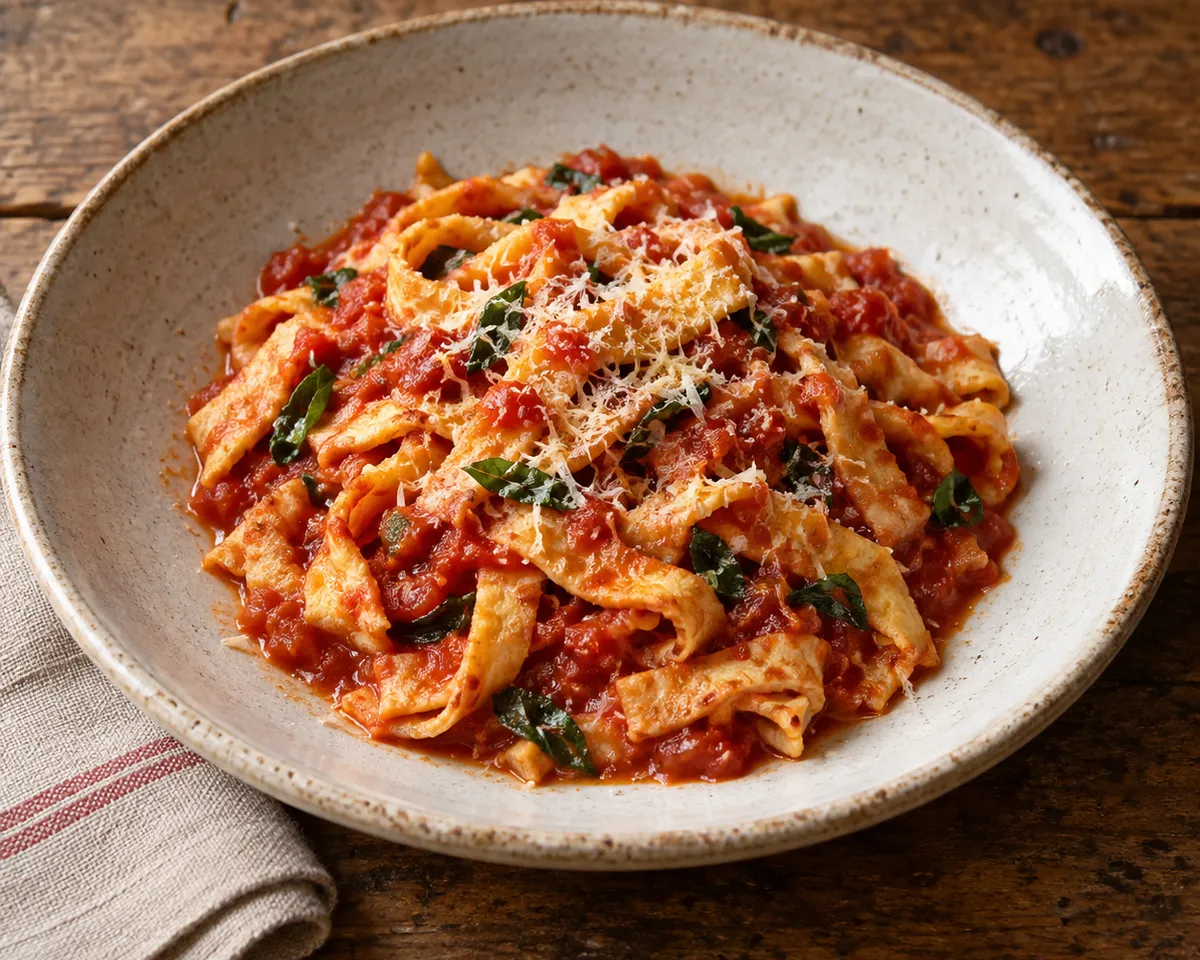
The trick is visual first: thin frittatine are rolled, sliced into soft pale ribbons, and sent into tomato sauce looking uncannily like tripe. By the time they reach the table, though, the joke has become a proper Florentine comfort dish—tender egg, cheese, and sauce with enough body to need bread nearby.
Trippa finta belongs to the wider Tuscan family of frittata trippata and uova trippate, home cooking that makes abundance from eggs. Grated cheese seasons the frittatine before they soak up the tomato. The fine point is to keep them thin; thick omelet strips lose the resemblance to tripe.
The sauce is not meant to drown them. It should be reduced and aromatic before the egg ribbons go in, then warmed just long enough for tomato and Parmigiano to meet without making the whole pan heavy.
Ingredients
For the egg ribbons
- 6large eggs
- 50 g(about ½ cup)finely grated Parmigiano Reggiano
- 30 ml(2 tbsp)whole milk
- 15 ml(1 tbsp)extra-virgin olive oil, plus a little more for the pan
- fine sea salt
- freshly ground black pepper
For the tomato sauce
- 45 ml(3 tbsp)extra-virgin olive oil
- 1garlic clove, lightly crushed
- 750 g(about 3 cups)tomato passata
- 12fresh basil leaves, torn
- fine sea salt and freshly ground black pepper, to taste
- 25 g(about ¼ cup)finely grated Parmigiano Reggiano, for serving
Kitchen notes
- Parmigiano Reggiano
- Use a real, aged Parmigiano Reggiano and grate it finely yourself. The shelf-stable granular powder often sold as “Parmesan” is much saltier and drier, and will make the egg batter harsh rather than savory.
- Shape and sauce
- The dish is made from thin frittatine cut into ribbons, then warmed in a reduced tomato sauce. It is not actual tripe, scrambled eggs, or wide egg noodles; those distinctions are what make the name's visual joke work.
Method
Reduce the tomato sauce
- Warm the 45 ml olive oil with the garlic in a wide skillet over medium-low heat until the garlic smells fragrant but has not colored, about 2 minutes. Add the passata, a pinch of salt, and black pepper. Simmer uncovered, stirring occasionally, until it loses its raw edge and is thick enough to leave a brief trail when a spoon is drawn across the pan, 18–25 minutes. Remove the garlic. Keep the sauce warm over the lowest heat.
Mix the eggs
- Whisk the eggs, 50 g Parmigiano Reggiano, milk, 15 ml olive oil, a small pinch of salt, and several grinds of pepper until evenly combined. The mixture should pour easily into a thin round; whisk it again before each addition to the pan.
Cook thin frittatine
- Heat an 8-inch (20 cm) nonstick or well-seasoned skillet over medium-low heat and wipe it with a thin film of olive oil. Pour in about one-quarter of the egg mixture, tilting immediately to make a thin round. Cook until the underside is set and pale gold, about 1 minute; turn carefully and cook the second side just until set, 20–30 seconds. Slide onto a plate. Repeat to make four thin frittatine, adding only enough oil to prevent sticking. Do not brown them deeply or cook them dry.
Cut the ribbons
- Let the frittatine cool for 5 minutes, stack them, and roll the stack loosely. Slice crosswise into 1 cm (about ⅜-inch) ribbons, then unroll the pieces with your fingers. The strips should look irregular and supple, like cut tripe rather than neat pasta.
Dress briefly and serve
- Fold the egg ribbons into the warm tomato sauce with a broad spoon. Keep the heat low and cook only until they are hot through and lightly stained red, 2–3 minutes. Fold in half the basil, taste for salt, then spoon into shallow bowls. Finish with the remaining basil, the Parmigiano Reggiano, and black pepper. Serve warm, with plain bread if you like.