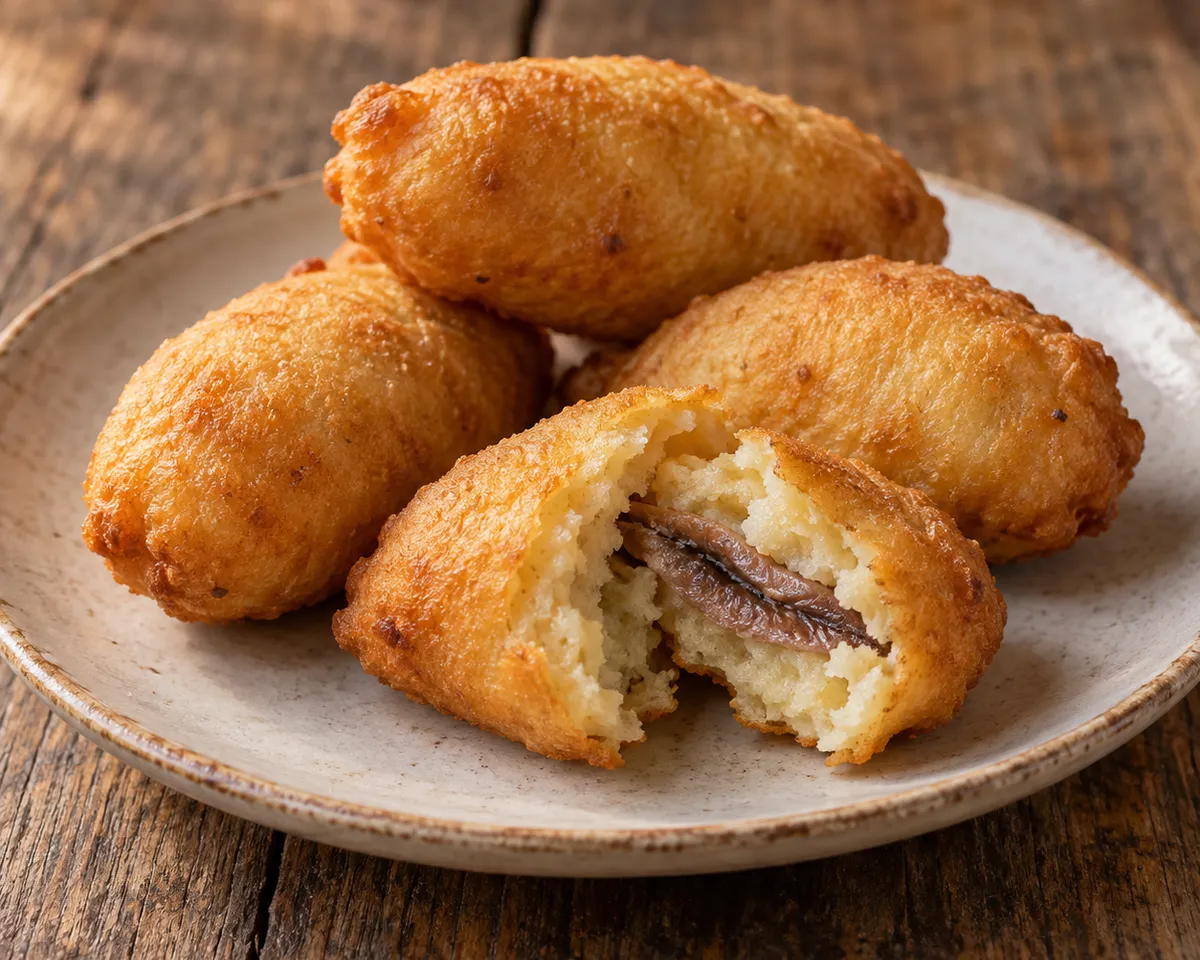
Zeppole salate con alici
Southern Calabrian potato dough fritters with anchovies
In southern Calabria, a zeppola can be a small savory event: warm potato dough, yeast, hot oil, and a salty flash of anchovy at the center. These are often called zippuli, a regional word that sits comfortably beside zeppole, grispelle, and other local names for the same broad family of fried doughs.
Potato gives the dough a soft, almost feathery interior beneath a thin golden crust, while the anchovy melts into the bread. They belong especially to the Christmas table, when one batch is rarely enough and variations with 'nduja, salt cod, or no filling at all are entirely normal.
A whole salt-cured fillet is enclosed in each piece of dough and fried until it rises, puffs, and colors evenly. Eat them while the crust is still audibly crisp and the center is hot.
Ingredients
For the potato dough
- 500 g(about 1.1 lb)floury potatoes, such as Russets, scrubbed
- 500 gall-purpose flour, plus a little for the work surface
- 10 gfresh yeast, crumbled (see note)
- 130–160 gwarm potato-cooking water or plain water, as needed
- 10 g(about 1¾ tsp)fine sea salt
For filling and frying
- 24salt-cured anchovy fillets, rinsed if packed in salt and patted very dry (about 75–85 g; see note)
- peanut oil, or another neutral frying oil, enough for a 5 cm (2-inch) depth in a deep pot (see note)
- fine sea salt, only if needed after frying
Kitchen notes
- Salt-cured anchovy fillets
- Use the small, intensely savory cured anchovies sold in tins, jars, or salt-packed tubs: they are not fresh anchovies and they are not canned sardines. Salt-packed fillets need a brief rinse and very thorough drying; oil-packed fillets need only draining. Their cure supplies the defining salinity, so do not substitute fresh fish or season the dough aggressively.
- Potatoes and flour
- Calabrian zeppole range from flour-and-water doughs to potato-rich ones, and potato ratios vary household to household. The potato quantity is weighed before boiling; use all the riced flesh, then add water gradually. Forcing a fixed water amount into watery potatoes makes a slack dough that will not hold the anchovy.
- Fresh yeast
- Fresh compressed yeast is common in Italian recipes. If it is unavailable, use 3.5 g (about 1 tsp) active dry yeast, dissolved in the warm water and given 5–10 minutes to foam before mixing.
- Frying oil
- The volume depends on the pot's diameter; measure a 5 cm (2-inch) oil depth. Use a deep, stable pot with ample space above the oil for the fritters to swell.
Method
Cook and rice the potatoes
- Put the potatoes in a saucepan, cover with cold water, and bring to a simmer. Cook until a skewer reaches the center without resistance, about 30–40 minutes depending on size. Before draining, reserve 160 g of the cooking water and let it cool until just warm. Drain the potatoes, peel while still hot enough to steam, and pass all the usable flesh through a ricer. The riced potato should be dry and fluffy, not wet or gluey.
Make a soft dough
- Put the flour in a large bowl. Dissolve the yeast in 130 g of the warm reserved water, then add it with the potato and salt. Mix and knead until no dry flour remains and the dough is smooth, soft, and slightly tacky. Add the remaining water a spoonful at a time only if it feels firm or dry; different potatoes absorb very differently. Cover and leave in a warm place until doubled, about 3–4 hours.
Fill the zeppole
- Line a tray with parchment and lightly flour the work surface. Turn out the risen dough and divide it into 24 equal pieces, about 44–48 g each depending on the potatoes. With lightly oiled hands, flatten one piece into a small oval, lay an anchovy fillet across the middle, and pinch the dough tightly over it. Roll gently into a short, plump log, making sure no fish is exposed. Set seam-side down on the tray and repeat. Keep the pieces covered while the oil heats.
Fry until puffed and golden
- Pour the oil into a deep, heavy pot to a depth of about 5 cm (2 inches), leaving at least 5 cm (2 inches) of clear space above the oil, and heat to 330°F (165°C). A 24 cm (9½-inch) Dutch oven needs about 2.25 L (about 9½ U.S. cups) to reach that depth. Fry 4–5 zeppole at a time, turning often, until they float, swell, and become evenly deep golden, about 4–5 minutes. The oil should bubble steadily around them without racing; let it return to temperature between batches. Transfer to a rack or paper towels, taste one before adding any salt, and serve hot.